

















I spend a fair amount of time staring at glossy brochures, and one pattern is impossible to miss: almost every wellness retreat in India looks flawless on a screen. Golden sunsets in soft focus, someone sipping herbal tea, a yoga mat perfectly placed on a balcony. It all blurs into the same promise.
Scratch the surface, though, and you quickly see that these places are doing very different things.
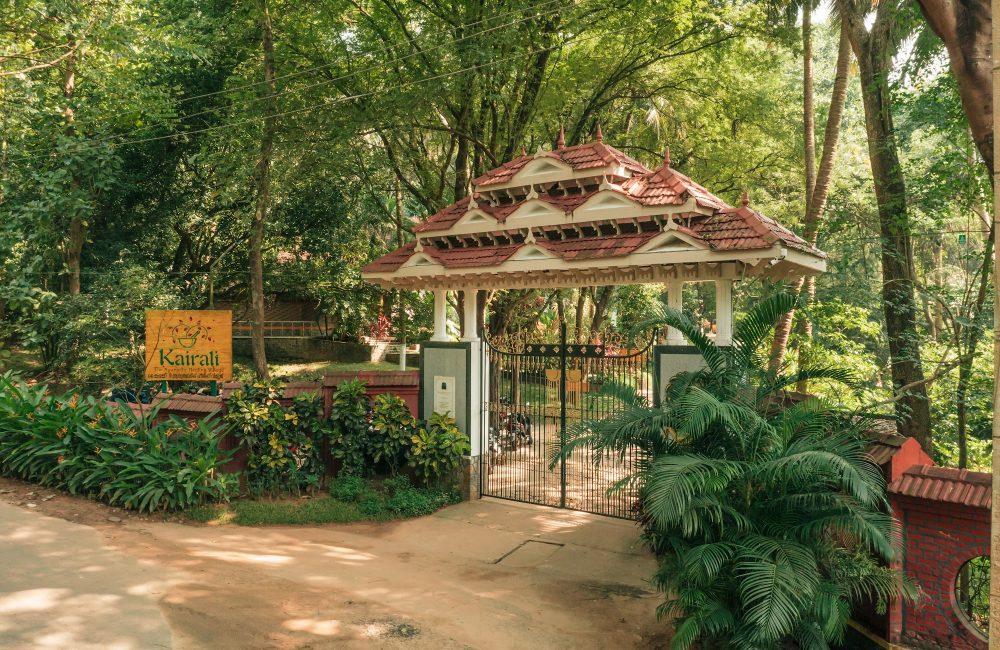
At Kairali – The Ayurvedic Healing Village in Palakkad, we meet this confusion every season. Guests turn up saying things like, “I thought all retreats were basically the same,” or, “I didn’t realise my last stay was more like a spa holiday than a therapeutic programme.” That gap between expectation and reality is exactly why this piece exists.
It’s written for travellers, NRI families and European guests who are trying to figure out where they actually belong on India’s wellness map, not just which brochure looks prettiest.
Two very different types of retreats
Broadly, wellness hotels in India fall into two distinct categories.
1. Lifestyle and feel-good resorts
These lean more towards relaxation, general fitness and mild stress relief. You’ll often see phrases like “detox weekend”, “recharge”, “reset escape”. Imagine elegant villas, filtered water in glass bottles, a carefully curated menu, maybe cryotherapy or sleep pods, and a schedule you can join or ignore depending on your mood that day.
2. Clinical-style Ayurvedic centres
These work with classical Ayurveda, the traditional health system from India, and build programmes around your *prakriti* (constitutional type) and your current *dosha* imbalance (Vata, Pitta, Kapha – three functional principles that describe how your body and mind tend to behave). In such centres, Panchakarma – a structured cleansing and rejuvenation process – isn’t a marketing term. It’s a serious medical protocol with defined steps, supervision and time for recovery.
One isn’t universally “better” than the other. The more honest question is: what do you need right now?
Start with your intention, not your Instagram
When people write to our team about Kairali, their reasons usually fall into three broad groups.
– “I want to relax and sleep better.”
– “I’m dealing with long-term concerns – weight, joint discomfort, hormonal swings, stress-related issues.”
– “I don’t know exactly what’s wrong, but I feel off, and I want proper guidance.”
If you recognise yourself in the first line, a gentler, lifestyle-focused retreat might be enough for now. If you’re closer to the second or third, a more clinical Ayurvedic environment can create deeper change – as long as you’re genuinely ready for routine, structure and physician supervision.
Our physicians at Kairali often greet new guests with one simple sentence: “Your body is checking in here, not your social media profile.” That lands strongly.
You can almost see the shoulders drop. The focus shifts from “How will this look?” to “How will this feel in my body over the next few months?”
How to decode a wellness brochure in 5 minutes
When you’re comparing retreats online, a few quick checks can reveal what kind of place you’re actually looking at.
1. Who is leading your programme?
– Spa-led model:
Here, the schedule is usually designed by spa managers or general wellness consultants. A doctor might be “available” or “on call”, but isn’t central to your daily plan. Treatments tend to be pre-packaged, and it’s quite easy to swap one therapy for another that sounds more appealing or Instagrammable.
– Physician-led model (as at Kairali):
Your stay begins with a detailed consultation. Ayurvedic doctors prescribe and adjust your diet, therapies and yoga throughout your time there. Sometimes they’ll tell you that a treatment you saw online isn’t right for you at this stage, and they’ll explain exactly why from a medical point of view.
A quick test helps: if the website doesn’t clearly name the physicians, mention their qualifications, or explain what the consultations involve, you’re almost certainly looking at a lifestyle resort rather than a clinical centre.
2. How personalised is the food, really?
Words like “organic”, “vegetarian”, “farm-fresh” and “plant-based” sound reassuring, but they still don’t answer the question of whether the kitchen understands *you* and your digestion.
In Ayurveda, Agni (digestive fire) and Ama (accumulated metabolic waste) are central ideas. Food is selected and prepared to support digestion, reduce heaviness and ease symptoms like bloating or sluggishness.
At Kairali, two guests sitting at the same table can receive very different plates. One might have a warm, lightly spiced khichdi that feels soothing and grounding; the person next to them might have raw salads temporarily removed because their Vata is already aggravated and needs calming. A guest recovering from chronic acidity may be given ghee in measured amounts to support healing, while another person’s spice levels are cut right down to quieten an irritated Pitta.
The dining hall looks like a restaurant, but behind the scenes the menu is closer to a prescription.
If every guest eats the exact same “healthy” menu every day, you’re probably in a wellness hotel rather than a therapeutic Ayurvedic centre.
3. What does a typical day look like?
Always ask for a sample daily schedule. It can reveal more than a dozen brochure adjectives.
Scan for things like:
– Fixed wake-up and sleep timings
– Specific yoga or movement planned according to your dosha and current state
– Daily or regular physician check-ins
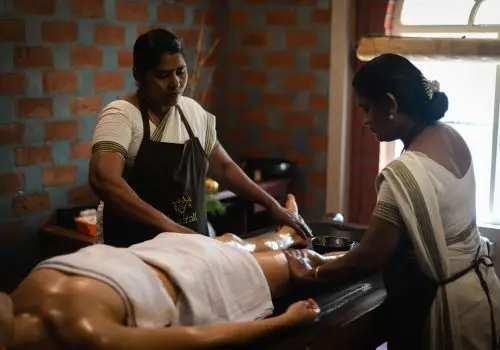
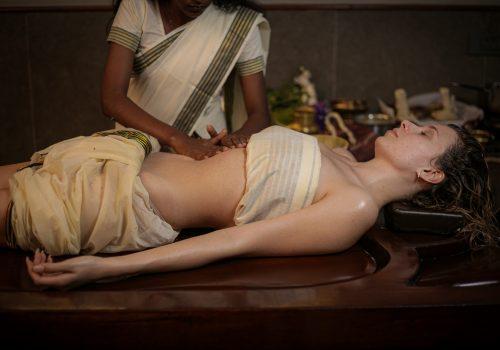
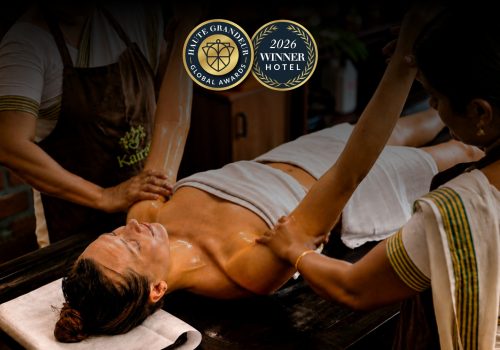
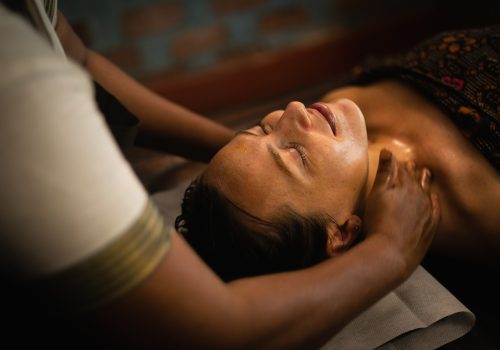
– Built-in time for rest, especially after oil therapies such as Abhyangam – a warm, synchronised full-body oil massage that many guests find deeply grounding and sometimes surprisingly sleep-inducing
At Kairali – The Ayurvedic Healing Village, guests are often taken aback by how much they sleep in the first few days. Our physicians don’t discourage it; they actively suggest more rest. That wave of fatigue often signals that the body is finally allowed to slow down after months, sometimes years, of running on reserves.
It’s common to watch someone arrive for “a bit of relaxation” and, by day three, realise just how exhausted they’ve been.
If your sample itinerary looks more like a resort holiday – back-to-back activities, late dinners, optional cocktails or parties – the focus is likely on entertainment and variety, not on resetting your system.
4. How is “detox” described?
“Detox” has become one of the most stretched and vague words in wellness marketing. It can mean anything from a three-day juice plan to a full Panchakarma protocol, and those experiences are very different.
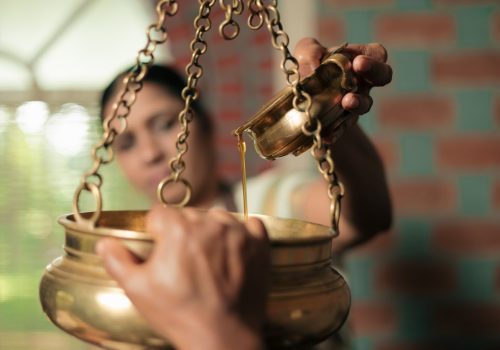
In classical Panchakarma, therapies are chosen to support the body’s own processes: oil massages, herbal steam, carefully monitored intake of medicated ghee, and specific elimination procedures when indicated. This isn’t a quick weekend experiment.
At Kairali, Panchakarma is planned with care and usually with time. Stays of 14 or 21 nights are often suggested for people who want something deeper than light rejuvenation. Some therapies leave you feeling warm, heavy-limbed or emotionally stirred on certain days; that’s why clinical supervision and rest are built into the schedule rather than treated as an optional extra.
Our physicians explain early on that feeling slightly “stirred up” before feeling clear and lighter is a normal phase for many guests. It’s not necessarily a sign that something has gone wrong; it can be part of the healing arc.
If a retreat’s “detox” is described entirely through smoothies, sauna sessions and perhaps a scrub, you’re likely looking at a lighter, spa-oriented approach. That can still be enjoyable and helpful in its own way – you just deserve to know what you’re actually booking.
When a clinical Ayurvedic village makes sense
From the marketing desk, booking patterns start to tell small human stories over time.
You see Indian professionals and entrepreneurs in their late 30s and 40s, worn down by years of travel, deadlines and erratic meals, now looking for structured help with sleep, digestion and nervous-system overload. Their emails often arrive at odd hours, which says a lot.
You also see NRI families who want a setting rich in Ayurveda and Indian culture, but which still feels comfortable, safe and manageable for parents, partners and occasionally teenagers who might be coming to India after a long gap.
Then there are guests from Germany, France and other parts of Europe who treat 14–21 nights of Panchakarma almost like an annual health appointment. They come back year after year, viewing it as part of a long relationship with their own wellbeing rather than as a one-time “fix”.
For these kinds of guests, Kairali’s structure – a self-contained village in rural Kerala – brings a few advantages that don’t always show up on a brochure.
– Distance from distraction:
There’s no bar, no nightlife, very few screens and no pressure to “make the most” of the destination between treatments. Decisions about food, sleep and daily activities become simple by design, so that your energy can go into healing, not constant planning.
– Nature that feels lived-in, not staged:
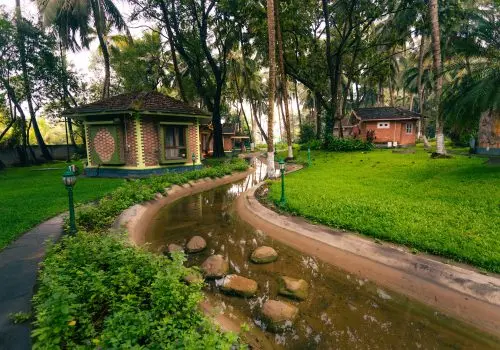
You walk through coconut groves, step on red laterite paths, listen to monsoon rain on tiled roofs, and hear birds at daybreak. The landscaping is thoughtful, but it doesn’t feel like a stage set. Quite a few guests describe a physical “softening” by their second or third evening, as the sounds and pace of the village gently replace traffic, notifications and office chatter.
– An ecosystem of support:
Therapists, kitchen staff, yoga teachers and physicians work as one team around your prescribed plan. If you’ve had an especially strong therapy in the morning, the kitchen already knows to lighten your lunch; yoga is adjusted so it feels supportive, not draining, that day. Small, quiet alignments like this add up.
One German guest once told us, “On day three I realised this place is designed so I can stop making decisions.” That line has stayed with me.
Because that, for many burned-out people, is what real luxury looks like now.
How to choose your next retreat with clarity
When you’re planning your next stay in India, it helps to ask yourself a few direct questions before you click “Book”.
– Do I want a wellness holiday, or am I actually looking for a structured therapeutic programme?
– Am I willing, at least for a while, to follow an early routine, specific dietary guidance and limited indulgences?
– Do I feel more at ease with physician-led care and a quieter environment, or do I prefer more flexibility, social options and entertainment?
If your honest answers lean towards the second and third questions, then a place like Kairali – The Ayurvedic Healing Village will probably match your needs more closely than a general wellness resort.
Give yourself that extra half-hour to clarify your intention, read beyond the brochure headlines and ask questions by email or phone. Then choose the space that doesn’t just look good in a photograph, but actually gives your body – and mind – the conditions they’ve been asking for.
Website: www.ktahv.com
Call: +91-9555156156