










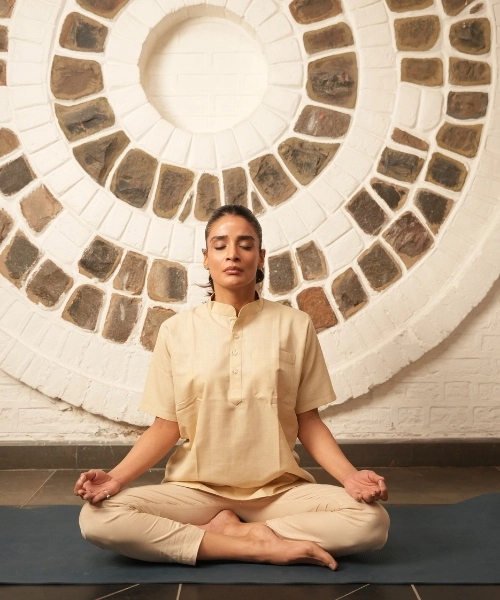

Public Yoga Parks do not replace Ayurvedic retreats; they prepare people for them. Here is how they reshape demand for structured healing at Kairali.
Why Yoga Parks Matter for the Future of Preventive Healthcare
When the Ministry of Ayush announces something like the Yoga Park Portal, it’s easy to treat it as just another policy update. On the ground, though, it quietly reshapes how people brush up against health in the middle of an ordinary week.
Once neighbourhood parks become places where yoga and meditation are normal, well-being stops being an annual resolution or a “someday” retreat plan. It can slip into how people meet, move, and recalibrate each day – walking home from the metro, after a school drop, or before logging into a 9.30 a.m. call.
Managing an Ayurvedic retreat that hosts guests from across India, the NRI community, and several parts of Europe, I tend to notice these behaviour shifts at a very personal level long before any survey or national report catches up.
Community Wellness as a Gateway, Not a Competitor
A question that comes up often from our B2B partners and referring practitioners is simple and entirely reasonable: “If yoga and basic wellness become available in every park, why would anyone still travel to a specialised healing centre?”
Our experience at Kairali Ayurvedic Healing Village suggests something quite different. Community access to yoga and basic preventive practices usually tends to:
– Raise awareness of stress, erratic sleep, weight swings, and early metabolic shifts.
– Lower the barrier for someone to experiment with traditional practices for the first time.
– Create better-prepared guests who already understand ideas like regularity, breath awareness, and simple alignment.
A person who has gone for sunrise yoga in their local park for six months doesn’t fly to Kerala to “see what yoga is like”. They come because they’ve hit a wall. They’ve seen that a weekend class doesn’t touch chronic back pain, spikes in blood pressure, or that unmistakable edge of burnout. At that point, they’re looking for structured, clinically guided support that is extremely hard to weave into a crowded city schedule.
One of our repeat guests from Mumbai summed it up during a review with our physicians: “The park class woke me up to the problem. I needed this place to actually work on it.”
What a Park Can Do – and What a Healing Village Adds
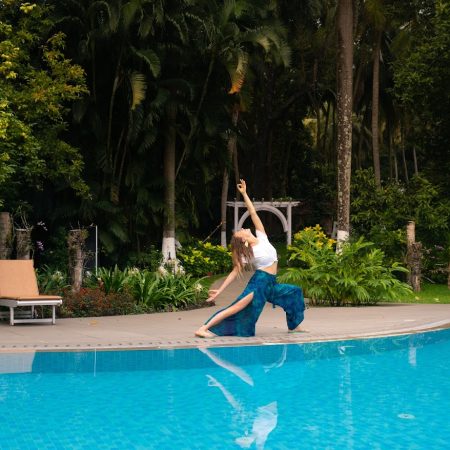
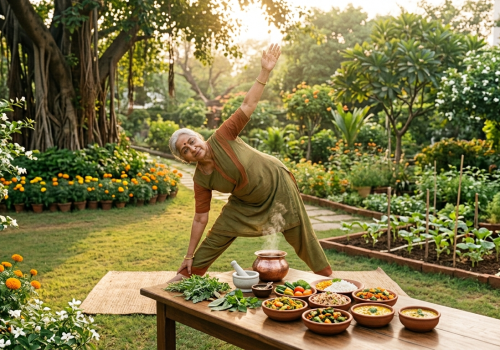
Yoga Parks can:
– Offer easy-to-join group classes.
– Bring families, children, and older adults into movement together in a neutral, non-threatening space.
– Make talk about stress, posture, and basic preventive care part of normal conversation.
An Ayurvedic centre such as Kairali builds on that base, adding layers that are very hard to reproduce in a public park.
1. Clinical Assessment and Customisation
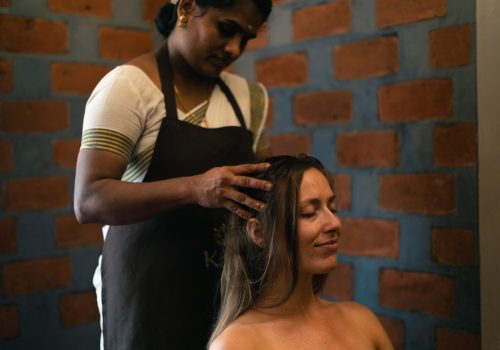
In a park, one teacher usually holds space for a mixed group with differing ages, histories, and conditions. At Kairali, our physicians begin somewhere else: with a detailed consultation that looks at your prakriti (constitutional type), current vikriti (imbalance), digestion, sleep quality, menstrual or hormonal history where it matters, and your stress and work profile.
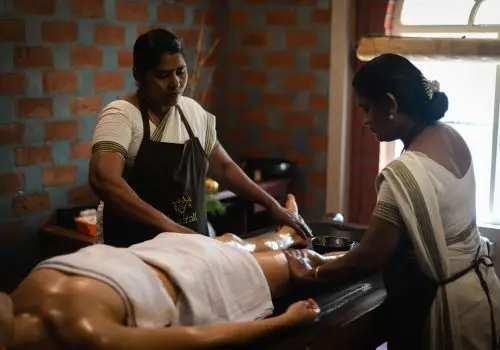
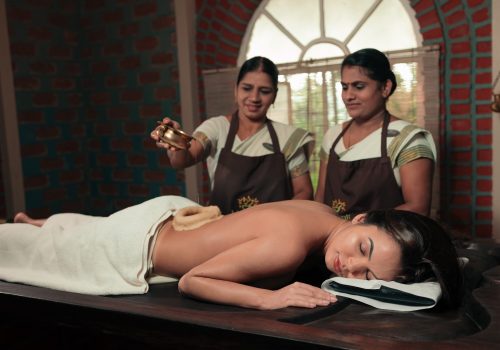
That movement from generic to specific is where Ayurveda (the traditional Indian system of health) becomes very practical. Two regulars from city yoga parks might arrive on the same day: one with Vata-dominant insomnia (light, broken sleep, anxiety, dry skin), the other with Pitta-led acidity (burning sensation, irritability, intolerance to heat). Once they’re with us, their yoga timings, sequences, oils used in Abhyangam (warm oil massage), and daily routines look completely different.
Our physicians routinely tweak details that seem small but aren’t – suggesting that a Vata-aggravated guest skip late-evening park classes once they return home, or asking a Pitta-profile professional who loves power yoga to add cooling pranayama and drop certain heating practices in peak summer. These refinements rarely enter a mixed park class, yet they measurably alter how someone feels over months and years.
2. Controlled Environment
Urban parks come with traffic noise, patchy ground, unpredictable air quality, and constantly shifting crowds. For a nervous system that’s already overstimulated, those factors cap how deeply the body can relax, even in a beautifully taught session.
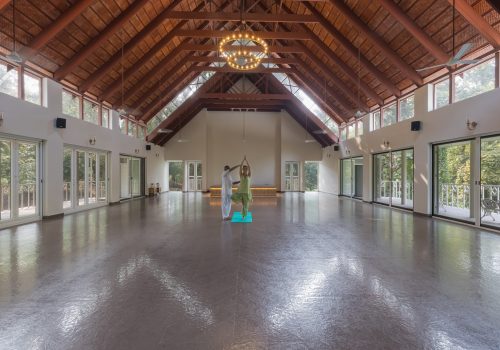
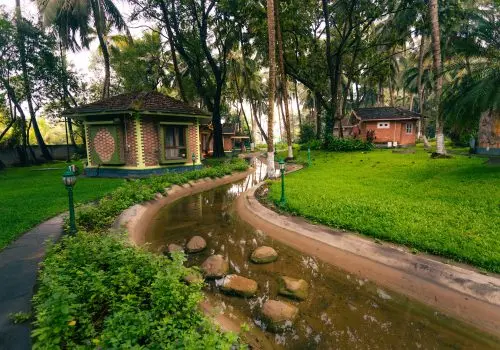
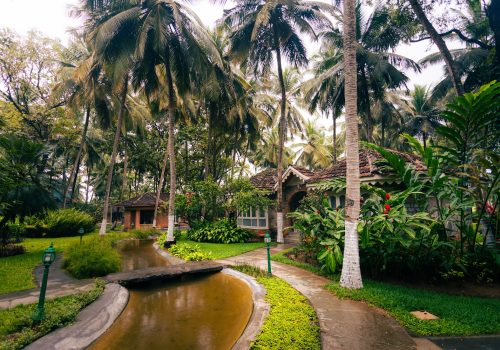
A healing village is designed to take that load off the senses. Pathways are even and familiar. Sound behaves differently when it travels through trees instead of bouncing off concrete. Treatment spaces are set up for steady temperature, low disturbance, and privacy.
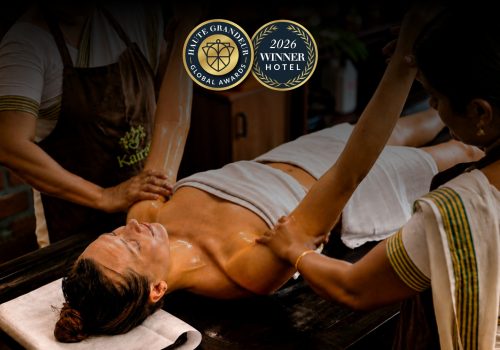
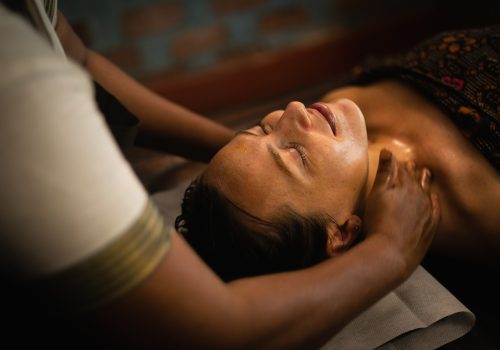
A telling detail: several guests from Germany and France have told us that the silence between sessions feels as powerful as the therapies themselves. They describe it in very practical terms – no horns, no people darting about in the edge of their vision, no inbox calling for attention. That absence of stimulation lets the body respond more fully to programmes like Panchakarma (a classic cleansing and regulation protocol), when our physicians recommend it.
During a recent monsoon, a French guest on a 21-day Panchakarma remarked that the sound of rain on the tiles became a kind of metronome for her day. That steady, predictable rhythm is a very different experience from a hurried park class squeezed between two meetings and a stream of notifications.
3. Integration of Therapies and Daily Routine
By design, a Yoga Park stays anchored in movement, breathwork, and sometimes guided relaxation or meditation. That’s its core strength, and its boundary.
At Kairali, yoga is woven together with:
– Tailored herbal formulations, where our physicians prescribe them.
– Diet plans tuned to Agni (digestive strength) and current season.
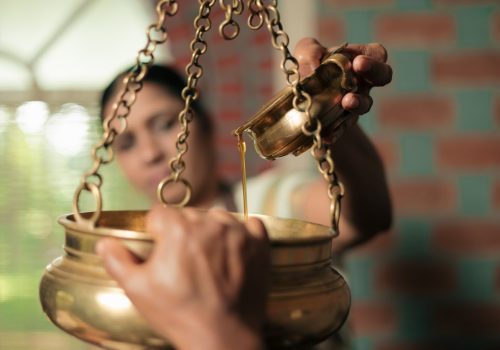
– Oil therapies and other procedures that support the management of specific conditions, from stubborn joint stiffness to recurring migraine patterns.
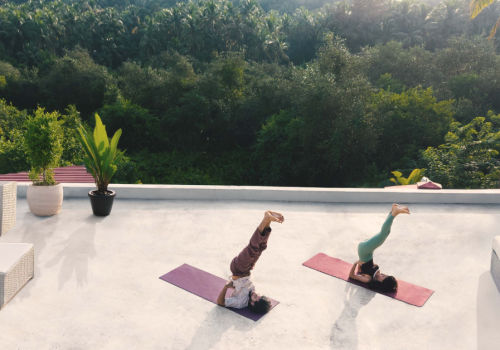
For a guest, this becomes less of a standalone class and more of an integrated rhythm: morning practice that prepares the body for treatment, lunch that’s light enough for digestion to stay steady, afternoon rest when the nervous system is naturally more receptive, and evening sessions that help sleep arrive without a fight.
We notice that guests who already have a yoga habit when they arrive tend to slip into this pattern more easily. Their bodies aren’t shocked by early mornings, and they know the feeling of moving from exertion to rest. They’re also less resistant to changes like earlier dinners, lower screen exposure, and quieter evenings.
How Public Initiatives Change the Guest Profile
For partners in travel, wellness, and corporate health, initiatives like the Yoga Park Portal influence more than just the number of people seeking retreats. They also change the quality of demand.
We’re seeing three clear trends.
1. Better-informed Indian professionals
Many women in their 40s now arrive having already tried park-based yoga for hormonal balance, perimenopausal shifts, or stress. They come with pointed questions about cycle regularity, thyroid support, or sleep, rather than a general wish to “relax”. That clarity gives our team room to design programmes that are both precise and realistic.
2. NRI guests with two-step journeys
A growing number of NRI families first meet yoga through community centres or municipal parks abroad, then look towards more structured work in India. They often choose a healing village as a conscious second step once they’re ready to invest time and resources. For them, the park abroad acts as a kind of orientation: they already know which practices ground them, which stir discomfort, and what they want from a 14- or 21-day stay.
3. European travellers seeking depth, not novelty
For many German- and French-speaking travellers, a few seasons of public-park yoga at home strip away the novelty. They’re not coming to Kerala for a scenic photo or a box to tick. They want credible, supervised programmes over 10–21 days, often in sync with their local therapist or physician. Our team regularly gets pre-arrival notes from European referrers outlining a guest’s routine and medical background, which we then fold into their treatment plan.
Seen this way, public infrastructure doesn’t dilute interest in retreats; it seasons and matures it. People arrive with lived experience instead of vague curiosity.
Opportunities for Collaboration: From CSR to Continuity of Care
The Yoga Park Portal also opens very practical channels for collaboration across sectors.
– CSR and corporate wellness
Companies that support park development through CSR can connect these projects with structured residential programmes for leadership groups or high-stress teams. We’ve watched senior executives engage deeply when a familiar activity (yoga in a park) expands into a more intensive residential reset. The body already knows the shapes and movements; the mind is then freer to explore changes in diet, sleep, and emotional fatigue in a quieter environment.
– Referral ecosystems
Yoga teachers and wellness practitioners who hold classes in these parks can become steady referral partners for more focused Ayurvedic care when their students hit the limits of group, outdoor practice. At Kairali, our physicians often receive notes from such teachers describing patterns – recurrent back pain, migraine episodes, anxiety surges – that haven’t shifted despite consistent attendance. That bridge makes the move from park to healing village a continuation rather than a sharp break.
– Post-stay continuity
Once they leave Kairali, many guests struggle to protect their new habits in dense, noisy cities. If their local park has a dedicated yoga space, it turns into a very practical continuation point. During discharge consultations, our physicians are increasingly prescribing not only herbs and diet, but also a specific pattern of park-based practice: best times of day, intensity levels, and what to skip for their dosha (functional constitution: Vata, Pitta, Kapha).
Put together, a stay at a healing village and a session in a city park aren’t rival products. They’re different points on the same care continuum.
Designing the Next Layer of India’s Wellness Infrastructure
India’s wellness future won’t be built around a single kind of facility. We’re clearly moving towards a layered ecosystem that includes:
– Neighbourhood-level access through Yoga Parks.
– Destination-level depth through healing villages and clinical centres.
– Digital support that ties those experiences together, through shared consultations, records, and follow-up routines.
At Kairali – The Ayurvedic Healing Village, our job is to remain a place where people can step out of their usual context and work steadily on health concerns that need time, structure, and clinical oversight. That also means staying in close conversation with public initiatives that shape how our guests live the other 50 weeks of their year.
If Yoga Parks do well, the guests who walk through our gates will arrive more aware, more engaged, and better prepared. That’s less about competition and more about alignment.
As custodians of a legacy property, our task is to welcome that alignment and to shape programmes, partnerships, and guest journeys that honour where the path often truly begins: with a simple choice to unroll a mat in a public park and take one’s health seriously, one practice at a time.
Website: www.ktahv.com
Call: +91-9555156156