



























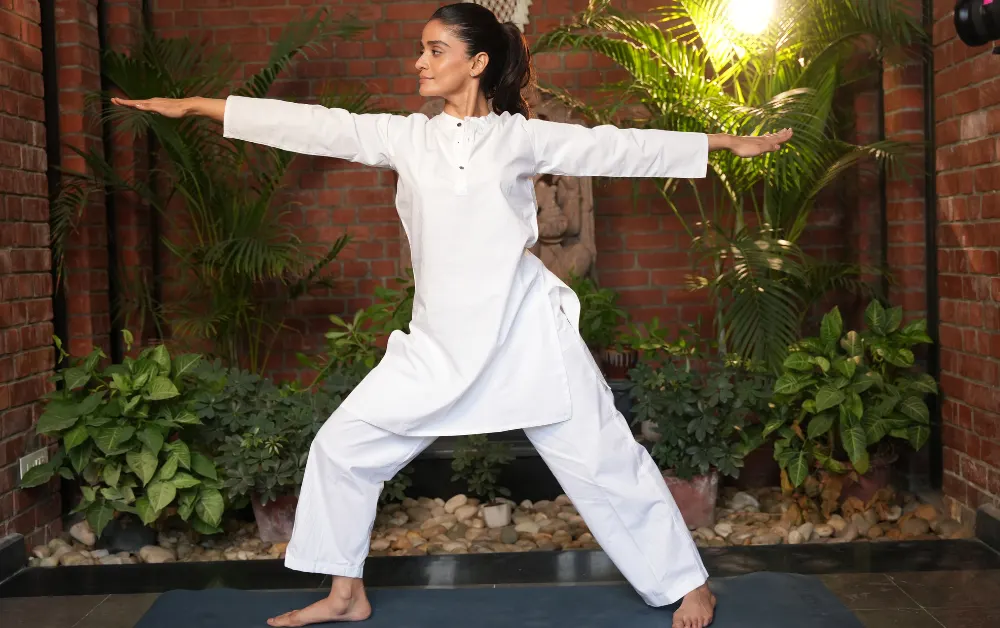

On International Yoga Day 2026, guests gathered for guided yoga sessions at Kairali – The Ayurvedic Healing Village that reflected a simple but increasingly relevant idea: health is not built through intensity alone. It is often sustained through consistency, attention, and daily practice.
Yoga has become a global phenomenon. It is taught in gyms, studios, corporate wellness programmes, schools, and wellness retreats across the world. Yet as yoga’s popularity has expanded, its original purpose is sometimes reduced to flexibility, fitness, or stress relief.
International Yoga Day offers an opportunity to revisit a broader understanding of yoga — one that sits alongside Ayurveda as part of a larger framework for health, self-observation, and long-term wellbeing.
More Than Exercise
For many people, yoga begins as a physical practice. It may be recommended for mobility, relaxation, posture, or general wellbeing. Over time, however, many practitioners discover that yoga’s value extends beyond movement.
In the classical Indian tradition, yoga was never solely about physical fitness. It was understood as a discipline that cultivates awareness, steadiness, and balance. The postures most people associate with yoga today are only one part of a much wider system that includes breathwork, concentration, ethical principles, and self-reflection.
This broader perspective remains relevant in modern life, where distraction, overstimulation, and constant connectivity have become everyday realities.
The Modern Health Conversation
Across healthcare and wellness, there is growing recognition that lifestyle factors influence how people feel on a daily basis. Sleep patterns, stress levels, physical activity, social connection, and daily routines all contribute to overall wellbeing.
Research has increasingly explored yoga’s role in supporting mental wellbeing, mobility, stress management, and quality of life. While outcomes vary between individuals and studies, the wider trend suggests that practices combining movement, breathing, and mindful attention continue to attract scientific and clinical interest.
This does not mean yoga is a universal solution to every health concern.
It does suggest that simple, sustainable practices may play a meaningful role in supporting long-term wellbeing when integrated into a broader health strategy.
Yoga and Ayurveda: A Shared Foundation
Yoga and Ayurveda developed alongside one another and share many underlying principles.
Both traditions place importance on individual differences rather than one-size-fits-all approaches. Both recognise that health involves more than the absence of symptoms. And both encourage daily habits that support physical, mental, and emotional balance over time.
Within Ayurveda, yoga is often viewed as one of several practices that can help individuals cultivate greater awareness of their own habits, routines, and responses to the environment around them.
This emphasis on observation and self-awareness is one reason the two systems remain closely connected today.
A Day of Practice, Not Performance
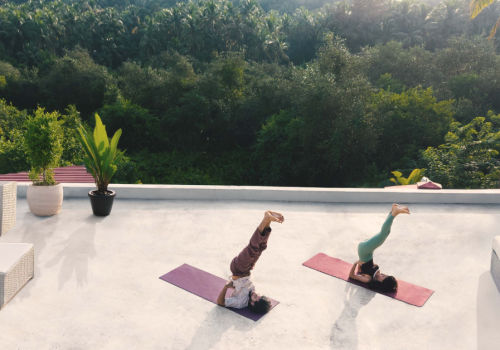
The yoga sessions held on International Yoga Day 2026 at Kairali focused on participation rather than performance.
Guests came together to engage in guided practices that encouraged movement, breath awareness, and moments of quiet reflection. The emphasis was not on achieving advanced postures or demonstrating physical ability. Instead, the sessions highlighted accessibility, consistency, and mindful engagement.
For many participants, the experience served as a reminder that yoga’s value often lies in what it asks us to do less of rather than more: less rushing, less distraction, and less reactivity.
Why Yoga Continues to Endure
International Yoga Day generates global conversations every year, yet the enduring appeal of yoga may be surprisingly straightforward.
It requires very little equipment. It can be adapted to different ages and abilities. And its core practices remain accessible even in a world increasingly dominated by technology and constant stimulation.
While wellness trends come and go, yoga continues to resonate across cultures because it addresses something fundamentally human: the need for moments of attention, stillness, and connection.
That relevance is perhaps even greater today than it was a decade ago.
As International Yoga Day 2026 reminded participants around the world, yoga is not simply a physical practice. It is a framework for cultivating awareness in daily life.
And in an age defined by speed, that may be one of its most valuable contributions.
Watch the full video: https://youtube.com/shorts/h6q1ICxpsS4?si=vYwriT_g2agNr-iR
International Yoga Day is observed annually on June 21 to raise awareness about yoga and its role in supporting physical, mental, and emotional wellbeing. It encourages people worldwide to incorporate yoga into their daily lives.
No. While yoga includes physical postures, it is traditionally a broader practice that also incorporates breathing techniques, concentration, and self-awareness. Many people use yoga to support both physical and mental wellbeing.
Yoga and Ayurveda developed alongside one another in India and share a common focus on balance, lifestyle, and individual wellbeing. Ayurveda provides a broader framework for health, while yoga is one of the practices traditionally used to support it.
Yes. Yoga can be adapted to different ages, fitness levels, and levels of experience. Many beginner-friendly practices focus on gentle movement, breathing, and relaxation rather than advanced postures.