













Ashtanga yoga is a structured style of practice built around a fixed sequence of postures linked with steady, controlled breathing. Each movement is coordinated with an inhale or exhale, so the whole session becomes a continuous flow rather than a collection of separate poses.
The Sanskrit word ashtanga joins ashta (eight) and anga (limbs), pointing to the eightfold path of yoga in the Yoga Sutras of Patanjali.
An Ashtanga class usually leans on three of these eight limbs:
– Pranayama – conscious regulation of the breath
– Asana – physical postures
– Dhyana – meditation or sustained, focused awareness
The practice can be strong and physically demanding. But underneath the muscular work, its aim is mental clarity, steadiness and a calmer nervous system, rather than fitness or performance alone.
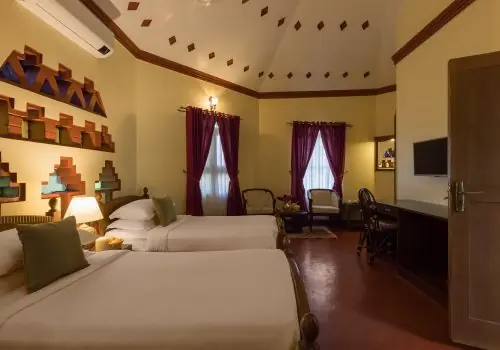
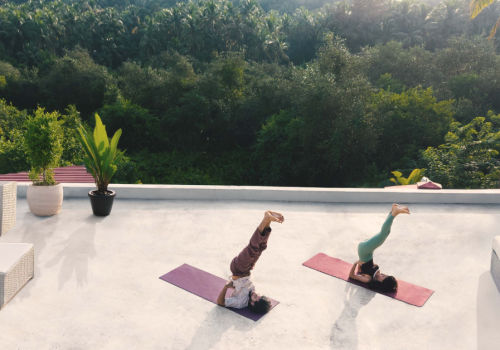
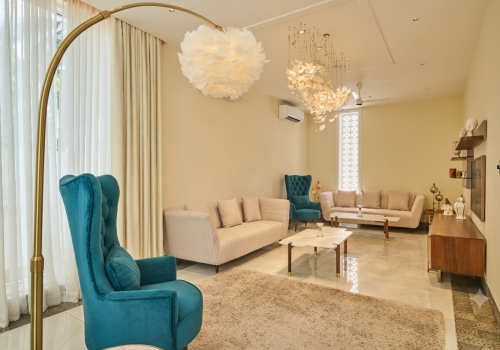
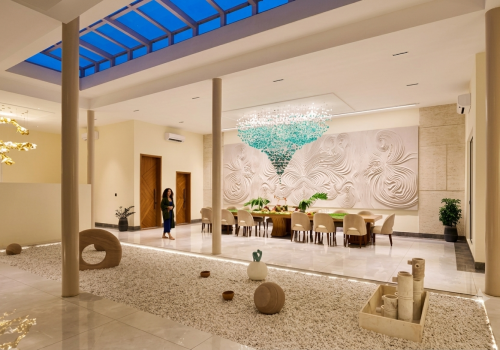
At Villa Raag in Goa, Ashtanga is approached as a precise, breath-led discipline. The pacing is unhurried, the sequencing is deliberate, and the visual quiet of the villa is used on purpose so the practice supports slow, design-led living instead of competing with it.
Origins of Ashtanga yoga
Tirumalai Krishnamacharya (1888–1989)
Ashtanga yoga traces its roots to T. Krishnamacharya, often described as a central figure in shaping modern postural yoga. Teaching in India as both a yoga instructor and Ayurvedic physician, he shifted emphasis from mainly static, seated practices to dynamic sequences that engaged the whole body in coordinated movement.
Krishnamacharya drew from classical yoga texts and from his clinical understanding of how bodies work. He placed equal weight on:
– breath and clear postural alignment
– individual constitutions (similar to *dosha* types in Ayurveda)
– weaving together physical, mental and spiritual disciplines
Sri K. Pattabhi Jois (1915–2009)
Sri K. Pattabhi Jois studied with Krishnamacharya from 1927 until 1953. He organised what he’d absorbed into the form now widely recognised as Ashtanga yoga.
Jois’s key contributions included:
– arranging postures into progressive, set series
– emphasising vinyasa – synchronised breath and movement between poses
– integrating sun salutations (*Surya Namaskar*) as a core foundation
In 1948 he founded the Ashtanga Yoga Research Institute in Mysore. Over the following decades, visits from European and American students grew into workshops abroad, which carried Ashtanga into studios and retreat centres worldwide.
The six Ashtanga series
Ashtanga yoga is organised into six progressive sequences:
1. Primary Series (Yoga Chikitsa) – often translated as “yoga therapy”. This sequence highlights forward folds, hip opening and foundational strength. It’s where most people start, and many remain here, refining it for years.
2. Secondary Series (Nadi Shodhana) – shifts focus towards deeper backbends and the “cleansing” of nerve channels (*nadi*).
3. Advanced Series A–D (Sthira Bhaga) – four demanding sequences that call for high levels of strength, mobility and balance. These are reserved for experienced practitioners and are usually taught one-to-one or in very small groups.
All six series share a common underlying architecture:
– Opening – opening mantra and several rounds of sun salutations
– Standing postures – grounding, alignment-focused poses
– Seated postures – forward folds, twists, hip-focused work and strength holds
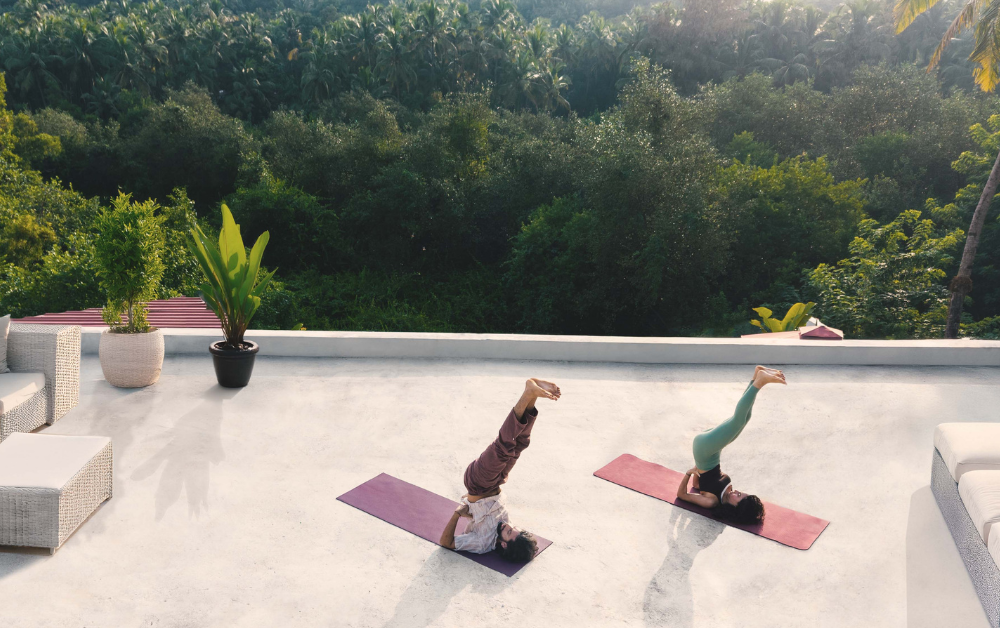
– Closing sequence – inversions, calming postures and a final rest or meditation
Most students stay with the Primary Series for a long stretch, often working more on breath and alignment than on collecting advanced shapes. At places like Villa Raag, visiting teachers use this shared framework as a base but adjust range, pacing and emphasis according to each guest’s level, mobility and day-to-day energy instead of enforcing a rigid syllabus.
Key components of practice
Mantra
The word mantra joins manas (mind) and tra (tool). It points to a sound, word or short phrase repeated to steady attention and help the mind settle.
In Ashtanga, many classes begin with a brief opening mantra and end with a closing chant. Practitioners often repeat Om, regarded as a primordial sound, typically three or more times to mark the shift into practice or rest. The vibration is usually felt across the chest, throat and face, and people often notice it as a gentle cue for the nervous system to slow down from everyday pace into more focused work.
Sun salutations (Surya Namaskar)
Surya means sun and namaskar means a bow or respectful greeting. Ashtanga relies on two main sun salutation patterns:
– Surya Namaskar A – a shorter cycle that links standing, forward fold, plank, low push-up, upward-facing backbend and downward-facing dog.
– Surya Namaskar B – a slightly longer cycle that adds extra standing postures and stronger leg work, such as repeated chair poses.
These are repeated several times at the beginning of practice to warm muscles, mobilise joints and synchronise breathing with motion. After a few rounds, many people notice heat across the shoulders and thighs, a more even inhale–exhale rhythm and a clearer, more grounded sense of awareness.
How Ashtanga feels in the body
People sometimes assume Ashtanga is only manageable for very flexible, athletic bodies. In reality, its effect is more about regular, measured effort than extreme range of motion.
Common experiences include:
– Gentle internal heat and circulation, especially from repeated sun salutations and standing poses
– Muscular fatigue, as strength gradually builds in the legs, core and shoulders
– Brief moments of stability or ease, when breath, gaze and alignment click into a single, steady rhythm
At Villa Raag, experts often notice that guests who already have a breath-aware movement practice—whether Ashtanga or a simpler routine—tend to settle faster into yoga routine and regular sleep–wake patterns. At Villa Raag, Ashtanga is offered in a way that regulates rather than overloads the nervous system, with explicit permission to rest or modify when the body signals it has reached an honest edge for that day.
Common misconceptions
“Ashtanga is only for advanced practitioners”
The full series are demanding, yet the structured layout of Ashtanga actually makes it easier to break things down. Thoughtful teachers adapt:
– range of motion
– length of time spent in each pose
– use of props, support and rest
For many people, a shorter, well-supported slice of the Primary Series repeated regularly does more good than forcing the complete sequence with strain and held breath.
“The sequence must never change”
Traditionally, the order of postures is fixed to build specific patterns of strength, flexibility and focus. In modern retreat and therapeutic contexts, though, sequences are often adjusted for available time, group capacity and safety. That kind of adaptation still respects the heart of the method—repetition, breath-led pacing, clear progression—while recognising real constraints like jet lag, work burnout, post-surgical recovery, or lifetime joint limits.
A quiet, clinically aware approach will protect joint health, breath quality and next-day energy above strict loyalty to the full classical sequence.
Ashtanga yoga at Villa Raag
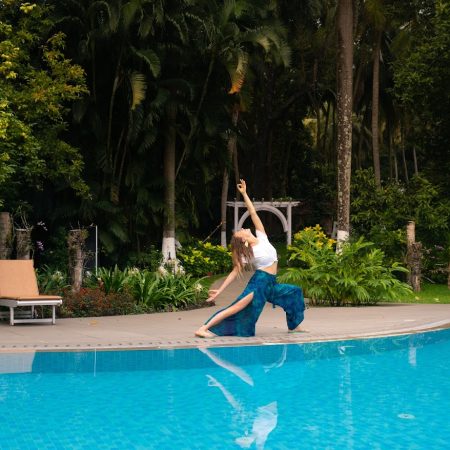
In a design-led villa, Ashtanga becomes a way of shaping the rhythm of the day as much as the body itself.
– Morning: steady sun salutations and standing work, often in soft natural light with minimal visual distraction so attention can narrow to breath and movement. The body warms gradually, thoughts thin out, and hunger for breakfast tends to arrive in a more regulated, predictable way.
– Late afternoon: shorter, gentler sections of the Primary Series, paired with a longer closing sequence of forward folds, simple inversions and rest. This helps guests ease out of screen time and travel mode, preparing the system for a quieter evening and deeper sleep.
For those exploring Ayurveda alongside yoga, Ashtanga’s breath-led cadence pairs naturally with daily routines (*dinacharya*) and personalised bodywork. When practice is placed thoughtfully —say, at least two to three hours after eating—it can support digestion, stabilise mood and help anchor a consistent sleep pattern. The emphasis leans away from intensity for its own sake toward clear, repeatable patterns the body can recognise and gradually trust.
Website: www.villaraag.com
Call: +91-9555156156