






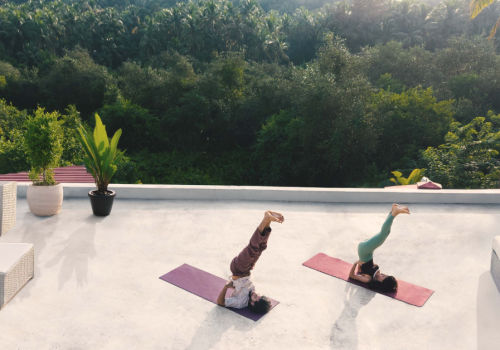

























Yoga may help us feel calmer, sleep better and respond more thoughtfully to daily pressures. But does it actually lower cortisol? The science offers a more interesting answer.
Cortisol has become one of the most talked-about hormones in wellness. From morning routines to social media advice, there is growing interest in ways to lower cortisol naturally.
Yoga often appears near the top of that list.
A Yoga Journal article titled “5 Ways Your Yoga Practice Can Lower Your Cortisol Levels and Help You Stress Less” reflects this interest in using yoga to manage everyday stress.
But there is an important distinction worth understanding. Feeling less stressed and having lower cortisol levels are not always the same thing.
Research suggests that yoga can help people manage stress. Whether it consistently lowers cortisol is a more complicated question.
Ayurveda offers another perspective: rather than focusing on a single hormone, it considers how daily routines, rest, movement, food and sleep contribute to a person’s overall state of balance.
What Is Cortisol, and Why Does It Matter?
Cortisol is a hormone produced by the adrenal glands. It plays an important role in several functions, including metabolism, immune regulation and the body’s response to stress.
It is often called the stress hormone, but cortisol is not inherently harmful.
Under normal circumstances, cortisol follows a daily rhythm. Levels are generally higher in the morning and decline towards evening. Cortisol also helps the body respond when a situation requires greater alertness or energy.
Problems can arise when stress becomes persistent and the body’s normal regulatory processes are disrupted.
However, not everyone experiencing stress has abnormally high cortisol. Stress can affect sleep, mood, concentration and physical comfort even when hormone measurements remain within normal ranges.
This is why improving stress management matters more than simply trying to make a cortisol number smaller.
Does Yoga Actually Lower Cortisol?
The evidence for yoga and stress reduction is encouraging, although it is not definitive.
A 2024 systematic review published in Frontiers in Psychiatry examined 13 randomised controlled trials involving 1,026 participants. The researchers found evidence that yoga could help reduce perceived stress, but rated the evidence for that outcome as low quality.
Another randomised trial, published in Psychoneuroendocrinology, examined an eight-week Hatha yoga programme. Participants reported less momentary stress, yet their daily salivary cortisol patterns did not significantly change compared with the control group.
These findings suggest that yoga may improve how people experience and respond to stress without necessarily producing measurable changes in cortisol.
That distinction matters.
A successful yoga practice does not need to demonstrate a hormone reduction to be valuable. Better sleep, improved body awareness and a calmer response to daily pressures are meaningful outcomes in their own right.
5 Ways Yoga May Help You Manage Stress
Yoga is more than physical exercise. It brings movement, breathing, attention and rest into a single practice. Each component may contribute to the way we experience stress.
1. Gentle Movement Can Release Physical Tension
Stress often appears in the body as muscle tightness, shallow breathing or general restlessness.
Gentle yoga postures encourage controlled movement and greater awareness of areas that feel tense.
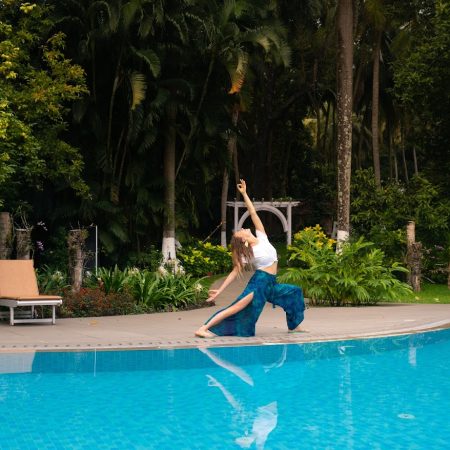
Practices such as Balasana (Child’s Pose), Marjaryasana-Bitilasana (Cat-Cow movement) and supported stretches may provide a comfortable starting point.
The purpose is not to achieve difficult positions. It is to move without unnecessary strain and recognise how the body responds.
For someone already feeling exhausted, a gentle session may be more appropriate than an intense practice.
2. Slow Breathing May Support Relaxation
Breathing is one of the most accessible parts of yoga.
During stressful moments, breathing may become faster or less regular. Slowing the breath gently can help create a sense of steadiness.
In yoga, breath regulation is known as Prāṇāyāma (the regulation of breath).
Simple practices that involve comfortable, unforced breathing may support relaxation and attention.
One traditional example is Nāḍī Śodhana, commonly known as alternate-nostril breathing. It can be introduced gradually under appropriate guidance.
Forceful breathing techniques or prolonged breath retention are not necessary for stress management and may be unsuitable for some people.
The emphasis should be on comfort, not performance.
3. Mindful Movement Can Interrupt Repetitive Thinking
Stress is not always caused by what is happening in the present moment. Sometimes it is sustained by repeatedly thinking about what might happen next.
Yoga encourages attention to immediate physical experiences: the movement of the body, contact with the floor and the rhythm of breathing.
This attention may make it easier to recognise repetitive thought patterns without becoming completely absorbed in them.
Mindful yoga is not about forcing the mind to become empty.
It is about practising the ability to notice distraction and gently return attention to the present activity.
Over time, this can become a useful skill beyond the yoga mat.
4. Restorative Practices Make Space for Recovery
Not every yoga session needs continuous movement.
Restorative practices use comfortable, supported positions that allow the body to rest without significant muscular effort.
Śavāsana (Corpse Pose) is one familiar example. Although physically simple, it encourages stillness and awareness after movement.
Yoga Nidrā, a guided relaxation practice, offers another approach to structured rest.
These practices may be particularly appealing to people who find it difficult to stop thinking about work or daily responsibilities.
However, relaxation responses vary. Some people may find prolonged stillness uncomfortable, particularly when experiencing anxiety or trauma-related distress. A qualified instructor can help adapt the practice.
Rest is a legitimate part of yoga, rather than a reward for completing more demanding postures.
5. A Consistent Practice May Support Better Daily Habits
One of yoga’s most practical benefits may come from establishing a regular routine.
A short period of movement and quiet attention can create a useful transition between different parts of the day.
Morning yoga may provide a structured beginning. A gentle evening session may help someone move away from work-related activity before bedtime.
Consistency matters more than trying to complete an elaborate routine occasionally.
The most useful practice is one that fits a person’s physical abilities, schedule and needs.
There is no single yoga sequence that has been established as the best method for lowering cortisol.
How Ayurveda Understands Stress and Daily Balance
Ayurveda does not describe stress through cortisol or other modern hormone measurements.
Instead, it understands health through individual constitution, functional balance, digestion, sleep and daily behaviour.
One important Ayurvedic concept is Dinacaryā (daily routine), which emphasises regular habits that support physical and mental wellbeing.
Another is Vata dosha, traditionally associated with movement and change. Within Ayurvedic theory, patterns involving restlessness, irregular sleep and excessive activity may be considered in relation to Vāta.
These are traditional interpretive concepts, not modern medical diagnoses or direct explanations of cortisol regulation.
The practical connection between yoga and Ayurveda lies in their shared emphasis on routine, appropriate activity and rest.
From an Ayurvedic perspective, the same practice may not suit everyone equally. Age, physical condition, energy levels and individual tolerance influence how movement and relaxation are approached.
A demanding yoga routine may suit one person, while another may benefit more from gentle movement and supported rest.
The objective is not to push the body towards an externally defined ideal, but to develop habits that can be maintained comfortably.
Bringing Yoga and Ayurveda Together at Kairali
Yoga can be practised at home, but guided practice may help people understand which movements and breathing techniques are appropriate for them.
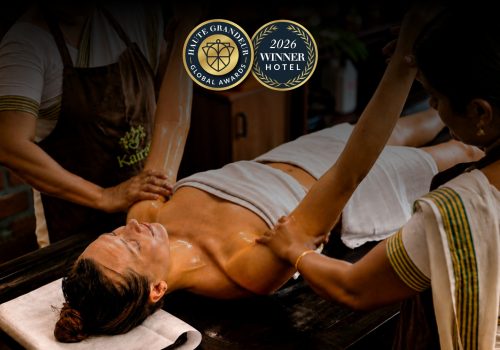
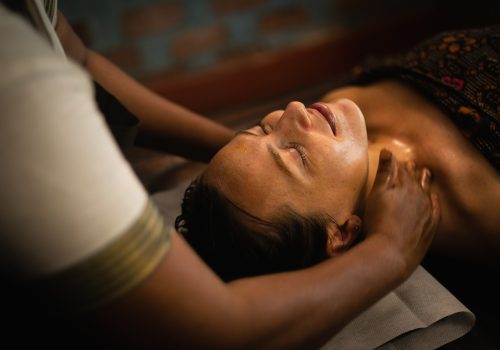
At Kairali – The Ayurvedic Healing Village, in Palakkad, Kerala, yoga forms part of a broader approach that includes Ayurvedic consultations, traditional practices, meditation and attention to daily routines.
The property is an NABH-accredited Ayurvedic hospital-resort, with opportunities for guests to participate in yoga and Ayurveda retreats.
The value of such an environment lies in having dedicated time to practise, rest and understand how healthier routines might continue after returning home.
It should not be understood as a promise of reduced cortisol levels or a substitute for medical care.
What Should You Remember About Yoga and Cortisol?
Yoga may help people feel less stressed, become more aware of physical tension and establish healthier daily routines.
But there is not enough consistent evidence to claim that particular yoga poses reliably lower cortisol in everyone.
A useful practice does not need to be complicated. Gentle movement, comfortable breathing, mindful attention and adequate rest can provide a sensible foundation.
Anyone with significant medical conditions, persistent symptoms or physical limitations should seek appropriate professional advice before beginning a new practice.
The most important question may not be whether yoga lowers a particular hormone.
It may be whether practising regularly helps you move through everyday life with greater comfort, attention and steadiness.
Website: www.ktahv.com
Call: +91-9555156156






Leave a Reply