




















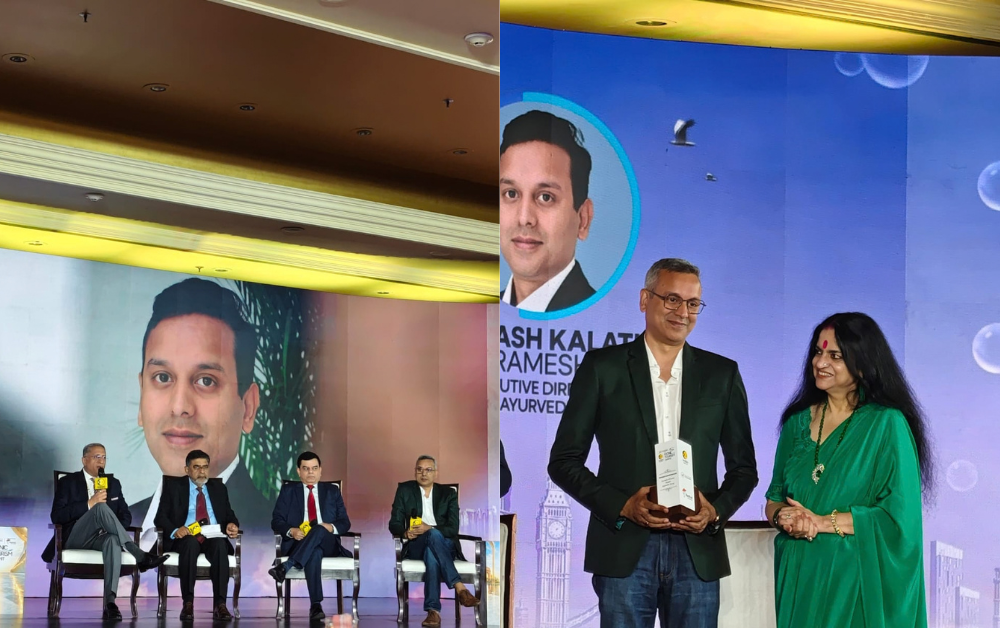
At the WION Iconic Tourism Summit & Awards 2026, a discussion on “Tech frontiers reshaping journeys” placed technology at the centre of tourism’s future. For Ayurveda and wellness travel, however, the more useful question may be where technology adds value — and where human judgement still matters more.
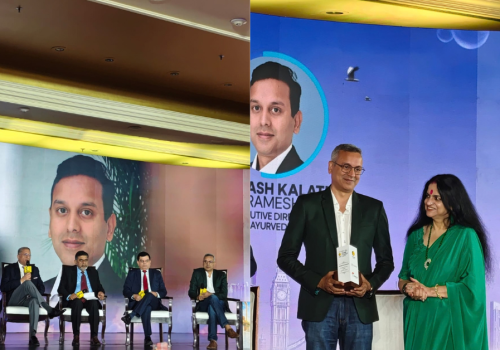
On 23 September 2026, policymakers, diplomats and leaders from tourism, aviation, hospitality and technology gathered in New Delhi for the WION Iconic Tourism Summit & Awards 2026.
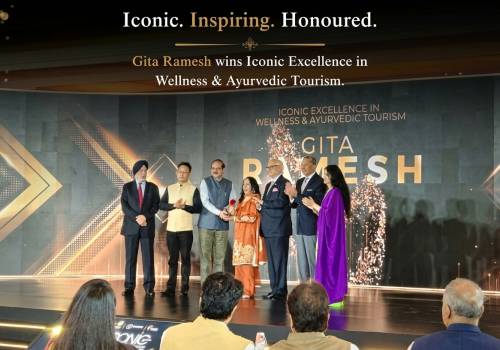
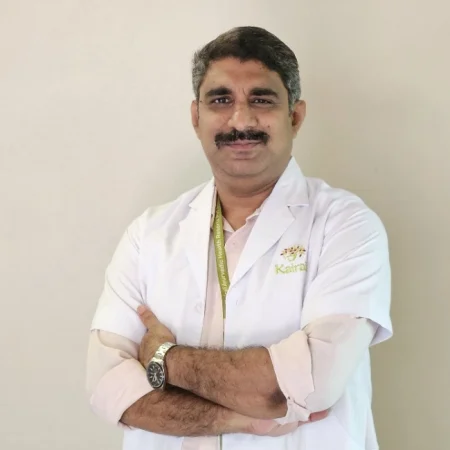
Among the subjects shaping the summit were digital transformation, artificial intelligence, mobility and the use of technology to improve the traveller experience. Abhilash K. Ramesh, Executive Director of Kairali Ayurvedic Group, participated in the discussion “Tech frontiers reshaping journeys”, bringing the wellness and Ayurveda sector into a conversation that is increasingly relevant to every part of tourism.
The premise is difficult to dispute. Technology is changing travel long before a traveller reaches an airport or checks into a hotel.
Artificial intelligence can help people compare destinations, build itineraries and navigate unfamiliar information. Digital systems can make visas, payments and bookings less cumbersome. Data can help hospitality businesses understand preferences more precisely. Technology is also changing how destinations and wellness providers are discovered in the first place.
But wellness travel presents an interesting test of how far this logic should go.
The best technology may not be the technology that replaces the most human interaction. It may be the technology that removes friction around the parts of a journey that do not need to be human, leaving more room for the parts that do.
The wellness journey now begins before the journey
For an international traveller considering Ayurveda in India, the first encounter is increasingly digital.
They may begin with a Google search, a travel publication, a video, an AI assistant or an online review. Before speaking to a physician or arriving at a retreat, they may already have researched Panchakarma, compared locations, checked practitioner credentials and read competing explanations of what Ayurveda can and cannot realistically offer.
That changes the responsibility of wellness providers.
Technology can make information easier to access, but easier access does not automatically mean better information.
Ayurveda is particularly vulnerable to this distinction. Online explanations often reduce a complex medical system to quick dosha quizzes, generic food lists or universal wellness prescriptions. AI can reproduce those simplifications at much greater speed if the information behind it is weak.
So the challenge is not simply to digitise Ayurveda.
It is to digitise it without flattening it.
Personalisation is not the same as individualisation
One of the most attractive promises of travel technology is personalisation.
A platform can remember that a traveller prefers vegetarian food, dislikes early flights and wants quieter accommodation. An AI travel assistant can assemble those preferences almost instantly.
That kind of personalisation is useful.
Ayurvedic care, however, asks a different set of questions.
A qualified practitioner considers constitution, current imbalance, digestion, sleep, age, season, medical history and other factors before recommending a course of care. Two guests requesting the same programme may therefore receive different recommendations.
Technology can assist that process. It can organise information, improve continuity, simplify documentation and make communication easier before and after travel.
But collecting more data is not identical to making a clinical judgement.
That distinction matters as wellness tourism becomes more technologically sophisticated.
The danger is not that technology will enter Ayurveda. It already has, as it has entered virtually every part of contemporary healthcare and hospitality.
The danger is assuming that an algorithmic recommendation and an individual clinical assessment are interchangeable.
They are not.
Technology should remove friction, not judgement
There is a practical case for substantially more technology around wellness travel.
International guests frequently have questions well before arrival: what a programme involves, how much time they need, what records to carry, what meals are provided, what the daily schedule looks like, how airport transfers work, and whether a particular retreat follows recognised standards.
Much of that information can be made clearer digitally.
A well-designed system can also help a traveller understand the difference between a clinically supervised Ayurvedic programme and a spa package using Ayurvedic terminology.
This is particularly important for international visitors unfamiliar with how Ayurveda is practised in India.
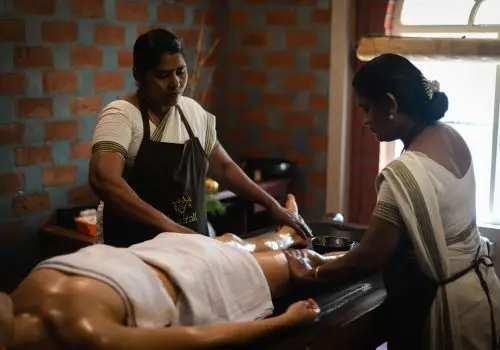
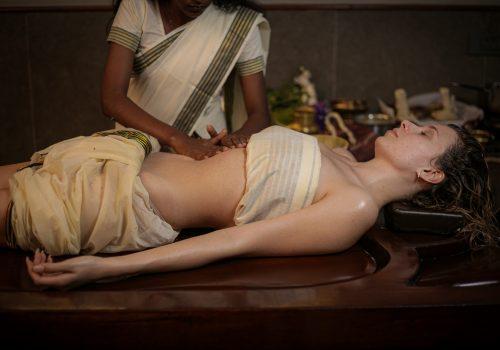
At Kairali, The Ayurvedic Healing Village in Kerala, for example, Ayurveda is delivered within an NABH-accredited Ayurvedic hospital setting. For a prospective traveller, making that distinction visible and understandable online is valuable before any booking decision is made.
Technology can therefore improve transparency as much as convenience.
That may ultimately be one of its most important contributions.
A traveller should be able to understand who will assess them, what qualifications practitioners hold, what a programme involves and where the limits of wellness claims lie before crossing continents for care.
AI can answer faster. It still needs better questions.
Artificial intelligence is likely to become one of the strongest forces shaping travel discovery.
Increasingly, people will not search through dozens of webpages themselves. They will ask an AI system to compare destinations, recommend retreats, build an itinerary or explain the difference between two forms of wellness travel.
For Ayurveda, this creates both an opportunity and a problem.
The opportunity is accessibility.
A person who might never open a classical Ayurvedic text can ask a direct question and receive an explanation in seconds.
The problem is confidence without context.
An AI system can provide a fluent answer even when the underlying source material is incomplete, promotional or medically weak. In a field where exaggerated claims already circulate widely, speed can amplify poor information just as effectively as good information.
For credible Ayurveda providers, the response should not be to reject AI. It should be to improve the quality of information AI systems and travellers can find.
That means clearer explanations of procedures. Better documentation of practitioner standards. Transparent credentials. Evidence-aware discussion of health claims. And an explicit willingness to say where evidence remains limited.
Technology makes information easier to distribute.
It does not relieve institutions of the responsibility to make that information accurate.
The future of wellness travel may be more digital and more human
There is sometimes an assumption that technology and traditional medicine sit on opposite sides of a divide.
That framing is not especially useful.
A traveller can use AI to research Ayurveda, complete administrative information digitally, communicate with a destination across time zones and receive well-organised pre-arrival guidance while still expecting the central clinical encounter to involve a trained practitioner.
Those things are not contradictory.
In fact, used carefully, technology can protect the human part of the experience by removing unnecessary administrative friction around it.
The stronger question for wellness tourism is therefore not, “How much can we automate?”
It is, “What deserves automation, and what deserves attention?”
Booking confirmations deserve automation.
Routine translation can benefit from automation.
Travel logistics can become substantially easier through technology.
Clinical judgement deserves attention.
Listening deserves attention.
Understanding why two people with apparently similar concerns may need different approaches deserves attention.
The future of travel will undoubtedly involve more AI, more data and more connected systems. The WION summit’s focus on technology reflects a wider shift already visible across international tourism. The industry is moving from debating whether technology will reshape travel to deciding how it should do so.
For Ayurveda, that distinction is especially important.
The goal should not be to make a centuries-old medical system appear technologically fashionable. Nor should technology be treated as a threat to tradition simply because it is new.
The useful middle ground is much more practical: use technology where it improves access, clarity, safety and continuity, while preserving professional judgement where the individual cannot be reduced to a set of preferences on a screen.
Travel may become increasingly intelligent.
Wellness travel will be better if it remains attentive as well.
About the summit: The WION Iconic Tourism Summit & Awards 2026 was held in New Delhi on 23 September 2026, bringing together policymakers, diplomats and leaders from tourism, aviation, hospitality and technology. Its agenda included visa policy, mobility, digital transformation and the growing role of artificial intelligence in traveller experiences.





Leave a Reply