











One Pose, Practised Slowly: Malasana at Villa Raag
Yoga does not always need a long sequence or an ambitious final posture. Sometimes one familiar pose, given enough time and attention, can become the practice.
Malasana, often called the yogi squat, is a useful example. It asks for mobility through the hips and ankles, awareness through the spine, and enough patience to adjust the pose to the body you have today.
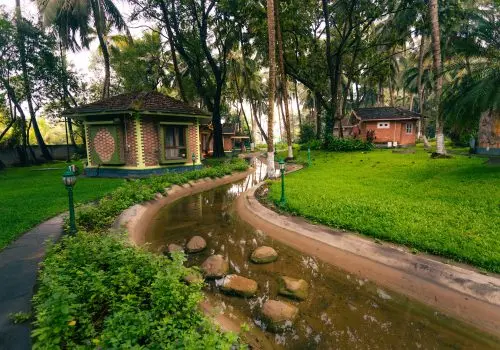
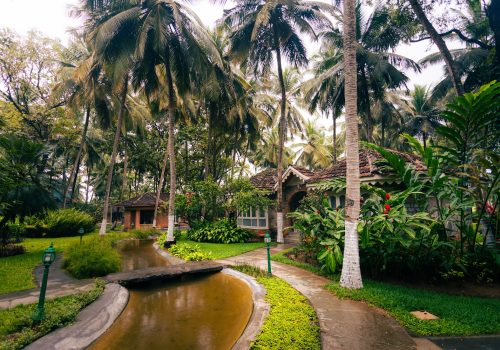
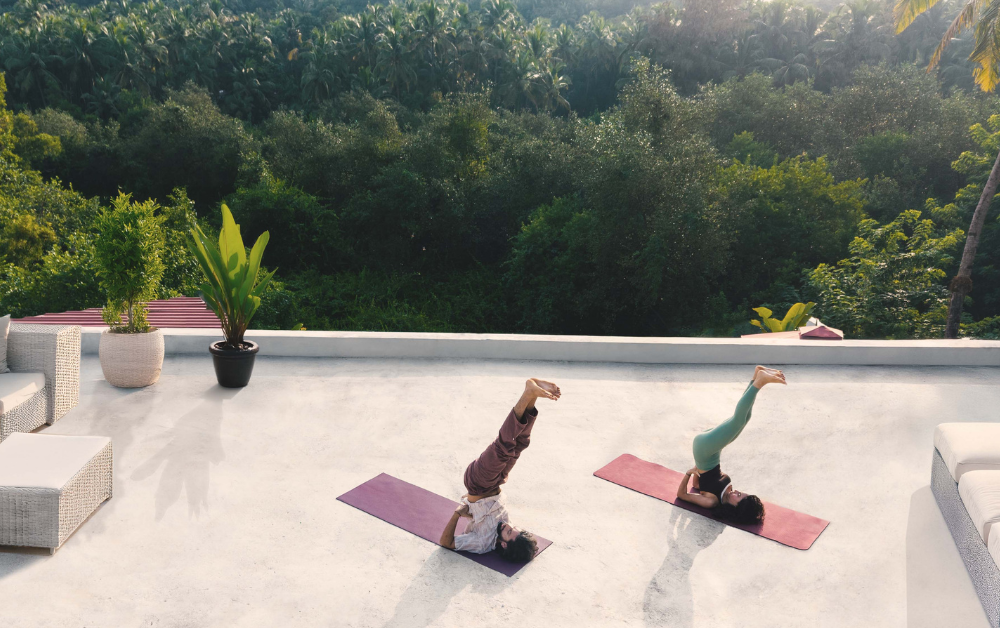
At Villa Raag in Agonda, that unhurried approach feels especially appropriate. Yoga can sit naturally within the day rather than becoming another item to complete.
Start with comfort, not depth
Stand with the feet a little wider than hip-width and turn the toes out to a comfortable angle. Bend the knees and lower into a squat only as far as you can while staying steady.
If the heels lift, place a folded towel or blanket underneath them. If the squat feels too demanding, sit onto a yoga block or bolster. Bring the palms together at the chest if that feels natural, and allow the spine to lengthen rather than forcing the body lower.
The aim is not to reproduce somebody else’s shape. It is to find a version in which you can breathe comfortably and remain attentive.
Let the pose become an observation
Once the basic shape feels stable, notice the smaller details.
Are you gripping the toes? Are the shoulders rising? Is the breath becoming hurried? Are you forcing the knees wider simply to make the pose look deeper?
These observations are part of yoga too. A supported Malasana can be more useful than a deeper version held with strain.
Stay for a few comfortable breaths, then rise slowly. Repeat if the body feels good.
Use support without treating it as a compromise
Props can make Malasana more accessible and more precise.
A folded blanket beneath the heels can help when ankle mobility is limited. A block or bolster beneath the hips reduces the demand of the full squat. A wall can offer additional steadiness while you explore the position.
None of these changes makes the practice less complete. They allow the posture to meet the practitioner rather than asking the practitioner to force a particular shape.
If you feel sharp pain, instability or unusual discomfort, come out of the pose rather than pushing through it. Anyone managing an injury, recovering from surgery or navigating a condition that affects movement should seek appropriate professional guidance before attempting unfamiliar postures.
Why a single pose can suit a slower stay
One of the pleasures of practising yoga away from a busy routine is that there is less pressure to fit everything in.
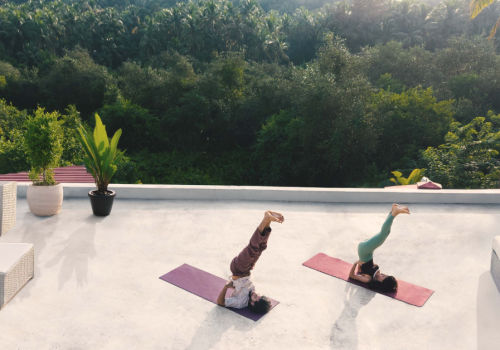
At Villa Raag, a practice might be a longer session. It might also be a few deliberate movements before breakfast, a quiet pause later in the day, or several breaths in one posture while the pace outside the mat remains equally unhurried.
Malasana works well in that spirit because it rewards attention more than performance. You can explore the feet, ankles, hips, spine and breath without needing to turn the practice into a challenge.
Yoga without a grand finale
There is a tendency to judge yoga by what the final pose looks like. A slower practice offers another measure: how closely you were paying attention.
Malasana can be deep or supported, held briefly or explored for longer. What matters is that the posture remains steady enough for you to notice what is happening rather than simply endure it.
In Agonda, where Villa Raag is shaped around yoga, quiet and a slower coastal rhythm, that feels like the more interesting practice: fewer poses, less performance, more presence.
Website: www.villaraagl.com
Call: +91-9555156156




Leave a Reply