






















Why Dhanvantari Day continues to matter, and how Kairali’s annual observance reflects the principles of traditional Ayurvedic care.
Dhanvantari Day is more than a date on the Hindu calendar. It is an occasion to reflect on the importance of health, the responsibility of those who practise medicine, and the place of Ayurveda in everyday life.
Celebrated on Dhanteras, just before Diwali, Dhanvantari Jayanti honours Lord Dhanvantari, traditionally revered as the divine physician and a central figure in Ayurveda’s history.
At Kairali – The Ayurvedic Healing Village in Palakkad, Kerala, the annual observance of Dhanvantari Day holds particular meaning. It provides an opportunity to recognise the medical tradition that informs the village’s approach to Ayurvedic care.
Who Is Lord Dhanvantari, and Why Is He Important to Ayurveda?
In Hindu tradition, Lord Dhanvantari is associated with the origin and transmission of Ayurvedic knowledge.
According to the account of Samudra Manthana, the churning of the cosmic ocean, Dhanvantari emerged carrying a vessel of amṛta (nectar of immortality). His appearance came to symbolise the importance of health and the preservation of life.
Dhanvantari is also closely associated with the classical medical tradition of Ayurveda, particularly its teachings on the study of the human body and the practice of medicine.
For Ayurvedic practitioners, Dhanvantari represents more than a religious figure. He is a symbol of the knowledge, discipline and responsibility involved in caring for others.
This makes Dhanvantari Day relevant not only to those who observe it as a festival, but also to the wider community of Ayurvedic physicians, students and institutions.
Why Dhanvantari Day Still Matters Today
Modern healthcare often becomes a priority when something goes wrong. People may overlook their sleep, eating habits, physical activity and everyday routines until these begin to affect their quality of life.
Ayurveda offers a different perspective on the importance of daily habits.
Its classical approach places considerable emphasis on dinacaryā (daily routine), ṛtucaryā (seasonal routine), appropriate nutrition and individual constitution.
These principles encourage people to pay attention to their health as part of everyday living, rather than considering it only during periods of illness.
Dhanvantari Day is an occasion to revisit these ideas.
It also offers an opportunity to distinguish traditional Ayurvedic principles from exaggerated wellness claims. Ayurveda has a long history of clinical practice, but the modern scientific evidence supporting individual treatments varies. Responsible practice requires appropriate assessment, attention to safety and clear communication about what a treatment can reasonably achieve.
Dhanvantari Day at Kairali – The Ayurvedic Healing Village
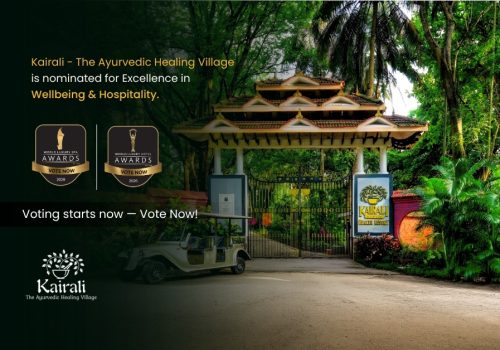
Situated in Kodumbu, Palakkad, Kairali – The Ayurvedic Healing Village is an NABH-accredited Ayurvedic hospital-resort where traditional Ayurvedic principles guide physician-led care.
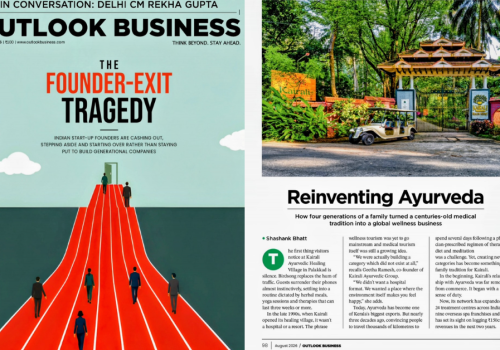
The village is part of Kairali Ayurvedic Group, founded in 1989 by K.V. Ramesh and Gita Ramesh. The group’s work builds on four generations of Ayurvedic practice in the founders’ family.
Kairali observes Dhanvantari Day annually, recognising the significance of Lord Dhanvantari and the medical tradition associated with him.
The occasion provides a meaningful connection between the historical foundations of Ayurveda and the responsibilities of practising it today.
At the Healing Village, Ayurvedic care is organised around individual assessment, practitioner supervision, therapeutic procedures, dietary considerations and appropriate daily routines.
These aspects of care reflect an important principle within Ayurveda: treatment decisions should take account of the individual, rather than following a single approach for everyone.
Dhanvantari Day offers an opportunity to reflect on the continued relevance of that principle.
How Kairali Carries Ayurvedic Principles Into Practice
The relevance of Dhanvantari Day at Kairali extends beyond the annual observance. It can also be understood through the way Ayurveda is practised at the Healing Village.
Personalised Ayurvedic assessment
Ayurveda traditionally considers prakṛti (individual constitution), current health concerns, digestive patterns, lifestyle and seasonal influences when planning care.
At Kairali, physician-led assessment provides the basis for determining which Ayurvedic procedures and routines may be appropriate for an individual.
Panchakarma under professional supervision
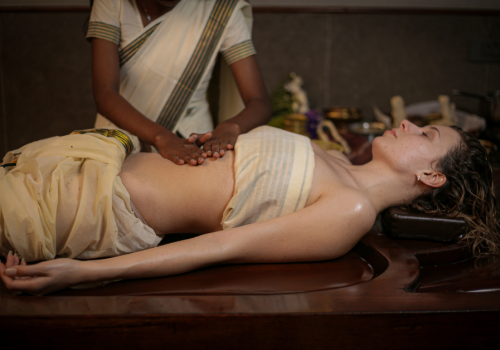
Pañcakarma (the five classical therapeutic procedures) is an important part of Ayurvedic clinical practice.
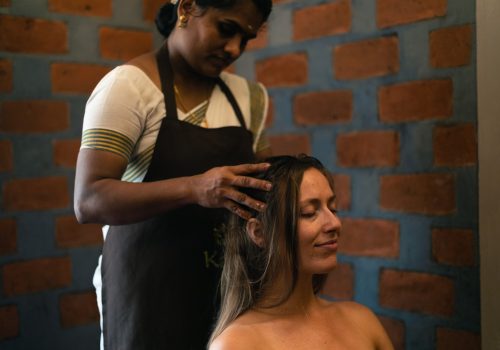
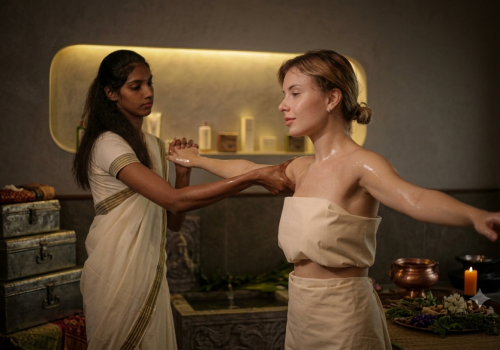
At the Healing Village, Panchakarma is approached as a supervised programme rather than a standard spa treatment. The choice and sequence of procedures depend on professional assessment and individual suitability.
Although Panchakarma has an established place in Ayurvedic tradition, clinical evidence for many claimed health outcomes remains limited. It should not be considered a substitute for necessary conventional medical care.
Food and daily routine as part of care
Ayurveda gives considerable importance to diet, rest and the regularity of everyday habits.
At Kairali, these considerations form part of the broader Ayurvedic experience alongside physician-guided therapies.
The emphasis is on understanding how everyday choices relate to health and how appropriate routines may be maintained beyond a residential stay.
Why the Message of Dhanvantari Day Reaches Beyond Kerala
Ayurveda is now encountered by people from many different cultural and medical backgrounds. Some are familiar with its traditional concepts, while others are discovering it through wellness travel or an interest in complementary healthcare.
Dhanvantari Day provides a useful starting point for understanding the system beyond its more visible treatments.
It draws attention to the responsibilities that come with practising a traditional medical discipline: preserving knowledge accurately, assessing individuals carefully, maintaining professional standards and communicating the limitations of available evidence.
These responsibilities are particularly important as Ayurveda reaches international audiences.
The Government of India previously observed National Ayurveda Day on Dhanvantari Jayanti. Since 2025, the national observance has taken place on 23 September each year, while Dhanvantari Jayanti continues to follow the traditional lunar calendar.
The distinction between the two dates does not diminish the cultural significance of Dhanvantari Day.
A Day to Reflect on the Meaning of Ayurvedic Care
For Kairali – The Ayurvedic Healing Village, Dhanvantari Day connects an annual cultural observance with the work of practising Ayurveda in a contemporary clinical setting.
The festival honours a figure who has long represented the medical tradition. The work of a modern Ayurvedic institution is to carry that tradition forward with qualified practitioners, careful assessment and an understanding of the responsibilities involved in healthcare.
Ultimately, the relevance of Dhanvantari Day lies in the attention it brings to health, medical knowledge and the duty of care.
At Kairali, these principles remain relevant throughout the year, not only on the day dedicated to Lord Dhanvantari.




Leave a Reply