
































“Take a deep breath in.”
For many living with chronic pelvic, back, or joint pain, even a simple cue like this can feel complicated. The breath catches, the body braces, and what looks like a gentle stretch from the outside can feel intense on the inside.
Ayurveda (the traditional science of life and health) looks at this differently. Instead of asking the body to perform, it asks: What is this pain saying about load, fatigue, digestion, and the nervous system today?
At Kairali, physicians often see guests who arrive after years of “pushing through”: long hours at a desk, strong vinyasa classes, minimal rest. By the time they reach the treatment room, the body is signalling in many ways – burning sensations, heaviness, disturbed sleep, emotional exhaustion.
When chronic pain is present, yoga and movement shift from achievement to listening:
- Smaller ranges of motion
- Slower transitions
- More support from props, walls, and breath
- Permission to stop when the body says “enough”
Ayurvedic assessment starts with the doshas (functional energies of the body), looking at patterns associated with movement and the nervous system, heat and metabolism, and structure and stability. The goal is not to “fix” in one session, but to gradually calm, nourish, and stabilise.
At our centres, this may look like:
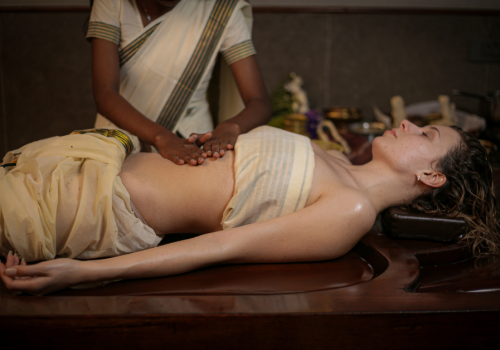
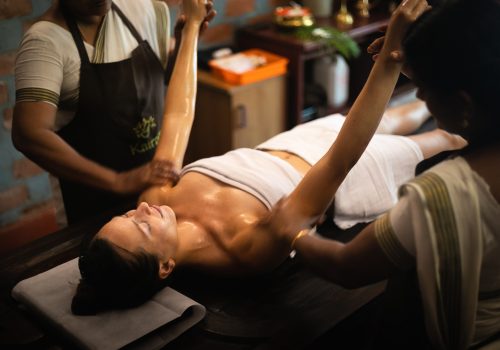
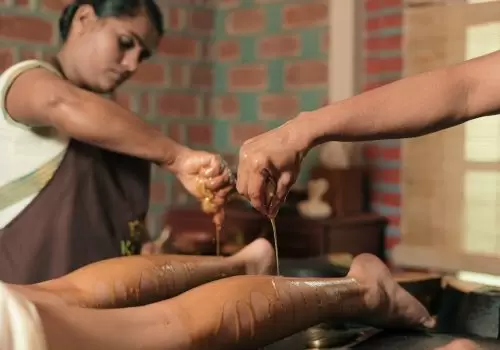
- Gentle, oil-based Abhyangam (full-body massage) to create a sense of containment and safety in the body
- Warm poultices or local treatments for areas that feel tight, stuck, or overworked
- Simple, breath-led yoga where the teacher demonstrates less and observes more
- Clear boundaries: no forcing into deep backbends, splits, or long static holds when the tissues are already fatigued
One Kairali physician often reminds guests: “Your pain is not an exam you have to pass. It is information.” When this perspective lands, people begin to:
- Choose rest over the hardest class on the schedule
- Accept a supported seated pose instead of forcing cross-legged
- Measure a “good practice” by how they sleep that night, not by how deep they went into a posture
For those who teach or guide movement, living with pain can become a quiet teacher. It tends to:
- Soften language: fewer commands, more invitations
- Slow down demonstrations and allow alternatives
- Centre the student’s experience over how the class looks from the outside
Integrative care matters. Ayurveda can sit alongside physiotherapy, gynaecology, pain specialists, and mental health support. Many guests continue their allopathic medications while using Ayurvedic therapies to support better sleep, digestion, and resilience.
If living with pain, consider asking before your next class or session:
- What would it feel like to do 60% instead of 100% today?
- Which 2–3 movements genuinely leave my body softer, not more irritated?
- How does my breath feel right after practice – calmer or more agitated?
Pain may not disappear quickly, and results vary by individual. When yoga, rest, and Ayurvedic routines are aligned with what the body can realistically hold, the intention is a practice that feels more manageable and respectful of individual limits.
At Kairali, that quieter, more sustainable practice is often where meaningful change begins.






Leave a Reply