























An Ayurveda retreat does not have to be a luxury reserved for special occasions. In Kerala, the practice of taking time for rest, structured routines, and personalised care reflects a broader understanding of health: maintaining well-being before problems arise.
Wellness retreats are often associated with luxury holidays, special celebrations, or recovery from demanding periods of life. For many travellers, taking a week or two away from work and everyday responsibilities feels like an indulgence.
Yet an Ayurveda retreat in Kerala offers a different perspective. Rather than treating well-being as an occasional reward, Ayurveda encourages regular attention to daily habits, seasonal changes, digestion, sleep, and physical activity.
This approach is based on a simple principle: caring for health should be part of everyday life, not something considered only when a person feels exhausted or unwell.
At Kairali – The Ayurvedic Healing Village in Palakkad, Kerala, this philosophy shapes the retreat experience. Personalised Ayurvedic consultations, structured daily routines, traditional therapies, balanced meals, and opportunities for rest form the basis of a stay.
Why an Ayurveda Retreat in Kerala Feels Different
Kerala has a long-established tradition of Ayurvedic practice. Its climate, vegetation, food culture, and history of traditional medicine have contributed to its reputation as a destination for Ayurveda.
The setting also plays an important role in the retreat experience.
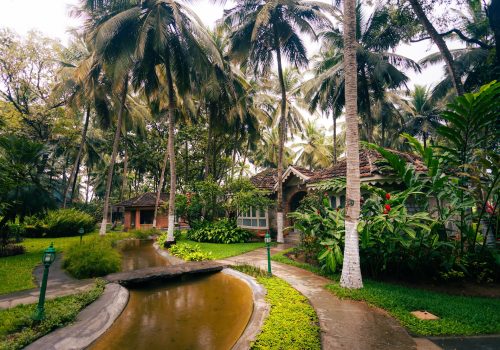
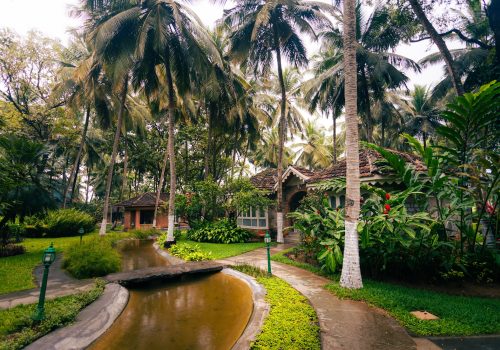
Located in Palakkad, Kairali – The Ayurvedic Healing Village provides an environment away from the usual pace of urban life. Coconut trees, shaded pathways, landscaped gardens, and traditional Kerala-style architecture create spaces where guests can follow a quieter daily routine.
The villas are designed according to Vāstu Śāstra (traditional Indian architectural principles), while the surrounding greenery and open spaces provide opportunities for walking, reflection, and rest.
However, the purpose of an Ayurvedic retreat extends beyond its surroundings.
A structured schedule, regular meals, guided yoga, and time away from everyday distractions allow guests to focus on habits that are often neglected during busy periods.
The emphasis is on consistency rather than constant activity.
Understanding Health Through an Ayurvedic Perspective
Modern healthcare commonly uses medical examinations, laboratory investigations, and other measurable indicators to understand health.
Ayurveda approaches the individual through a different conceptual framework. It considers factors such as daily routine, appetite, digestion, sleep, lifestyle, and individual constitution when assessing well-being.
Two important concepts in this approach are:
- Prakṛti (individual constitution): The Ayurvedic understanding of a person’s characteristic physical and physiological tendencies.
- Agni (digestive and metabolic capacity): A classical concept used to describe processes associated with digestion and transformation within the body.
These concepts are discussed in classical Ayurvedic literature, including the Caraka Saṃhitā.
During an Ayurvedic consultation, practitioners may ask about sleep, appetite, digestion, physical activity, and daily habits. Traditional assessment methods may also include observation of the tongue, skin, and pulse.
These assessments help practitioners develop an individualised Ayurvedic programme.
Importantly, traditional Ayurvedic assessments are not equivalent to modern diagnostic tests. They represent a distinct system of understanding health and should not replace appropriate medical evaluation when needed.
For a more detailed introduction to these principles, read What Is Ayurveda and Why Is It Important?.
What Happens During an Ayurveda Retreat in Kerala?
An Ayurveda retreat generally follows a structured daily schedule. The specific programme depends on the individual’s health history, constitution, needs, and the recommendations of qualified Ayurvedic practitioners.
At Kairali – The Ayurvedic Healing Village, a retreat may include the following elements.
1. Traditional Ayurvedic Therapies
Traditional therapies are an important part of many Ayurvedic retreat programmes.
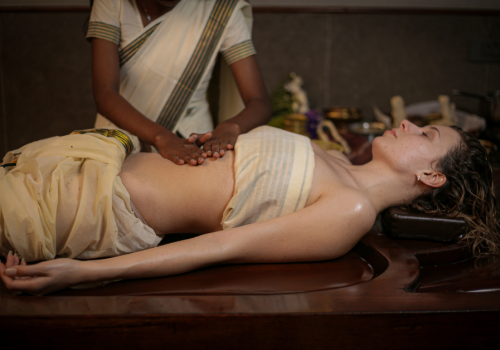
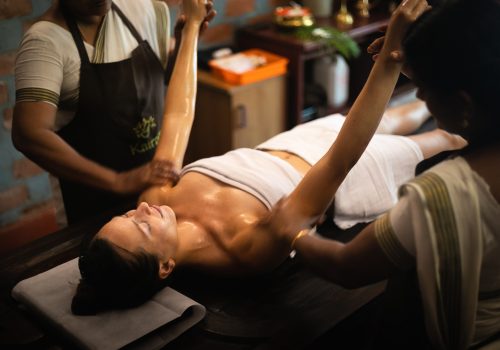
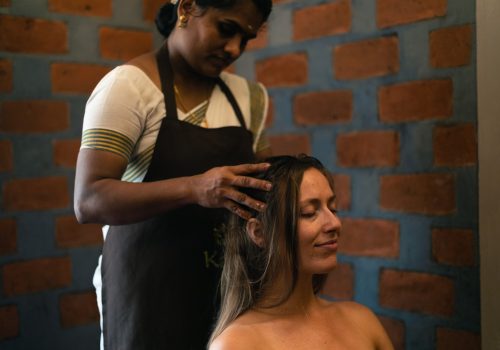
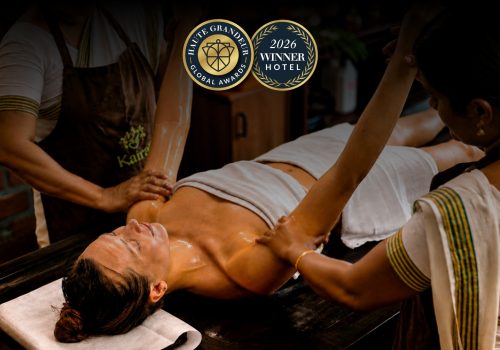
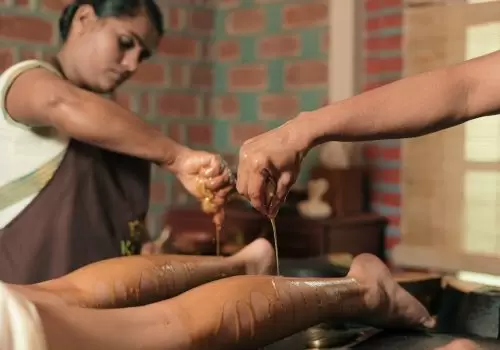
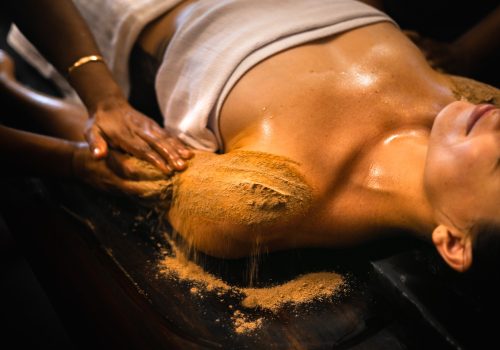
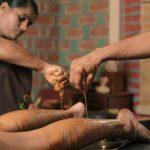
Abhyaṅga (oil massage) involves the application of warm herbal oils using traditional massage techniques. Śirodhārā involves the controlled pouring of a continuous stream of liquid, commonly oil, over the forehead.
These therapies have established roles within traditional Ayurvedic practice and are often associated with relaxation. However, research on their specific clinical benefits remains limited, and individual experiences can vary.
The selection and suitability of therapies should be determined by qualified practitioners rather than personal preference alone.
2. Regular, Balanced Meals
Food is central to the Ayurvedic understanding of health.
Ayurveda places importance not only on what people eat but also on meal timing, preparation methods, digestive capacity, and individual requirements.
At the Healing Village, vegetarian meals form part of the daily retreat routine. The property’s organic farm and herbal garden contribute to its food philosophy.
Meals are planned around Ayurvedic dietary principles and individual needs, with an emphasis on freshly prepared food and regular eating schedules.
This approach also encourages guests to reconsider everyday eating habits, particularly irregular mealtimes and rushed meals.
3. Yoga and Meditation
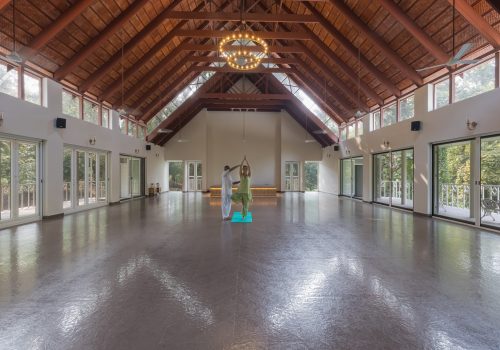
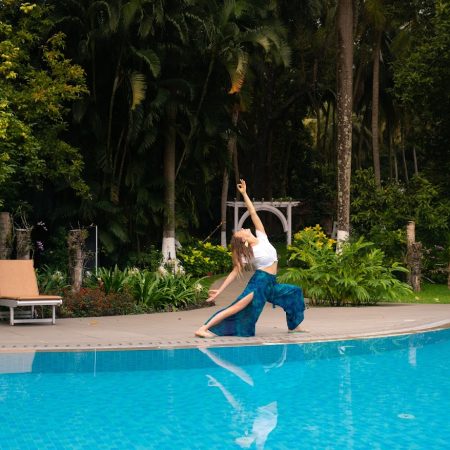
Yoga and meditation complement the retreat’s structured approach to daily living.
Rather than focusing on demanding physical routines, these practices encourage gradual movement, breathing awareness, and consistency.
Sessions provide dedicated time for physical activity and quiet reflection, without the usual interruptions of a working day.
Research suggests that yoga and mindfulness-based practices may support perceived stress reduction and aspects of well-being. The strength of evidence varies according to the practice and health outcome being studied.
4. Time for Rest and Reflection
One of the less discussed aspects of an Ayurveda retreat is the opportunity to follow a predictable routine without constant distractions.
Daily schedules can include therapy sessions, meals, movement, and periods of rest. This structure reduces the need to make frequent decisions about how to spend the day.
For people accustomed to long working hours, irregular schedules, and continuous digital communication, the change can initially feel unfamiliar.
The retreat environment offers an opportunity to observe everyday habits, particularly those related to rest, meals, and screen use, without the demands of a normal workweek.
For a closer look at the retreat experience, read Inside the Ayurvedic Healing Village: A Week of Panchakarma, Yoga & Silence in Palakkad.
Why Seasonal Timing Matters in Ayurveda
Seasonal changes have an important place in classical Ayurvedic practice.
The concept of Ṛtucaryā (seasonal regimen) describes how diet, daily habits, and activities may be adjusted according to the changing seasons.
In Kerala, the transition from the southwest monsoon into the following months brings changes in rainfall, temperature, and humidity. These seasonal variations provide a practical context for considering daily routines and lifestyle habits.
Classical Ayurveda also recognises Śarad Ṛtu (autumn) as a distinct seasonal period, with dietary and lifestyle recommendations based on traditional Ayurvedic principles.
For visitors considering an Ayurveda retreat in Kerala, seasonal planning may influence travel preferences, outdoor activities, and the overall experience.
However, there is no established clinical evidence that visiting during a particular Ayurvedic season produces better health outcomes for everyone.
The appropriate timing and nature of an Ayurvedic programme depend on individual circumstances, health considerations, and professional assessment.
Why Wellness Should Be Viewed as Maintenance
Health maintenance is rarely the result of a single activity.
Regular sleep, balanced nutrition, physical movement, appropriate healthcare, and manageable daily routines all contribute to general well-being.
Ayurveda has long emphasised these everyday practices through concepts such as Dinacaryā (daily regimen) and Ṛtucaryā (seasonal regimen).
An Ayurvedic retreat can provide a structured setting in which to examine these habits more closely.
The value of a retreat does not necessarily depend on dramatic changes during the stay. It may also lie in developing a clearer understanding of personal routines and identifying practical adjustments that can be continued at home.
An occasional retreat cannot replace consistent daily habits, preventive healthcare, or medical treatment. It can, however, create dedicated time for practices that are difficult to prioritise in everyday life.
This distinction is important.
A retreat should not be viewed as a substitute for healthcare or as a guaranteed solution to accumulated stress. Its role is better understood as one component of a broader approach to well-being.
Making an Ayurveda Retreat Part of a Thoughtful Wellness Routine
There is no universal schedule for attending an Ayurveda retreat.
Some travellers may prefer an occasional stay focused on rest and reflection. Others may consider returning periodically as part of their personal wellness routine.
The decision should depend on individual goals, medical considerations, time, and circumstances rather than the expectation that repeated retreats are necessary for good health.
For those exploring a retreat, the most useful questions concern the quality of care, practitioner qualifications, programme structure, and whether the experience is suitable for their needs.
Kairali – The Ayurvedic Healing Village is an NABH-accredited Ayurvedic hospital in Palakkad, Kerala. Its physician-led approach combines classical Ayurvedic practice with a structured residential environment.
The focus remains on individual assessment, appropriate traditional therapies, daily routines, and practical lifestyle considerations.
A Different Way to Think About an Ayurveda Retreat in Kerala
An Ayurveda retreat in Kerala need not be reserved for a milestone, a celebration, or a period of exhaustion.
It can be approached as an intentional opportunity to review daily habits, understand traditional Ayurvedic approaches to well-being, and make time for rest.
The larger lesson extends beyond the retreat itself. Regular attention to sleep, meals, movement, and personal health remains important throughout the year.
Wellness is better understood as something maintained through everyday habits than something restored during an occasional holiday.
For readers interested in a structured Ayurvedic retreat, Kairali – The Ayurvedic Healing Village offers information about its residential programmes, facilities, and practitioner-led approach in Palakkad, Kerala.





Leave a Reply