
































Saffron is now a familiar ingredient in premium skincare. It appears in facial oils, creams, masks and serums, often with promises of brighter, smoother or more radiant skin.
Ayurveda takes a more measured view.
Saffron, known in Ayurvedic contexts as Kumkuma or Keshara, comes from Crocus sativus. It has a long association with skin and beauty preparations, but its value depends on more than the ingredient name.
The quality of the saffron matters. So does the formulation around it.
What does saffron do for the skin?
In Ayurvedic skincare, saffron is traditionally included in formulations intended to support the appearance and condition of the skin.
That does not mean saffron should be treated as a miracle ingredient.
In a well-designed cosmetic formulation, it may form part of a broader approach to nourishment, moisturisation, softness and a healthy-looking radiance.
The important point is that these effects belong to the finished formulation, not to saffron alone.
Why the formulation matters
A facial oil containing saffron is very different from a saffron cream or wash-off mask.
Even when the same botanical appears on the label, the final product depends on many other factors: the base, the supporting ingredients, the way the botanicals are processed and the way the product is intended to be used.
This is also consistent with traditional Ayurvedic formulation.
Ingredients are usually selected in combination rather than treated as isolated “hero” ingredients.
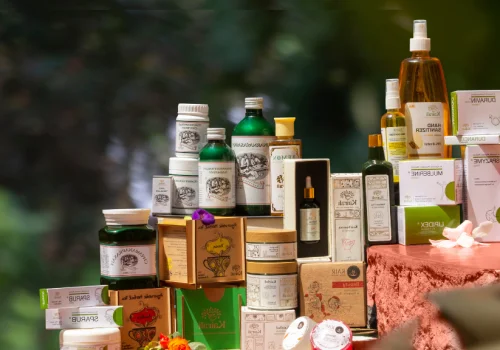
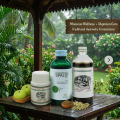
Kairali’s Kaircin Kumkumadi Facial Oil is one example. Saffron is used alongside lotus and other traditionally used botanicals in a facial-oil formulation intended for nourishment, moisturisation and a healthy-looking radiant appearance.
The point is not that saffron works alone. It is that saffron has a place within a carefully designed formulation.
Not all saffron is equal
Saffron is one of the world’s more valuable botanicals, so quality and authenticity deserve attention.
The word “saffron” on a label tells you very little by itself.
More useful questions include where the ingredient comes from, whether its botanical identity is documented, which part of the plant is being used and how it has been handled before entering the formulation.
These details are not as visible as the ingredient name on the front of a pack, but they matter more.
Be cautious with exaggerated claims
Saffron also attracts ambitious skincare claims.
Products may promise instant transformation, dramatic lightening or effects that move well beyond normal cosmetic use.
That is where greater restraint is useful.
For cosmetic skincare, claims around moisturisation, softness, smoothness, texture and healthy-looking radiance are easier to understand and more proportionate to what a skincare product is designed to do.
This kind of language does not make saffron less interesting. It makes the discussion more credible.
So, is saffron good for the skin?
It can be a valuable part of an Ayurvedic skincare formulation.
But the better question is not simply whether a product contains saffron.
Look at the whole formulation.
Consider the quality of the botanical, the ingredients used alongside it, the manufacturing standards and the claims being made about the finished product.
Saffron may be the ingredient that catches the eye. What matters most is what has been built around it.








Leave a Reply