















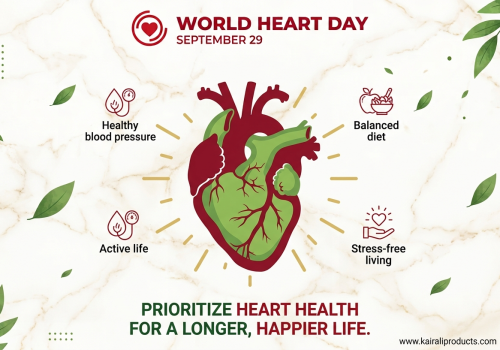

















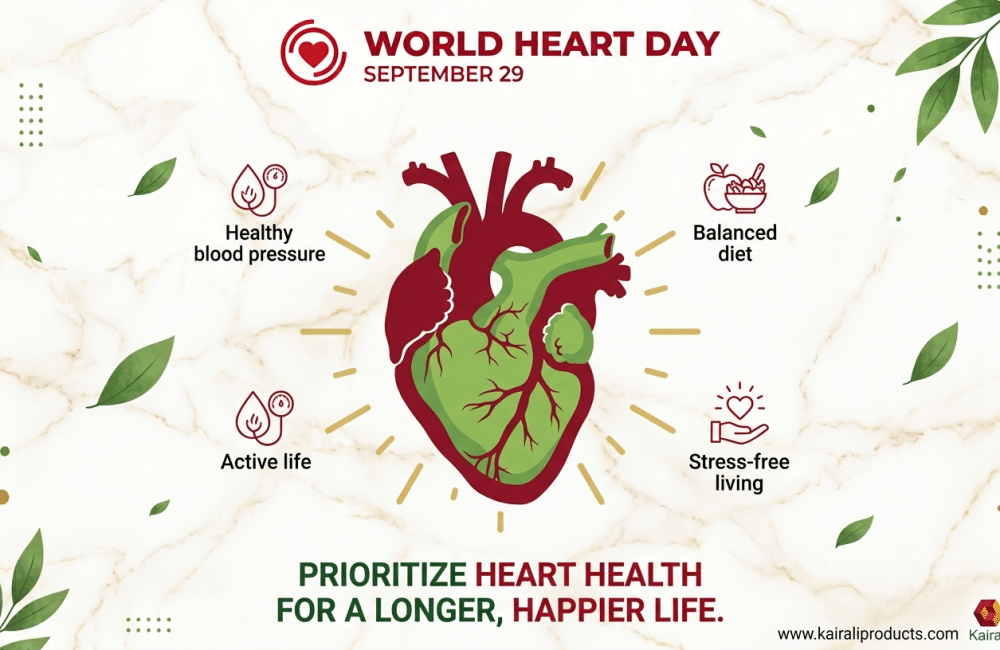

Heart health is rarely shaped by one decision. It is influenced by what we eat repeatedly, how much we move, how well we sleep, whether we smoke, how we respond to prolonged stress, and whether we keep track of important health indicators as we age.
Modern cardiovascular guidance increasingly reflects this broader picture. The World Health Organization identifies unhealthy diet, physical inactivity and tobacco use among the important behavioural risk factors for cardiovascular disease. The American Heart Association similarly places diet, physical activity, sleep and avoidance of nicotine within its core measures of cardiovascular health.
Ayurveda approaches daily health from a different medical tradition, but it also places considerable importance on routine. Rather than waiting for illness before paying attention to the body, Ayurvedic practice has long emphasised dinacharya (daily regimen): the repeated choices around food, activity, rest and other habits that form the background of health.
For the heart, this offers a useful starting point. Supporting cardiovascular wellbeing is not about finding a single “natural” solution. It is about creating a daily pattern that is sustainable, while using appropriate medical care and monitoring when needed.
1. Build movement into ordinary life
Regular physical activity is one of the most established lifestyle measures for cardiovascular health. The American Heart Association recommends that adults aim for at least 150 minutes of moderate-intensity activity or 75 minutes of vigorous activity each week.
That does not mean every person needs an intensive exercise programme.
Walking, swimming, cycling and other forms of movement can all contribute. The more useful question is often whether movement has a regular place in the week rather than whether a particular workout appears impressive.
This idea of regularity also sits comfortably with the Ayurvedic emphasis on routine. Activity should be considered in relation to age, constitution, season and individual capacity rather than approached as a competition.
For someone who has been sedentary, has cardiovascular disease, or has other significant health concerns, the appropriate level of exercise should be discussed with a healthcare professional.
2. Think about dietary patterns, not miracle foods
Heart-health conversations often become dominated by individual ingredients: one seed, one oil, one fruit or one supplement.
The evidence points towards something less dramatic and more practical: the overall dietary pattern matters.
WHO recommends reducing salt intake, eating more fruit and vegetables and addressing other modifiable lifestyle risks as part of cardiovascular disease prevention. The American Heart Association similarly recommends a dietary pattern centred on whole foods, fruits and vegetables, nuts, seeds and appropriate sources of protein.
Ayurvedic dietary thinking adds another consideration: food is not viewed only as a collection of nutrients. Appetite, digestion, meal timing, preparation and individual tolerance also matter.
That does not mean an Ayurvedic diet replaces established nutritional or medical guidance. A more useful interpretation is that eating well involves both what we eat and how consistently we eat well.
3. Treat sleep as part of heart health
Sleep is easy to push to the bottom of a wellness routine because its effects can seem less visible than exercise or diet.
Current cardiovascular guidance suggests otherwise.
The American Heart Association includes healthy sleep among its eight measures of cardiovascular health and recommends that most adults aim for seven to nine hours per night. Sleep health is also associated with several cardiometabolic risk factors, although research continues to examine how different dimensions of sleep affect cardiovascular outcomes.
Ayurveda has long treated sleep, or nidrā, as a fundamental part of maintaining health. From a practical perspective, this makes regular sleep and waking times, sufficient rest and a calmer transition into the evening more than questions of comfort.
They are part of the daily routine through which health is maintained.
4. Do not ignore prolonged stress
Stress and cardiovascular health have a complicated relationship. Stress should not be reduced to a simplistic claim that being stressed directly causes every heart problem, nor should relaxation practices be presented as substitutes for medical treatment.
Still, the way we structure our days matters.
Periods of rest, breathing practices, meditation, gentle yoga and time away from constant digital stimulation can be useful parts of a broader wellbeing routine. For some people, the most important intervention may simply be recognising that recovery needs a place in the schedule rather than being left to whatever time remains.
Ayurveda’s emphasis on routine can be especially relevant here. A health-supportive day does not have to be elaborate. Consistency often matters more than adding more practices.
5. Avoid tobacco and nicotine exposure
Not every heart-supporting habit needs an Ayurvedic interpretation.
Avoiding tobacco is one of the clearest examples.
WHO identifies tobacco use as an important behavioural risk factor for cardiovascular disease. The American Heart Association likewise includes quitting tobacco and nicotine products among its core cardiovascular-health behaviours.
This is an area where established public-health guidance should be stated plainly.
Where Ayurvedic formulations fit
Herbal formulations have a long history within Ayurvedic practice, but they should not be treated as shortcuts around the fundamentals of cardiovascular care.
Kairali Ayurvedic Products Pvt. Ltd, the WHO-GMP-certified pharmaceutical manufacturing division of Kairali Ayurvedic Group, produces classical and proprietary Ayurvedic formulations. Its range includes Cardospa and a related Kairali Ayurvedic kit. These are Ayurvedic formulations and should be considered within the wider context of responsible Ayurvedic care rather than as replacements for healthy habits, cardiovascular monitoring, prescribed medicines or medical treatment.
This distinction is important.
A product should not become the centre of a heart-health routine simply because it is described as “natural.” Natural origin does not establish that a formulation is appropriate for every person, nor does it remove the possibility of interactions with medicines or other health considerations.
Anyone considering an Ayurvedic formulation, particularly someone already taking cardiovascular medication or receiving treatment for an existing condition, should discuss its use with an appropriately qualified healthcare professional.
The most useful heart-health routine may be the least dramatic one
There is a tendency in wellness culture to look for the intervention that changes everything.
Heart health gives us good reason to resist that tendency.
Eat well most days. Move regularly. Protect sufficient time for sleep. Do not smoke. Make room for recovery from stress. Know the health indicators your doctor recommends monitoring. And when using Ayurveda, approach it as part of a considered system of care rather than as an alternative to necessary medical assessment.
Ayurveda’s contribution to this conversation does not need to rest on extravagant promises. Its emphasis on daily routine offers something more practical: health is influenced by what we repeatedly do.
Website: www.kairaliproducts.in
Call: +91-9555156156








Leave a Reply