














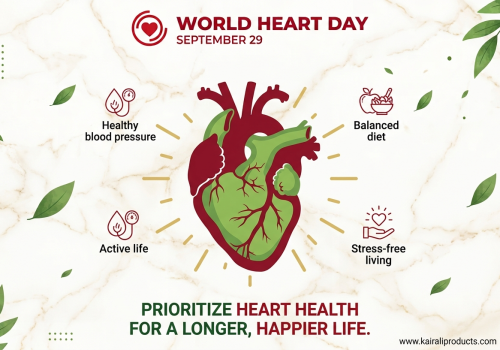














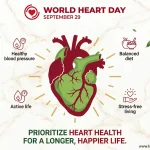
Every year on 29 September, World Heart Day brings global attention to cardiovascular disease. The 2026 campaign from the World Heart Federation carries a simple message: “Don’t Miss a Beat.”
Behind that message is a serious public-health challenge. Cardiovascular diseases remain the leading cause of death worldwide. The World Health Organization estimates that they accounted for 19.8 million deaths in 2022, approximately 32 per cent of all deaths globally. Yet many of the factors that shape cardiovascular risk accumulate quietly over years: diet, physical inactivity, tobacco use, excess weight and metabolic changes such as raised blood pressure and abnormal blood lipids.
That makes World Heart Day an opportunity to think beyond the heart as an organ that demands attention only after something goes wrong.
For Ayurveda, this wider view is particularly relevant. Health is understood not simply as the absence of a diagnosed condition, but through the everyday patterns that influence physiological balance: how we eat, move, sleep, recover from strain and adapt our routines as our bodies and circumstances change.
This does not make Ayurveda a substitute for cardiology. Cardiovascular disease requires appropriate medical assessment, monitoring and treatment. But there is a useful conversation to be had about the habits that precede disease and the conditions in which healthier habits become sustainable.
The heart does not live separately from the rest of our lives
Modern cardiovascular medicine already makes the importance of lifestyle clear.
The WHO identifies unhealthy diet, physical inactivity, tobacco use and harmful alcohol use among the major behavioural risk factors for heart disease and stroke. These can contribute to measurable changes such as elevated blood pressure, blood glucose, blood lipids and excess body weight.
Ayurveda approaches lifestyle from a different medical tradition, but there is an important point of convergence: what we repeatedly do matters.
Ayurvedic practice places considerable emphasis on dinacaryā (daily routine), food suited to the individual and circumstances, appropriate physical activity, sleep, digestion and the management of mental strain. Rather than treating these as isolated wellness activities, they are considered interconnected aspects of health.
This is perhaps one of Ayurveda’s most useful contributions to the modern heart-health conversation. A healthy routine is not a short intervention undertaken once a year. It is a pattern that has to work in ordinary life.
Food matters, but so does the way we eat
Discussions about heart health understandably focus on what is on the plate. WHO guidance emphasises a varied diet with fruit and vegetables, legumes and whole grains while limiting excess salt, sugars, saturated fats and industrially produced trans fats.
Ayurveda adds another layer to the conversation by considering digestion, appetite, meal timing and individual response to food.
The concept of agni (digestive and metabolic capacity) is central to Ayurvedic dietary thinking. In practical terms, this means food recommendations are not viewed entirely in isolation from the person eating them. Appetite, digestion, age, activity, season and constitution can influence how an Ayurvedic physician structures dietary advice.
At Kairali – The Ayurvedic Healing Village in Kerala, food is consequently part of the physician-led programme rather than a separate hospitality feature. Dietary planning sits alongside consultation, daily routine, appropriate therapies, movement and rest.
The aim is not to identify a single “heart-healthy Ayurvedic food”. No such shortcut adequately addresses cardiovascular health. The more useful question is whether the overall pattern of eating supports good health and can be maintained after a retreat ends.
Movement should belong to everyday life
Physical activity is one of the clearest areas where cardiovascular recommendations are consistent. WHO notes that regular physical activity is associated with a lower risk of cardiovascular disease mortality and offers benefits for cardiometabolic and mental health.
For many people, however, the difficulty is not knowing that exercise matters. It is building movement into daily life consistently.
Yoga can have a role here.
Research into yoga and cardiovascular risk factors is encouraging, although it should not be overstated. A 2023 meta-analysis of 64 randomised controlled trials involving 16,797 participants found modest improvements across several cardiovascular risk markers. Earlier systematic reviews have also reported potentially beneficial changes while noting limitations in study quality and heterogeneity.
That distinction matters. Yoga should not be presented as a treatment for cardiovascular disease or as a replacement for prescribed exercise, medication or cardiac rehabilitation.
It can, however, provide an accessible form of movement and mind-body practice for some people.
At Kairali, programmes including the Yoga & Meditation Program and Yoga-Based Stress & Energy Reset Program incorporate structured yoga and meditation within a broader routine. The appropriate intensity and form of physical activity should always reflect the individual’s health status, particularly where cardiovascular disease or significant risk factors are already present.
Stress and sleep deserve a place in the conversation
Heart-health advice can become a checklist: eat better, move more, stop smoking, monitor the numbers.
But human behaviour rarely works as neatly as a checklist.
Persistent stress can disrupt sleep, change eating patterns, reduce motivation to exercise and make otherwise sensible routines difficult to sustain. Poor sleep can further affect physical and psychological wellbeing.
This is why a broader lifestyle approach can be useful.
Kairali currently offers programmes including the Cardiovascular Health & Blood Pressure Treatment, Yoga-Based Stress & Energy Reset Program and Sleep Restoration Therapy – Nidrā Chikitsa. These are not presented here as treatments for cardiovascular disease. Their relevance to the World Heart Day conversation lies elsewhere: they create structured environments in which sleep, rest, movement, diet and stress management can be considered together rather than as unrelated tasks.
That distinction is important, particularly for international readers accustomed to seeing wellness programmes make claims far beyond the available evidence.
Where Panchakarma fits, and where it does not
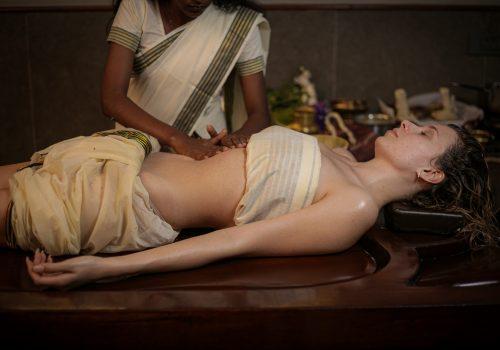
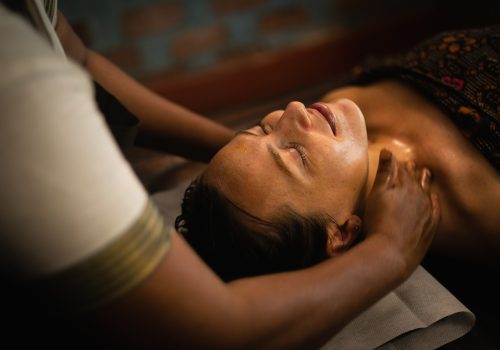
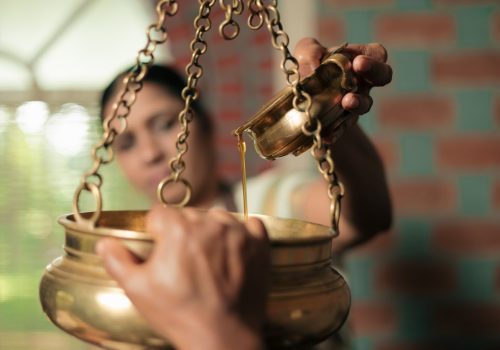
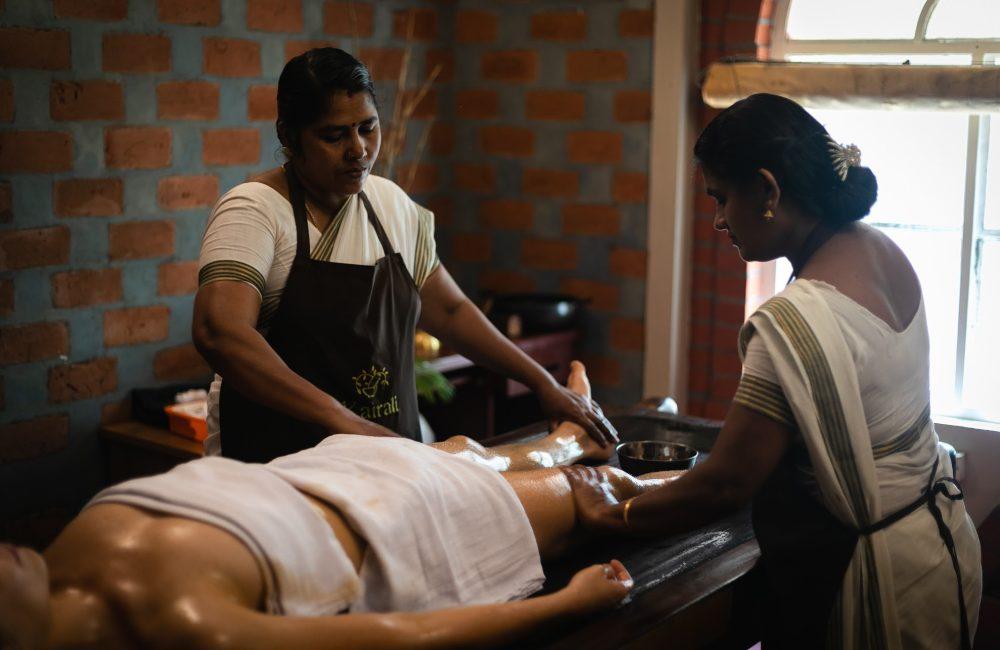
Panchakarma is among Ayurveda’s best-known physician-supervised therapeutic frameworks. At Kairali, Ayurvedic Panchakarma is delivered within an individualised programme following Ayurvedic physician assessment.
It is tempting in wellness marketing to attach Panchakarma to almost every modern health concern. Cardiovascular health requires more restraint.
Panchakarma should not be understood as a replacement for cardiovascular screening, prescribed medication, cardiology care or evidence-based risk-factor management. Nor should anyone discontinue cardiovascular medication in order to undertake an Ayurvedic programme unless this has been discussed with the treating medical team.
Its place within a broader Ayurvedic approach is individual and physician-led. Suitability depends on a person’s health status, constitution, strength, age, existing diagnoses and other clinical considerations.
For some guests, the most relevant part of a residential Ayurvedic programme may ultimately be less dramatic: regular meals, supervised daily routines, appropriate movement, adequate rest and the opportunity to reconsider habits that have become difficult to change at home.
Weight management is about more than a number
Body weight is another part of cardiovascular risk, but responsible weight management needs to move beyond rapid-loss promises.
Kairali’s Weight Management & Metabolism Therapy places weight within a broader programme involving Ayurvedic assessment, food, activity and lifestyle structure. For an international audience increasingly exposed to extreme diets and rapid weight-loss claims, the distinction between sustainable health behaviours and aggressive short-term intervention is worth making.
Where obesity or other metabolic risk factors are present, conventional medical assessment remains important. An Ayurvedic programme can sit alongside appropriate medical care, but it should not replace it.
What a responsible integrative approach looks like
World Heart Day should not become an argument about whether Ayurveda or modern medicine has the better answer.
Cardiovascular medicine provides diagnostic tools, risk assessment, medicines, procedures and emergency care that Ayurveda cannot replace. Anyone with known cardiovascular disease, elevated cardiovascular risk or concerning symptoms requires appropriate medical evaluation.
Ayurveda asks a complementary question: what does daily life look like between medical appointments?
Are meals regular and appropriate? Is movement part of the week rather than an occasional resolution? Is sleep repeatedly sacrificed? Has chronic stress become normal? Are health recommendations realistic enough to continue once the initial motivation disappears?
At Kairali – The Ayurvedic Healing Village, the physician-led model is designed around this wider context. Depending on individual assessment, a programme may draw from Ayurvedic therapies, Panchakarma, yoga and meditation, dietary planning, sleep support, stress-focused practices and structured daily routines.
Not every programme is appropriate for every person. That is precisely why assessment matters.
This World Heart Day, think in years rather than days
A heart-health campaign lasts a day. Cardiovascular health does not.
The strongest message of World Heart Day may therefore be one of continuity. Prevention is built through decisions repeated over months and years, together with appropriate screening and medical care.
Ayurveda’s contribution to that conversation is not a promise that one therapy, herb or residential programme can protect the heart. Its more credible contribution is the insistence that everyday patterns deserve serious attention.
Food. Movement. Sleep. Stress. Routine. Individual context.
None is fashionable or dramatic. All require repetition.
And perhaps that is exactly the point of World Heart Day: not simply to remember the heart on 29 September, but to consider what we ask of it on every other day of the year.
Take a more considered approach to your health. Speak with an Ayurvedic doctor at Kairali – The Ayurvedic Healing Village to understand which physician-led programme may be appropriate for your individual health goals.
Book a Free Doctor Consultation at +91-9555156156 or visit www.ktahv.com







Leave a Reply