




























There is a particular kind of tiredness that belongs to modern life.
The body is ready to stop. The lights are off. The day is technically over.
But the mind is still somewhere else.
Replaying a conversation. Remembering an unanswered message. Thinking about tomorrow’s first meeting. Mentally rewriting something that should have been finished hours ago.
You are in bed, but some part of the day has followed you there.
That gap between physical tiredness and mental quiet is what Raag After Dark – Sound, Stillness & Yoga Nidra explores.
Created for World Wellness Weekend at Villa Raag in Goa, the experience is built around a simple idea: the end of the day does not always arrive just because the clock says it has.
Sometimes, we need to create the conditions for it.
When the day keeps going after the day is over
Most people know the feeling.
The phone goes on the bedside table, but the last few notifications remain in the mind.
A work problem has no clear ending.
A conversation continues internally long after it has ended externally.
Even leisure can become another form of stimulation: one more episode, one more scroll, one more piece of information before sleep.
None of this necessarily feels dramatic.
That may be precisely why it is so familiar.
Modern evenings are often less about coming to rest and more about gradually running out of things to do.
The body stops first.
The mind takes longer.
Why the evening deserves its own rhythm
Morning routines receive a great deal of attention.
Evening routines deserve just as much.
The final part of the day creates a transition between activity and rest. When that transition disappears, the mind can carry the pace of the day straight into bed.
An evening routine does not need to be complicated.
It can simply create a clear change in tempo.
Lights become softer.
Conversation becomes quieter.
Screens move away.
Movement slows.
Attention turns inward rather than toward the next piece of information.
The purpose is not to manufacture sleep on command.
It is to stop asking the evening to behave like an extension of the working day.
From stimulation to stillness
Stillness can feel surprisingly unfamiliar.
During the day, there is usually something to respond to: a message, a person, a task, a sound, a screen.
When those signals disappear, the first experience may not be immediate calm.
It may simply be awareness.
Awareness of how much is still moving internally.
That is why moving toward stillness often works better as a gradual process than as an instruction to “relax”.
Raag After Dark follows that gradual approach.
Rather than expecting participants to become quiet immediately, the experience moves step by step from guided relaxation toward deeper stillness.
Yoga Nidra, simply explained
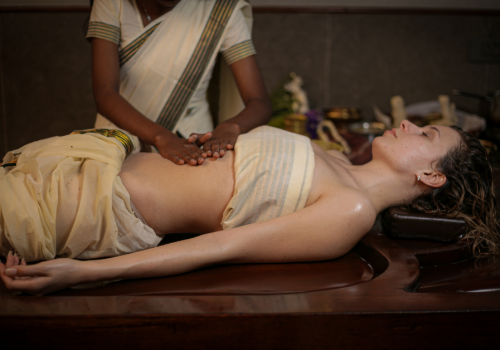
Yoga Nidra is often translated as “yogic sleep”, although the experience is better understood as a guided practice of deep rest and awareness.
Participants typically lie down or settle into a comfortable position while following spoken guidance.
There is nothing to perform.
No posture to perfect.
No need to force concentration.
The practice invites attention to move through the body, breath and different layers of awareness while the participant remains physically at rest.
For someone encountering Yoga Nidra for the first time, this simplicity can be part of its appeal.
You are not being asked to achieve a special state.
You are being given permission to stop doing.
The role of sound
Sound enters Raag After Dark as part of the atmosphere rather than as a promise of treatment.
In a quiet nighttime setting, sound can change the quality of attention.
A sustained tone, a soft vibration or a carefully placed musical element can become something to notice without analysing.
There is no need to attach a medical claim to that experience.
Sound can simply be sound.
It can mark a change of pace.
It can give the mind something gentle to rest attention on.
And, importantly, it can eventually give way to silence.
What happens during Raag After Dark
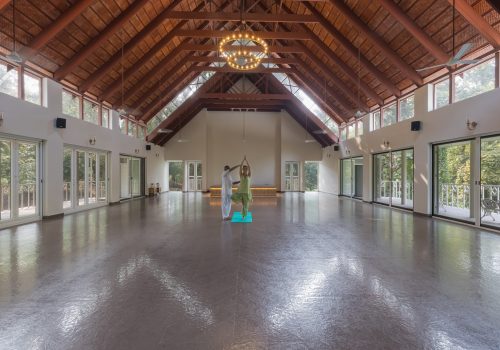
Raag After Dark – Sound, Stillness & Yoga Nidra has been designed as an evening journey rather than a conventional class.
The sequence moves through four stages:
Guided relaxation → Yoga Nidra → sound → silence
The first stage helps participants settle physically.
Yoga Nidra then provides a guided structure for rest.
Sound becomes part of the transition toward quieter attention.
And finally, the experience allows silence to remain.
That last part matters.
Many wellness experiences feel compelled to keep adding something: another instruction, another technique, another sensory element.
Raag After Dark moves in the opposite direction.
It gradually removes stimulation.
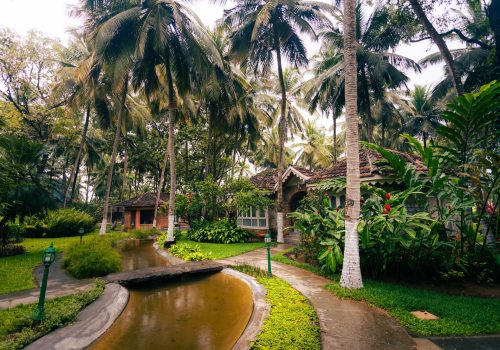
After dark at Villa Raag
Night changes the character of a place.
At Villa Raag in Goa, the smaller scale of the setting allows an evening experience like this to remain intimate.
The atmosphere is not built around spectacle.
It is built around reduction.
Less conversation.
Less instruction.
Less stimulation.
As the night settles around the property, the experience asks participants to do something increasingly rare: allow the environment to become quiet without immediately filling that quiet with something else.
For a meditation retreat in South Goa, that may be one of the most relevant forms of luxury available today.
Not more input.
Less.
You do not have to optimise the end of the day
Wellness culture can sometimes turn rest into another assignment.
Track it.
Improve it.
Measure it.
Perfect the routine.
Set an intention.
But some evenings may require something simpler.
An ending.
Raag After Dark is built around that possibility.
You do not need to solve tomorrow tonight.
You do not need to finish every thought.
You do not need to make the final hour of the day productive.
Sometimes the most useful thing an evening can offer is a clear permission to stop.
Tonight, don’t set an intention. Let the day end.
Experience Raag After Dark during World Wellness Weekend at Villa Raag.
Website: www.villaraag.com
Call: +91-9555156156






Leave a Reply