
























Before the world asks anything of you, what would you like to give yourself?
For many people, the first few minutes of the morning no longer really belong to them.
An alarm sounds on the phone. The alarm becomes a glance at the time. The glance becomes a notification. Then another. Before getting out of bed, the mind may already be moving through messages, headlines, calendars, unfinished conversations and the small demands waiting for attention.
Nothing dramatic has happened, yet the day has already begun in response mode.
That rhythm has become so ordinary that it can be difficult to notice. We rarely question why the first thing we encounter in the morning should be a screen, or why the first decisions of the day should concern other people’s requests.
A different morning does not require an elaborate routine. Sometimes it begins simply by delaying the noise.
The first hour has become crowded
There was a time when waking meant noticing the room, the weather or the quality of the morning light.
Now, for many of us, waking is almost immediately followed by information.
The problem is not that technology exists. Phones are useful, work is real and messages eventually need answers. The more interesting question is whether all of that deserves the first moments of the day.
When a morning begins reactively, its pace can be established before we have consciously chosen one. There is an immediate sense of catching up: checking what happened overnight, working out what needs attention first and moving mentally into the day’s obligations.
An intentional morning creates a different sequence.
You wake. You move. You breathe. You notice where you are.
Only later does everything else arrive.
That sequence sounds modest, but perhaps that is precisely why it matters.
Movement before momentum
Morning movement does not have to be athletic to feel meaningful.
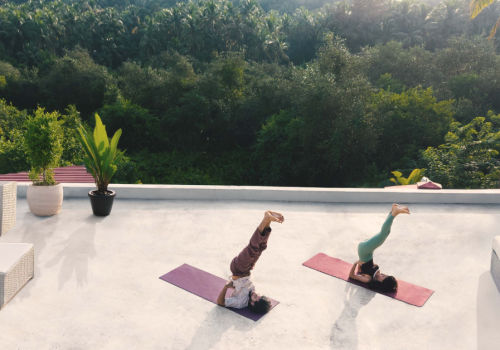
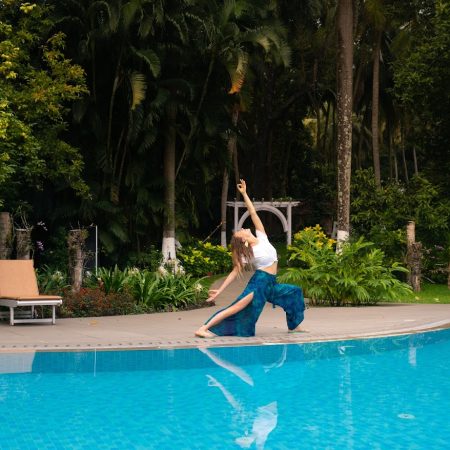
Gentle yoga offers something quite different from beginning the day with urgency. Instead of moving towards a result, attention moves towards sensation: how the feet meet the ground, where the body feels open or resistant, how naturally the breath follows a posture.
The value is partly in the pace.
A slower sequence creates room to notice rather than immediately accomplish. Breathing becomes something experienced rather than something happening unnoticed in the background.
There is also something quietly appropriate about practising at sunrise. The body is waking at roughly the same time as the landscape around it. Light changes gradually. The air shifts. The surroundings become visible not all at once, but minute by minute.
You are not trying to make the morning productive.
You are simply there for its beginning.
Why place changes the experience
A yoga practice can happen almost anywhere, and meditation needs very little in the way of equipment. Yet environment changes the quality of attention.
Indoors, particularly in the spaces where we work and live, the mind already has associations. A desk suggests tasks. A phone suggests messages. A familiar room contains reminders.
Outside, attention has somewhere else to go.
The changing light provides no notification but still asks to be noticed. Waves repeat without needing a response. Wind, birdsong, sand and the temperature of the air offer small sensory details that are easy to miss during a normal working day.
Natural environments do not need to be romanticised to be useful. Their value can be remarkably straightforward: they give attention something immediate and physical to rest on.
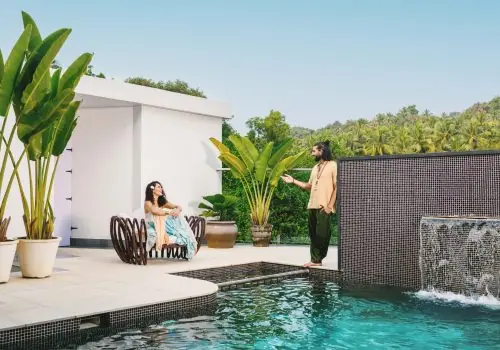
At Agonda Beach in South Goa in Villa Raag that experience takes on a particular rhythm at first light. The coastline is beginning its day too. The brightness arrives gradually, and the sea creates a constant point of reference without demanding anything from the person watching it.
For a morning practice, simplicity is enough.
There is a difference between silence and emptiness
Silence is often misunderstood as the absence of something.
No conversation. No music. No podcast. No notifications.
But intentional silence can feel less like an absence and more like the removal of competition.
When there is nothing to respond to, smaller details become perceptible: the cadence of breathing, the sensation of walking on sand, the repetitive sound of water reaching the shore.
A silent walk can therefore be surprisingly active. The difference is that the activity is observational rather than conversational.
It also changes the social atmosphere.
Walking beside other people without needing to speak removes the usual pressure to fill space. Nobody has to entertain anyone else. There is no need for small talk or introductions. The group shares an experience without continually interpreting it aloud.
For people accustomed to spending most of their waking hours consuming information, even a short period of chosen quiet can feel unfamiliar.
That unfamiliarity is part of the point.
First Light at Villa Raag
During World Wellness Weekend, Villa Raag brings these ideas together in First Light: Sunrise Beach Yoga & Silent Sea Meditation.
The morning begins with a silent walk towards Agonda Beach. Rather than treating the walk simply as the route to an activity, it becomes part of the experience itself: a transition from sleep and indoor space into the early coastal landscape.
On the beach, the practice moves into gentle sunrise yoga.
The emphasis is not on difficult postures or performance. The setting invites a quieter approach: movement paced with breathing, with the changing morning light and the sound of the sea forming the background rather than music or instruction filling every moment.
The yoga practice is followed by meditation facing the sea.
Again, the premise is uncomplicated.
Sit. Listen. Notice.
There is nowhere else the morning needs to go just yet.
A different definition of a luxury morning
Luxury in wellness is sometimes expressed through abundance: more treatments, more facilities, more elaborate schedules.
There is another possibility.
A luxury morning may simply be one in which nothing demands your immediate attention.
No inbox before sunrise. No rush to organise the next hour. No requirement to optimise the experience itself.
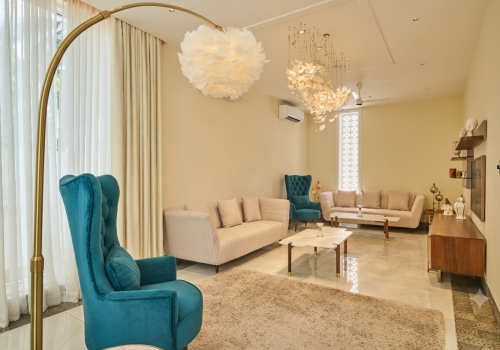
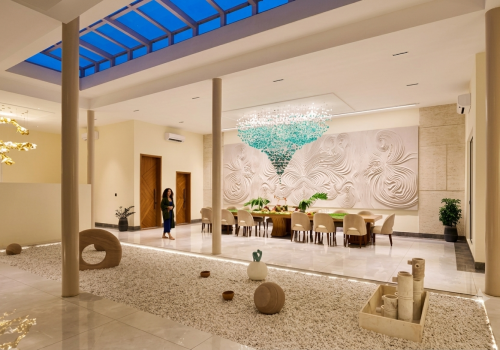
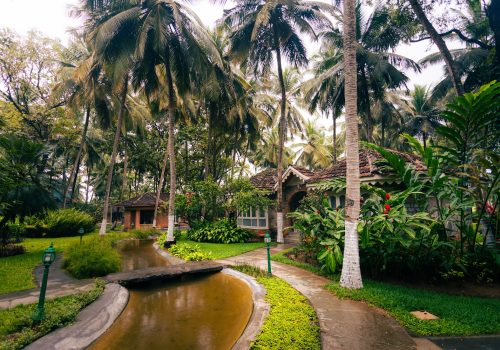
Villa Raag’s setting in Agonda makes that kind of morning possible without turning it into a performance. As an intimate wellness stay centred on yoga, meditation and mindful living, the property allows the surrounding landscape to remain part of the experience rather than merely a backdrop.
The sea is not there to make the practice more impressive.
It is there because the morning is happening beside it.
That distinction matters.
Before the day becomes noisy
Eventually, the phone will be switched on.
Messages will appear. Breakfast will happen. Plans will be made. The practical world does not disappear because someone spent a quiet hour beside the sea.
Nor should it.
The point of a slower morning is not to withdraw permanently from ordinary life. It is to experience what happens when the order changes.
Instead of waking and immediately entering the world’s conversation, you begin with movement.
Instead of filling the first silence, you allow it to remain.
Instead of looking at a screen to find out what is happening, you watch the light change over the water.
Nothing about this requires rejecting modern life.
It simply asks whether modern life needs to have the first word every morning.
Experience First Light during World Wellness Weekend at Villa Raag, 18–20 September 2026.
Website: www.villaraag.com
Call: +91-9555156156







Leave a Reply