































Five Ayurvedic Herbs in Modern Wellness Products: What Responsible Formulation Requires
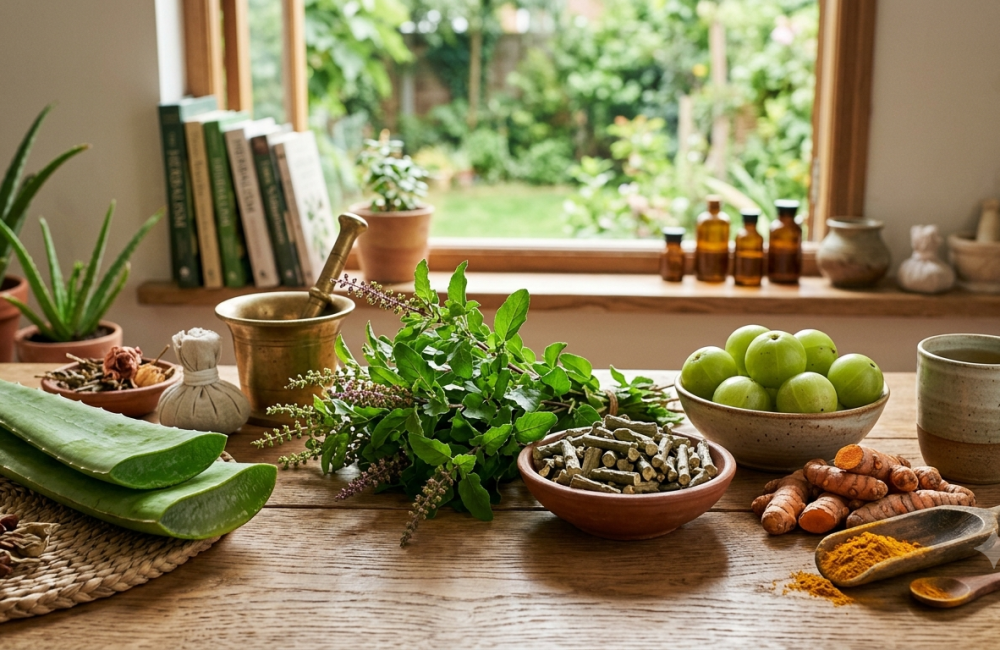
Tulsi, guduchi, amla, turmeric and aloe vera are familiar names in the Ayurvedic and herbal wellness market. Their familiarity, however, can make product conversations sound simpler than they really are.
For manufacturers, distributors and B2B buyers, the important question is not only, “Which herb is popular?” It is also: What plant material is being used, in what form, at what quality, and with what claims?
That distinction matters because a traditional ingredient name alone does not establish the quality, suitability or regulatory status of a finished product.
1. Tulsi
Tulsi is one of the most recognisable plants associated with Ayurveda and Indian household traditions. It appears across herbal teas, wellness blends and other consumer formats.
For a serious product portfolio, the commercial opportunity should be matched by basic ingredient discipline: correct botanical identification, appropriate plant part, defined specifications and claims that match the product category in which tulsi is being used.
2. Guduchi
Guduchi, also widely known as giloy, is another prominent Ayurvedic ingredient. Its visibility has increased substantially in the wellness market, which makes responsible communication especially important.
A manufacturer or buyer should look beyond the ingredient name and ask how the raw material is identified, processed and documented. Traditional reputation should not be converted automatically into broad therapeutic promises.
3. Amla
Amla is used across a wide range of Ayurvedic and wellness formats, from traditional preparations to contemporary food, hair-care and personal-care products.
Its versatility is commercially valuable, but the intended use of the finished product still determines how the ingredient should be formulated, labelled and communicated. A food product, cosmetic and Ayurvedic medicine cannot simply use the same benefit language because they contain the same plant.
4. Turmeric
Turmeric demonstrates how a traditional ingredient can move into the global mainstream. It now appears in foods, beverages, supplements, personal care and traditional formulations.
That popularity also creates a common marketing problem: consumers may recognise the ingredient, but recognition should not become a shortcut for exaggerated claims. Product credibility depends on the quality of the ingredient and the discipline of the finished formulation, not on trend value alone.
5. Aloe vera
Aloe vera is widely recognised in personal-care and wellness categories and can appear in different product formats.
Here again, the finished product matters more than the familiarity of the plant. Buyers should evaluate the intended use, ingredient specifications, processing, supporting documentation and applicable labelling requirements rather than treating “aloe vera” as a complete quality statement by itself.
What B2B buyers should ask
When evaluating an Ayurvedic or herbal product portfolio, five practical questions are useful:
- Is the botanical identity of the ingredient clearly established?
- Is the plant part and form used in the formulation documented?
- Are raw-material and finished-product specifications available where applicable?
- Does the product’s labelling and benefit language match its regulatory category?
- Can the supplier support its product information with appropriate manufacturing and quality documentation?
These questions may be less attention-grabbing than a simple list of popular herbs, but they are far more useful for building a credible wellness portfolio.
From ingredient popularity to product credibility
Ayurveda offers a deep materia medica, and familiar plants can provide an accessible entry point for consumers. For manufacturers and B2B partners, however, the opportunity lies in translating that familiarity responsibly.
The strongest Ayurvedic product story is not simply that an ingredient has been used traditionally. It is that traditional knowledge is carried into a modern product through careful identification, formulation, quality control, documentation and responsible communication.
That is the standard serious Ayurvedic brands and buyers should expect.







Leave a Reply