

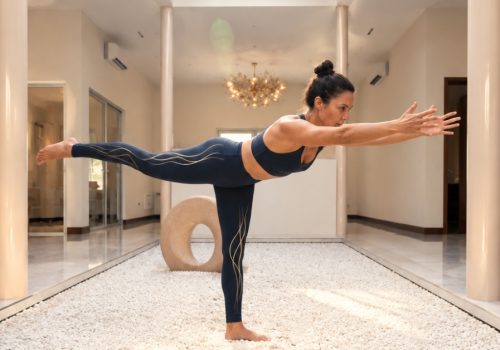














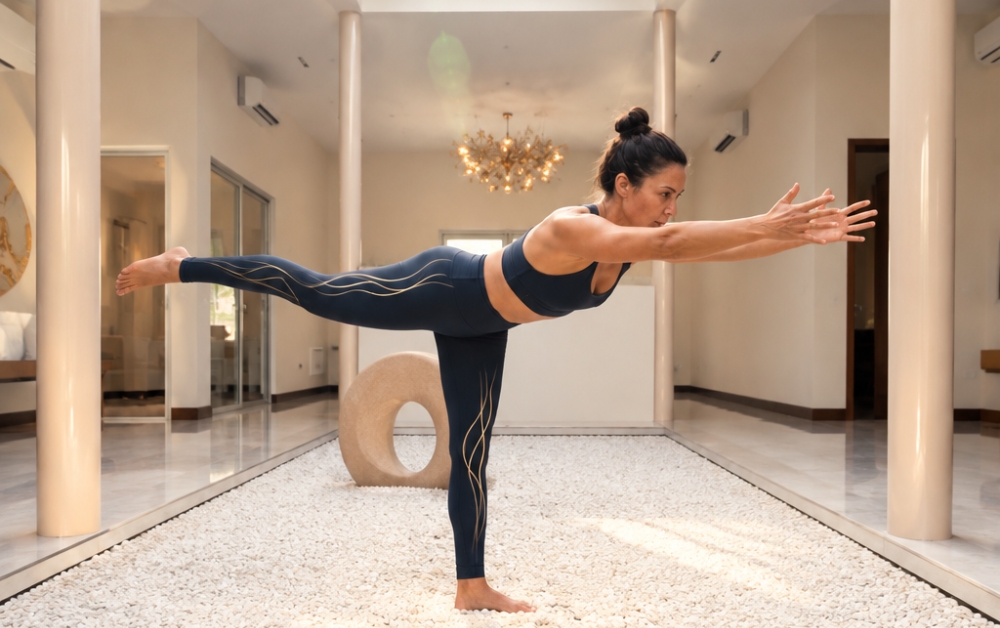

Some yoga poses look effortless in photographs. Virabhadrasana III, or Warrior III, rarely feels that way when you first explore it.
Standing on one leg while the torso reaches forward and the other leg extends behind asks for strength, coordination and attention. But the value of the pose is not in creating a perfectly horizontal line. It is in learning how to find steadiness without forcing the body into a shape.
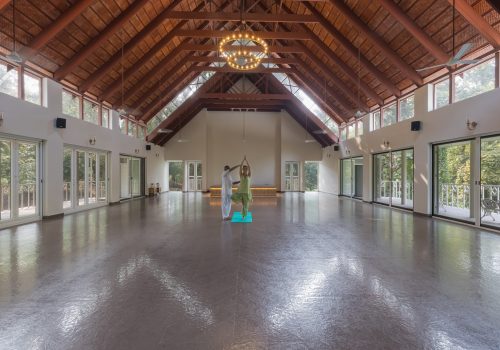
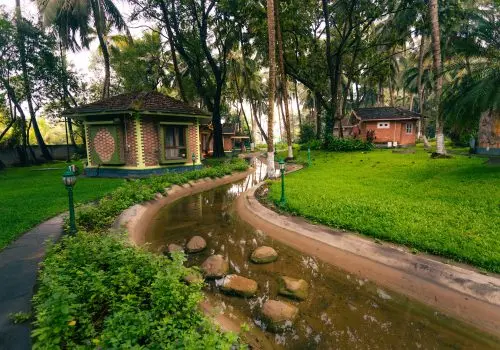
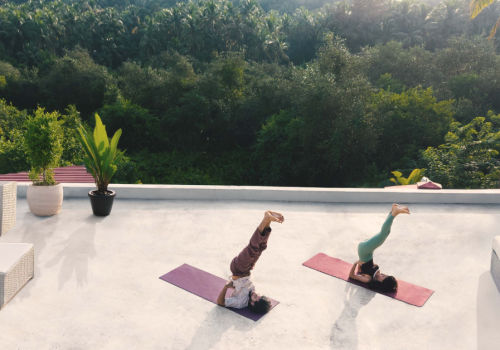
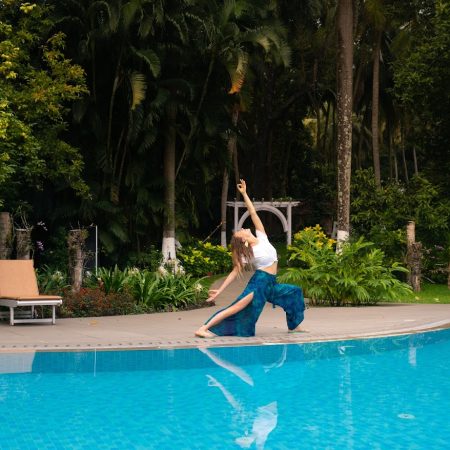
At Villa Raag in Agonda, that idea fits naturally into a slower approach to yoga: practise with attention, use support when it helps, and leave room for the pose to develop over time.
Start with stability, not depth
Begin standing comfortably and shift your weight gradually into one foot. Keep a soft bend in the standing knee if needed. As the torso begins to tip forward, extend the opposite leg behind you.
Rather than trying to lift the back leg as high as possible, think about length: reach forward through the crown of the head and backward through the heel.
Your hands can stay at your hips, reach forward, or rest on a wall or chair. The best variation is the one in which you can remain steady and breathe comfortably.
Support changes the practice
A wall can make Warrior III more accessible. Place your hands against it and walk back until your torso can move toward parallel with the floor. From there, explore lifting one leg without worrying about balance.
Support is not a lesser version of the pose. It can help you notice alignment, weight distribution and breath more clearly.
Notice before you correct
Warrior III gives you plenty to observe. Is the standing foot gripping? Are the shoulders tense? Is the lifted hip opening to the side? Has the breath become shallow because you are trying too hard?
Instead of correcting everything at once, choose one thing to notice. Make a small adjustment and see what changes.
That is often where yoga becomes more interesting: not in achieving the final shape, but in paying closer attention to how you arrive there.
Let the setting slow the practice down
At Villa Raag, yoga sits within a wider rhythm of an unhurried stay in Agonda. A morning practice does not need to become another item to complete before the day begins.
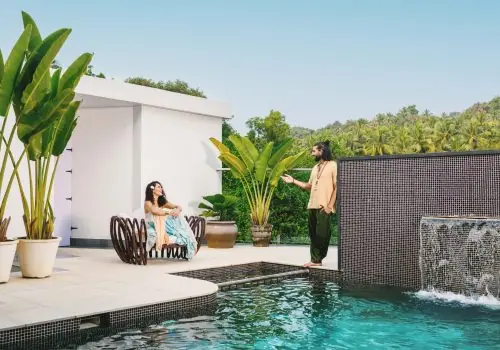
You might spend a few breaths exploring Warrior III, have breakfast, take time by the pool, walk along Agonda and return to the mat another day. Progress does not have to be dramatic to be meaningful.
For a pose built around balance, perhaps that is the most useful lesson: steadiness is something you explore, not something you perform.
If you experience sharp pain, dizziness or unusual discomfort, come out of the pose. If you are managing an injury, recovering from surgery or have a condition that affects balance, seek guidance from an appropriately qualified professional before changing your practice.




Leave a Reply