















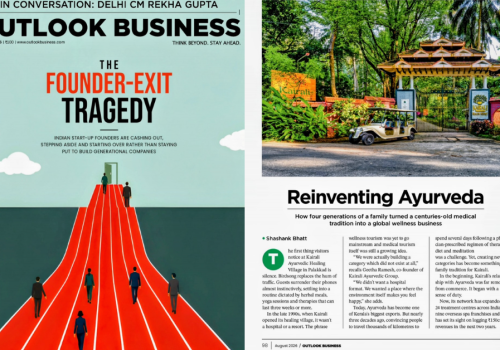
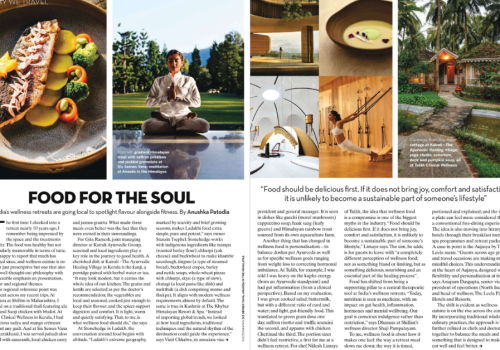


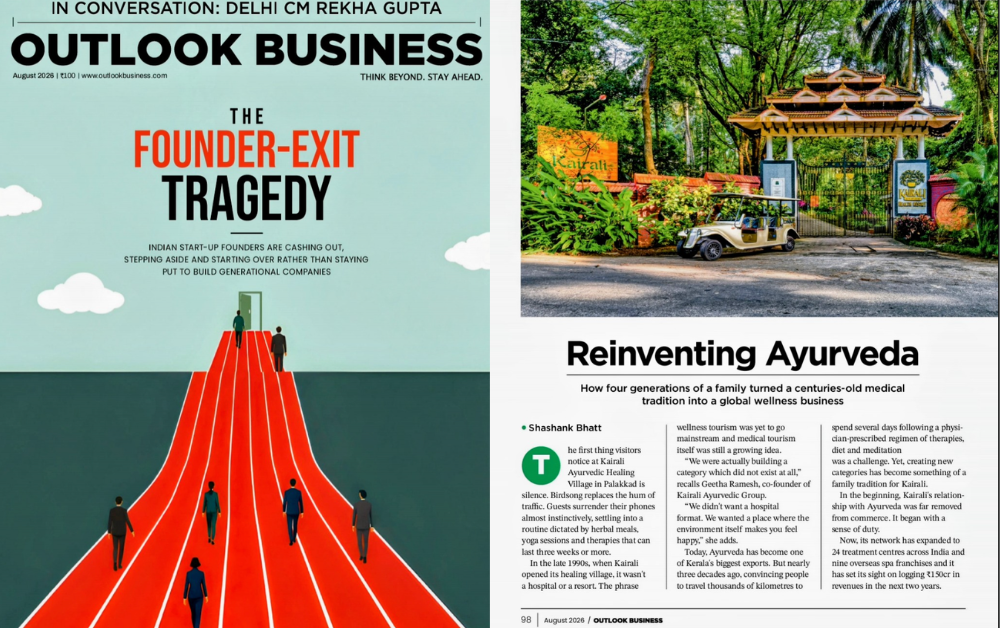
The August 2026 issue of Outlook Business features Kairali Ayurvedic Group in a story titled “Reinventing Ayurveda”, written by Shashank Bhatt.
The article looks beyond Kairali – The Ayurvedic Healing Village as a wellness destination. Instead, it follows a larger business question: how does a family tradition built around individual Ayurvedic care grow into an organisation without turning that care into something standardised?
That question has followed Kairali for much of its history.
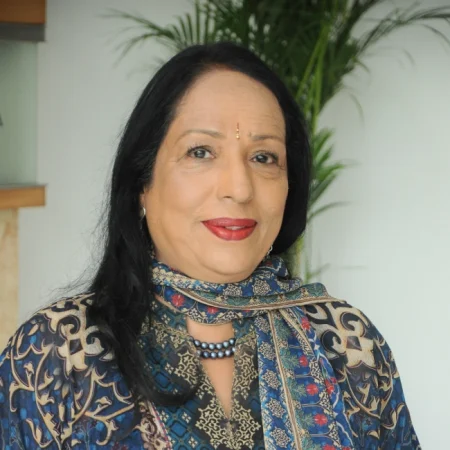
Kairali Ayurvedic Group was founded in 1989 by K.V. Ramesh and Gita Ramesh, drawing on four generations of Ayurvedic practice in the founders’ family. What began as a family knowledge tradition gradually expanded into treatment centres, pharmaceutical manufacturing and, later, the residential model represented by Kairali, The Ayurvedic Healing Village in Palakkad.
The Outlook Business feature presents this evolution not simply as expansion, but as a series of decisions about what could change and what had to remain intact.
From individual practice to an organised system
One of the most interesting parts of the article is its account of the period before the modern Kairali Group existed.
The feature traces the family’s Ayurvedic practice through earlier generations and describes a shift from medicines prepared by hand to more organised manufacturing. It highlights the role of K.S.V. Vasudevan in moving Ayurvedic formulations towards formats that could be produced and distributed more systematically.
By the late 1980s, according to the article, another question had emerged: could Ayurveda reach more people without losing the individual approach on which the system depends?
K.V. Ramesh and Gita Ramesh founded the modern Kairali Ayurvedic Group in 1989. Delhi became an important early market, even though Ayurveda was far less familiar there at the time than it was in Kerala.
That decision mattered because it tested whether Ayurveda could work outside the cultural setting in which it was already well understood.
The answer was not simply to open more treatment rooms. Kairali had to explain what Ayurveda was, why consultation mattered and why two people with similar complaints might receive different recommendations.
Why Ayurveda is difficult to scale
Most businesses grow by standardising.
Ayurveda creates a particular problem for that model.
Its clinical approach is individual by design. Two people may describe the same broad concern but differ in constitution, digestion, strength, medical history, age and current state of health. A physician may therefore recommend different therapies, food or routines.
That makes scale more complicated.
A standard product can be reproduced. A standard operating process can be repeated. But clinical judgement cannot simply be copied like a menu.
The Outlook Business article captures this tension particularly well. As Kairali expanded, the central challenge was not only how to grow, but how to build systems around a form of care that remains dependent on individual assessment.
That is still one of the most important questions facing Ayurveda today.
Why Palakkad became a different kind of model
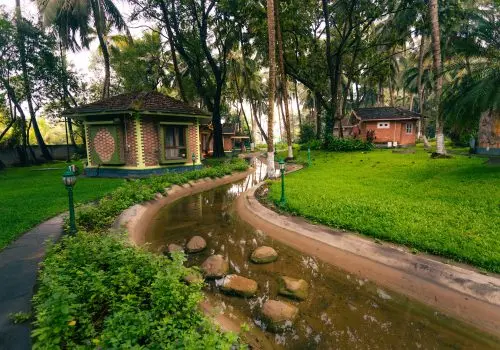
After establishing treatment activity in Delhi, Kairali eventually returned to Kerala to develop what became Kairali – The Ayurvedic Healing Village in Palakkad.
The idea was different from a city treatment centre.
A consultation lasting an hour can tell a physician a great deal. A residential programme allows something else: the opportunity to observe how food, sleep, therapies, movement and daily routine interact over time.
That distinction became central to the Palakkad model.
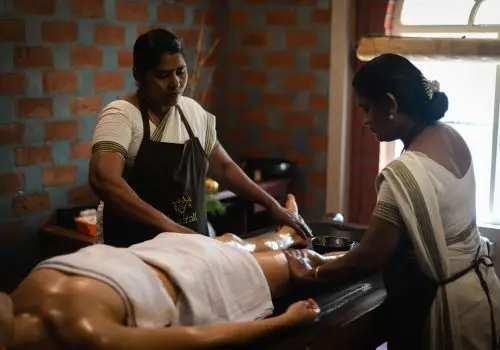
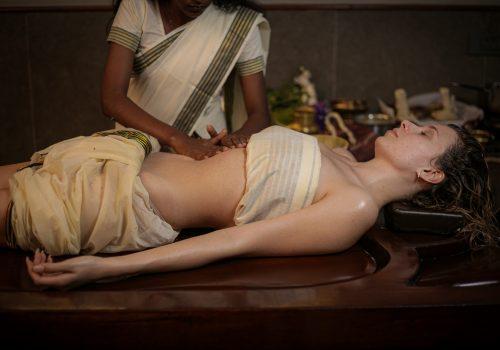
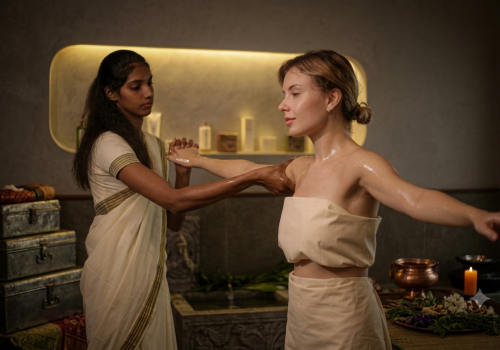
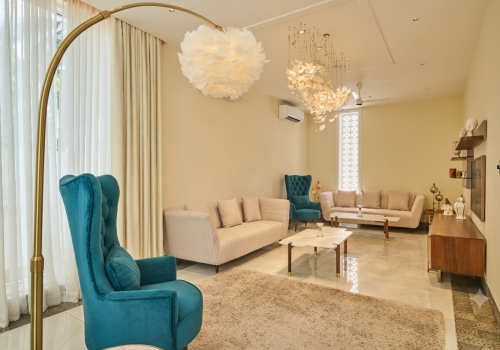
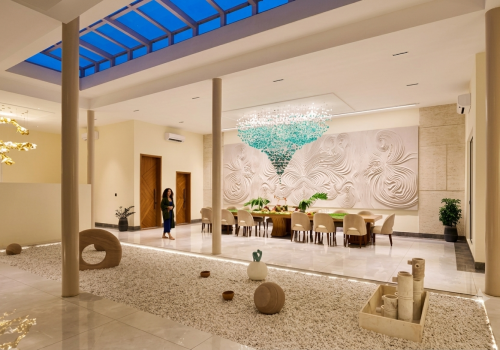
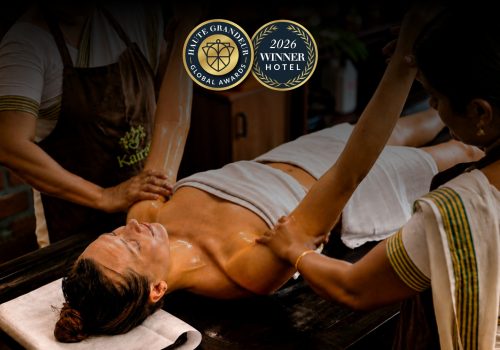
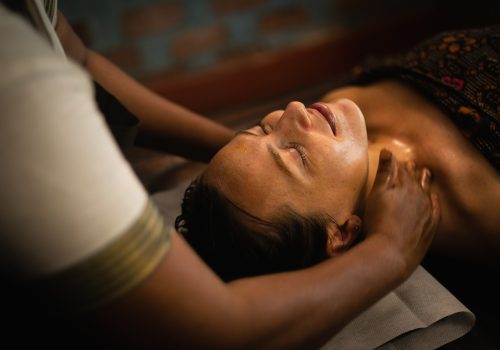
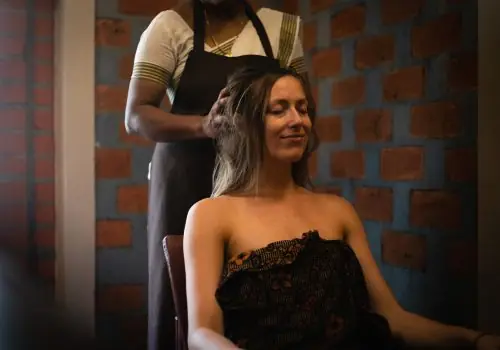
At the Healing Village, guests stay within the same environment in which their Ayurvedic programme is delivered. Physician consultations, treatments, meals, yoga, rest and daily routine can therefore be considered together rather than as separate services.
Today, Kairali, The Ayurvedic Healing Village operates as an NABH-accredited Ayurvedic hospital in Kodumbu, Palakkad.
The accreditation matters because it places the clinical structure at the centre of what might otherwise be described simply as a wellness retreat.
The next generation did not inherit a single business
Another theme in the Outlook Business feature is succession.
By the time the next generation entered the Group, Kairali was no longer one operation. It had developed different areas of activity, including treatment, hospitality, manufacturing and consumer products.
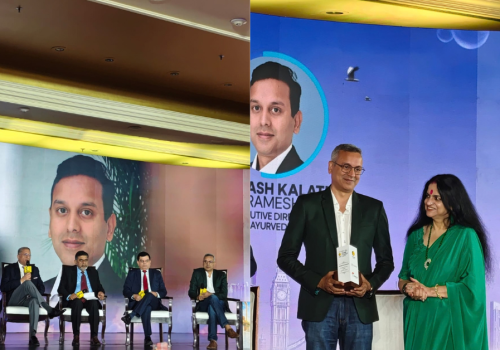
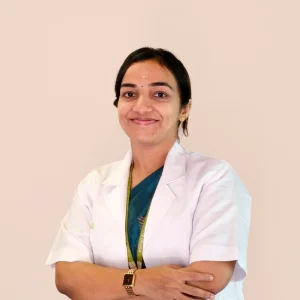
The article describes Abhilash K. Ramesh and Abishek Ramesh joining the family enterprise and taking responsibility for different parts of its development.
That division is worth noting.
Family-business succession is often described as though the next generation simply takes over what already exists. Kairali’s experience has been different. Growth created specialised verticals, and those verticals required different forms of leadership.
The challenge became less about preserving a small family operation exactly as it was and more about deciding which principles had to remain consistent as the organisation became larger.
What should never be standardised?
This is where the Outlook Business story becomes relevant beyond Kairali.
Ayurveda is now far more visible internationally than it was when Kairali began.
That visibility creates pressure to simplify.
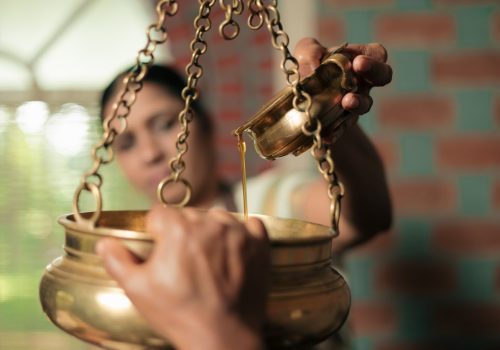
A therapy can become a spa treatment. A doṣa can become a personality type. Panchakarma can become a packaged itinerary. A traditional formulation can become another wellness product competing for attention on a crowded shelf.
Scale makes Ayurveda easier to distribute.
It can also make Ayurveda easier to dilute.
The answer is not to reject modern systems, manufacturing or technology. Ayurveda needs reliable processes if it is to operate responsibly at scale.
The more important question is what those systems are designed to protect.
For physician-led Ayurveda, individual assessment is one of those things.
A larger organisation can standardise hygiene, manufacturing processes, documentation, training and quality control. It should not assume that every patient requires the same clinical programme simply because standardisation is operationally convenient.
Tradition and modernisation are not opposites
The phrase “reinventing Ayurveda” makes a strong magazine headline.
But the story underneath it is more nuanced.
Modernisation does not necessarily mean changing Ayurveda into something else. It can also mean changing the systems around Ayurveda so that traditional clinical principles can function within a contemporary organisation.
Manufacturing needs quality standards.
Hospitals need documented processes.
International operations need reliable systems.
Patients need clarity about who is treating them and why a therapy has been recommended.
Digital tools may improve administration and access, but they do not replace physician judgement.
The useful distinction is between modernising delivery and simplifying clinical reasoning.
Those are not the same thing.
What the Outlook Business feature gets right
The strongest part of the Outlook Business feature is that it does not present Kairali’s story as a simple progression from “traditional” to “modern.”
Instead, it shows the friction between the two.
Growth creates opportunities. It also creates choices.
Do you use cheaper inputs?
Do you make every treatment centre identical?
Do you turn personalised care into a fixed package because it is easier to sell?
Do you expand faster than your systems can support?
These are business questions, but in Ayurveda they are also questions about clinical integrity.
For Kairali, the challenge of the next stage will be the same one that shaped the earlier stages: growing the institution without making Ayurveda generic.
That may be the more useful interpretation of “reinvention.”
Not replacing the system.
Building an organisation capable of carrying it forward.







Leave a Reply