
























Poor sleep. A menstrual cycle that suddenly becomes less predictable. Irritability that seems to arrive without warning. Hot flushes, fatigue, anxiety, changes in body composition or the unsettling feeling that your body is behaving differently from the one you have known for years.
For some women in their late thirties and forties, these changes may be part of perimenopause, the transition leading up to menopause.
The subject has become more visible in mainstream healthcare and wellness conversations, and that visibility matters. In August 2026, Karnataka announced initiatives focused specifically on menopause and perimenopause awareness and specialist training, reflecting a wider recognition that this stage of women’s health deserves greater attention.
But increased attention brings another challenge: not every episode of anxiety, insomnia, fatigue or low mood in a woman over 35 is caused by perimenopause.
That distinction is important.
Ayurveda can contribute usefully to this conversation when it does what it does best: looks at the pattern of change across sleep, digestion, menstrual rhythm, temperature, energy and emotional state, rather than reducing every experience to a single symptom or label.
First, What Exactly Is Perimenopause?
Perimenopause is the transitional period before menopause, during which ovarian hormone production becomes increasingly variable.
It commonly begins during the forties, although some women notice changes earlier. Menstrual cycles may become shorter, longer or less predictable. Changes in oestrogen and progesterone can be accompanied by hot flushes, night sweats, sleep disturbance, mood changes and vaginal or urinary symptoms.
Menopause itself is different. Clinically, natural menopause is generally recognised after 12 consecutive months without a menstrual period, when another cause is not responsible.
The transition is also highly individual.
One woman may first notice disrupted sleep. Another may experience irregular periods. Someone else may have prominent vasomotor symptoms such as hot flushes, while another experiences relatively few difficulties.
This is one reason self-diagnosing every midlife change as “hormonal” can be misleading. Symptoms associated with perimenopause can overlap with thyroid conditions, anaemia, mood disorders, sleep disorders and other health concerns. Appropriate medical assessment remains important, particularly when symptoms are new, severe or persistent.
Ayurveda Looks for a Pattern, Not Only a Hormone
Ayurveda did not describe perimenopause using modern concepts such as oestrogen or progesterone. It belongs to a different medical framework, and the two should not be presented as interchangeable.
What Ayurveda does offer is a way of examining how a transition is expressing itself in an individual.
An Ayurvedic consultation may consider menstrual rhythm alongside agni (digestive and metabolic function), sleep, appetite, bowel patterns, energy, emotional state, tissue nourishment and the relative influence of the three doṣas (functional principles): Vāta, Pitta and Kapha.
This pattern-based approach matters because two women experiencing the same life stage may require very different forms of support.
When Vāta Features Predominate
Vāta is traditionally associated with movement, variability and the nervous system.
During a period of transition, a Vāta-predominant pattern may include features such as:
- irregularity in the menstrual cycle
- difficulty falling or staying asleep
- restlessness
- heightened worry
- racing thoughts
- dryness
- fluctuating energy
The Ayurvedic emphasis in such a pattern is generally on regularity, adequate nourishment, rest and reducing unnecessary physical and mental overstimulation.
When Pitta Features Predominate
Pitta is traditionally associated with heat, transformation and metabolic activity.
A Pitta-predominant presentation may be characterised by:
- sensations of heat
- hot flushes
- night sweats
- increased heat sensitivity
- irritability
- emotional intensity
- disturbed sleep associated with feeling overheated
This Ayurvedic interpretation should not be confused with a biomedical diagnosis. Rather, it is one way an Ayurvedic physician organises a group of presenting features before deciding whether and how traditional care may be appropriate.
When Kapha Features Predominate
Kapha is associated with structure, stability and heaviness.
A Kapha-predominant pattern may include:
- feelings of heaviness
- sluggishness
- reduced motivation
- changes in body composition
- lethargy
- emotional dullness
Most people do not fit neatly into one category. Mixed patterns are common, which is precisely why a competent Ayurvedic assessment should go beyond an online dosha checklist.
Why So Many Women Feel Unprepared for the Transition
One of the more difficult parts of perimenopause is not necessarily an individual symptom. It is the uncertainty.
A woman who has spent decades with a relatively predictable menstrual cycle may suddenly experience changes that seem disconnected from one another.
She sleeps badly and assumes it was a stressful week.
Her cycle changes and she attributes it to travel.
She feels unusually irritable and blames herself for being impatient.
She feels anxious without an obvious reason and wonders whether she is simply failing to cope as well as she used to.
Recognition matters because these experiences deserve investigation rather than dismissal.
At the same time, the current surge of menopause discussion requires some caution. Recent reporting has highlighted concerns that anxiety, insomnia and “brain fog” are sometimes attributed too quickly to perimenopause, particularly in commercial or social-media environments. Clinical guidance increasingly emphasises careful symptom history rather than assuming every symptom in midlife has the same cause.
The useful middle ground is neither dismissal nor overdiagnosis.
It is careful attention.
What a Physician-Guided Ayurvedic Approach Can Look Like
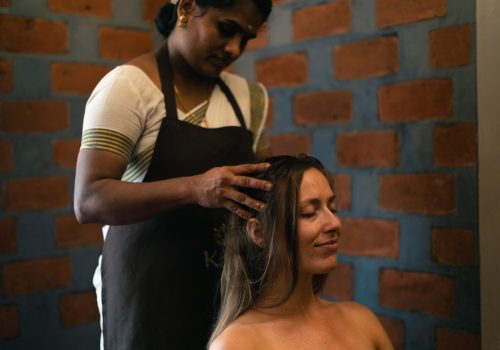
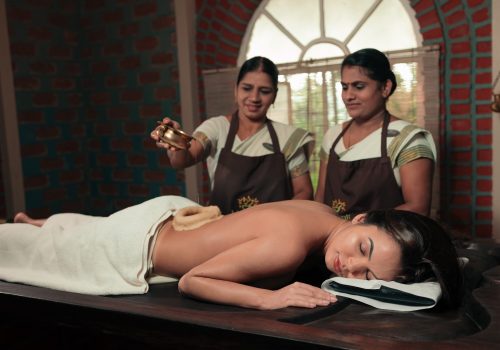
At Kairali – The Ayurvedic Healing Village in Palakkad, women’s health is approached within a physician-led Ayurvedic framework. Kairali is an NABH-accredited Ayurvedic hospital-resort, and care is individualised rather than based on a standard protocol applied to every guest.
For women presenting during the perimenopausal years, an Ayurvedic consultation may consider much more than the menstrual cycle alone.
The physician may assess:
- menstrual pattern and recent changes
- sleep quality
- digestion and appetite
- stress and emotional state
- energy levels
- daily routine
- dietary patterns
- constitutional and current dosha features
- other medical conditions and medicines being taken
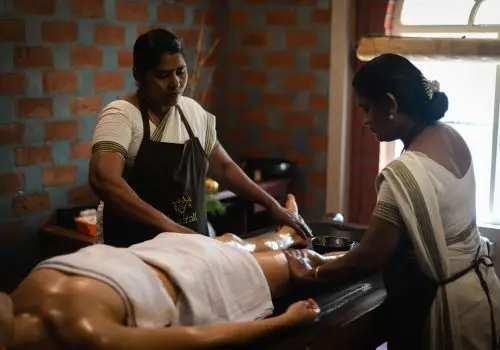
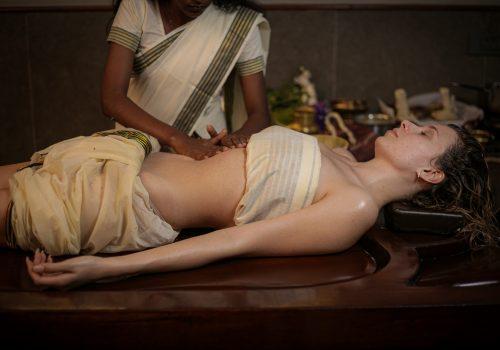
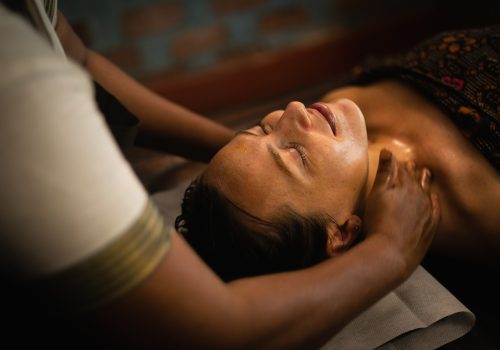
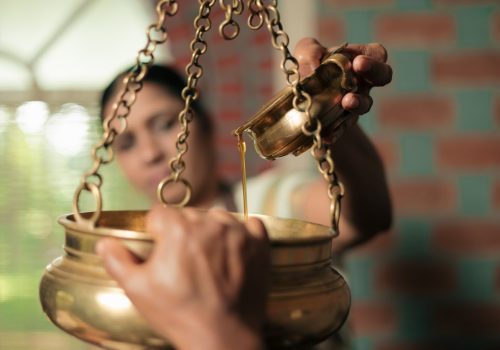
Depending on that assessment, traditional care may include dietary guidance, adjustments to daily routine, supervised Ayurvedic therapies, appropriately selected herbal preparations and practices intended to support rest and stress regulation.
The objective should not be to promise that Ayurveda can “fix hormones”.
That is neither an accurate description of Ayurvedic practice nor an evidence-based claim.
A more responsible role for Ayurveda is supportive care during a physiological transition, individualised to the person rather than reduced to the diagnosis.
Where Herbs Fit, and Where the Claims Need Caution
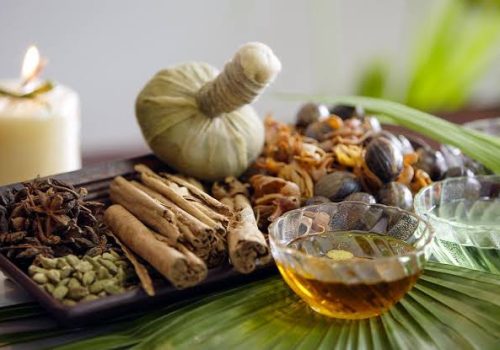
Three herbs frequently appear in discussions of Ayurveda and women’s health: Śatāvarī (Asparagus racemosus), Brahmi (Bacopa monnieri) and Aśvagandhā (Withania somnifera).
They should not, however, be treated as a universal perimenopause prescription.
Shatavari
Shatavari has a longstanding place in Ayurvedic approaches to women’s health and nourishment.
Contemporary research is beginning to investigate its potential relevance to menopausal symptoms. Recent controlled studies have reported encouraging findings for Shatavari extracts in women experiencing menopausal or postmenopausal symptoms, but this remains a developing evidence base rather than grounds for describing the herb as a proven treatment.
Brahmi
Brahmi is traditionally classified as a medhya rasāyana, a category associated with supporting cognitive and mental functions.
In a perimenopause context, its relevance would therefore be considered according to the individual’s overall presentation rather than because Brahmi is a specific “menopause herb”.
Claims that it directly corrects hormonal changes would go beyond the evidence currently available.
Ashwagandha
Ashwagandha is widely studied in contemporary research, particularly in relation to stress and sleep.
There is also emerging clinical research specifically examining Ashwagandha during the climacteric and perimenopausal period, with some studies reporting improvements in certain symptom scores. These findings are interesting, but they do not establish that Ashwagandha is appropriate for every woman going through perimenopause.
Herbal selection depends on the individual, the preparation, medical history, other medicines and the physician’s assessment.
“Natural” does not mean automatically suitable.
Perimenopause Is a Transition, Not a Personal Failure
Perhaps the most important thing women should know about perimenopause is that recognising change is not the same as pathologising it.
Perimenopause is a physiological transition.
But a natural transition can still produce symptoms significant enough to affect sleep, work, relationships and quality of life. Women should not be expected simply to tolerate those symptoms because the process itself is natural.
Nor should Ayurveda be framed as an alternative that requires women to reject conventional care.
Depending on the woman and her symptoms, appropriate support may include consultation with a gynaecologist or menopause specialist, discussion of evidence-based medical treatments, nutritional and lifestyle changes, psychological support, and complementary approaches such as physician-guided Ayurveda.
The most useful model is not one system competing with another.
It is a woman receiving enough information to understand what is changing, enough clinical attention to rule out other causes, and enough choice to decide what kind of support is appropriate for her.
What Women Over 35 Can Pay Attention To
You do not need to wait for symptoms to become overwhelming before paying attention to changes in your health.
Notice patterns.
Has your menstrual cycle changed significantly?
Has sleep become persistently difficult?
Are hot flushes or night sweats appearing?
Has your mood changed in a way that is affecting daily life?
Are fatigue, anxiety or changes in energy persistent rather than occasional?
And, importantly, could something other than perimenopause be contributing?
Keeping track of these changes can make conversations with both conventional and Ayurvedic practitioners more useful.
Perimenopause does not look identical in every woman. That is precisely why good care begins with observation rather than assumptions.
Ayurveda’s contribution to the conversation is not the claim that it discovered modern hormonal science centuries ago. It did not.
Its contribution is a different question: how is this transition expressing itself in this particular person, and what forms of nourishment, routine, rest and professionally supervised care may support her through it?
For a stage of life that has too often been minimised, that individual attention matters.