

















A week at an Ayurvedic retreat does not necessarily begin with a massage.
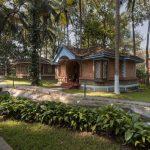
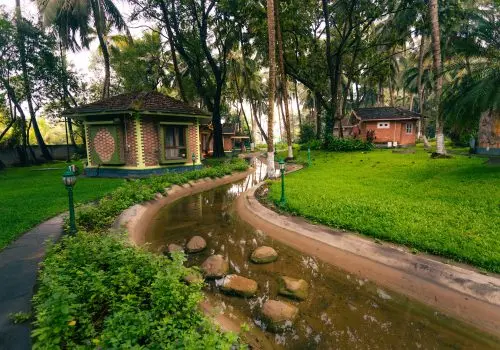
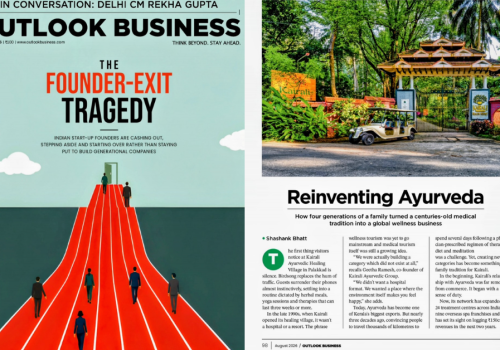
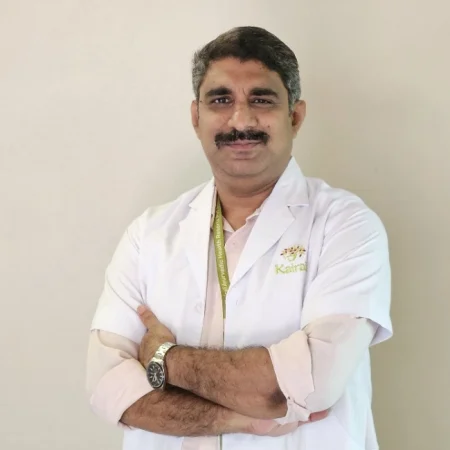
At Kairali – The Ayurvedic Healing Village in Palakkad, the starting point is typically a consultation. Before therapies are planned, an Ayurvedic physician considers the individual’s health history, daily routine, digestion, sleep, appetite and other relevant factors.
That distinction is important when trying to understand Panchakarma. It is often described in travel and wellness media simply as an Ayurvedic “detox”, but classical Panchakarma is a supervised therapeutic framework rather than a fixed collection of spa treatments.
A residential stay brings together physician assessment, therapies, food, yoga, breathing practices and rest. What happens over a week depends on the individual and the treatment plan recommended by the physician.
Here is what that rhythm can look like.
Day 1: Consultation before treatment
Arrival at an Ayurvedic retreat is often quieter than visitors expect.
The change of environment itself can be noticeable: fewer interruptions, a more structured daily routine and considerably less of the constant movement associated with ordinary work and travel.
But the clinically relevant part of the first day is the consultation.
An Ayurvedic physician may ask about sleep, digestion, appetite, bowel habits, stress, food preferences, previous illnesses and everyday routines. The assessment can also consider prakriti (individual constitution) and vikriti (the present pattern of imbalance).
These concepts are used within Ayurveda to help practitioners individualise care.
The result should not be an identical Panchakarma programme for every guest. Therapies, food and daily routines may differ because the assessment is intended to guide what is appropriate for that individual.
Days 2–3: Establishing a treatment rhythm
Once the physician has established a plan, therapies may begin.
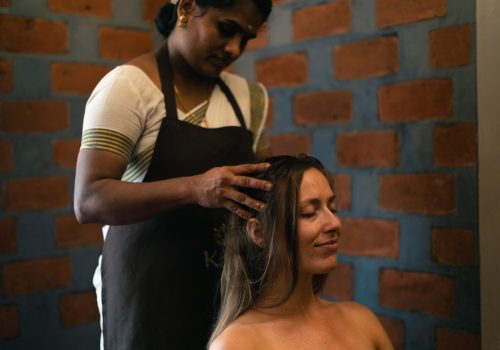
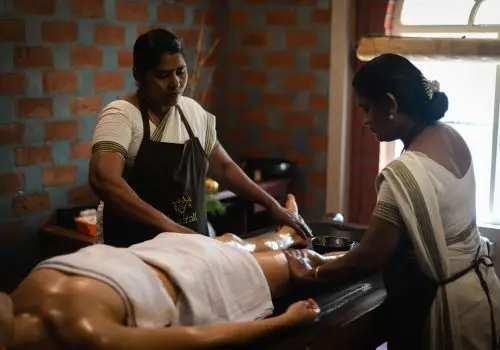
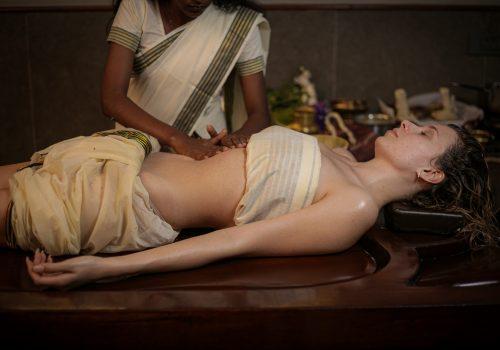
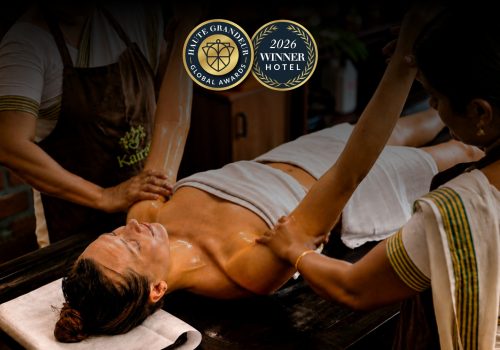
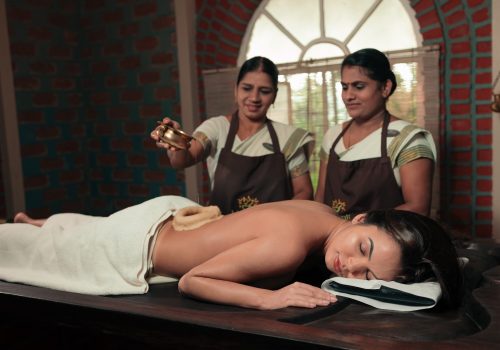
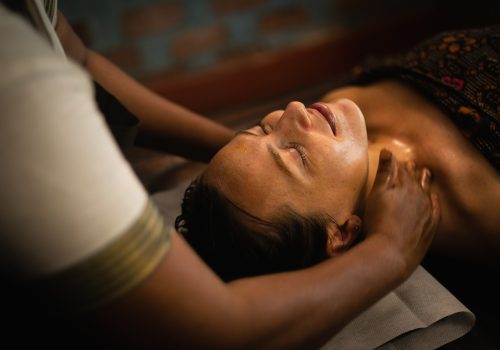
One commonly encountered treatment is Abhyanga, an Ayurvedic oil therapy in which warm herbal oils are applied across the body using rhythmic movements.
For many guests, the immediate experience is one of warmth and relaxation. But within an Ayurvedic treatment programme, Abhyanga is not simply chosen because it feels pleasant. The oil, technique and place of the therapy within the wider programme may be determined by the physician.
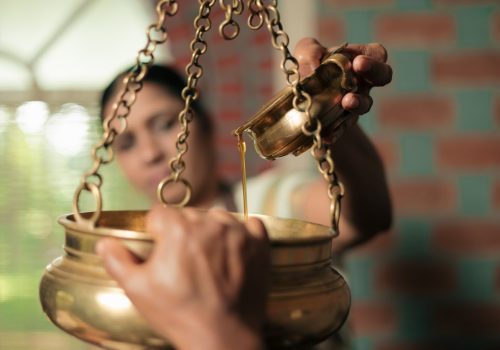
Another therapy that may be prescribed in appropriate cases is Shirodhara, in which a controlled stream of liquid, commonly oil, is directed over the forehead for a set period under supervision.
Shirodhara has become one of the most recognisable images of Ayurveda in wellness media. Yet, as with other Ayurvedic procedures, its suitability depends on the individual. It should not be treated as an automatic component of every Panchakarma stay.
Yoga, breathing and a different daily pace
By the second or third day, another aspect of residential Ayurveda becomes clearer: treatment is not limited to the therapy room.
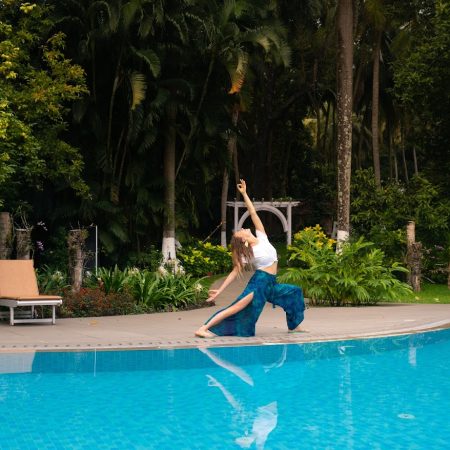
A typical day may include yoga, breathing practices, prescribed therapies, meals and periods of rest.
That repetition creates a rhythm quite different from a conventional holiday.
Yoga sessions can provide gentle movement alongside the therapeutic schedule, while breathing and meditation practices create quieter periods within the day. These activities are not substitutes for medical treatment, but they can form part of the broader residential environment in which Ayurvedic care is delivered.
The intention is not to keep the guest constantly occupied.
In fact, one of the more unfamiliar aspects of a retreat can be the amount of space deliberately left for rest.
Food is part of the programme
Meals are another area where an Ayurvedic retreat differs from a conventional resort.
Food within a physician-guided Ayurvedic programme may be adjusted according to the individual and the stage of treatment. The objective is not simply to create a menu labelled “healthy”.
Ayurveda pays particular attention to agni (digestive function) and to how food is tolerated by the individual.
That means meals may be comparatively simple during certain stages of a programme. Visitors accustomed to treating restaurant dining as a central part of a holiday can find this shift surprisingly significant.
Food becomes part of the daily therapeutic structure rather than entertainment between treatments.
Days 4–5: When the routine does not feel effortless
Many retreat narratives make Panchakarma sound continuously serene.
That is not necessarily a useful expectation.
A new diet, an unfamiliar schedule, reduced stimulation and physician-directed therapies can take adjustment. Some people may feel tired or restless, while others may simply find the slower routine unfamiliar.
These experiences should not automatically be interpreted as evidence that “toxins are leaving the body”.
That explanation is common in wellness marketing, but it converts a traditional concept into a physiological claim that has not been established in those terms.
If a guest experiences discomfort, unusual symptoms or significant changes during Panchakarma, the appropriate response is to tell the supervising physician rather than assume discomfort is a necessary sign that the treatment is working.
That is one reason professionally supervised Panchakarma differs from self-directed “detox” programmes.
Days 6–7: Observation rather than promised transformation
A week is long enough for someone to become accustomed to a very different routine, but it is not a useful point at which to promise a standard result.
Some guests may notice changes in how they sleep, eat or experience the pace of the day. Others may require considerably longer programmes, depending on why they have sought Ayurvedic care and what their physician recommends.
Ayurveda is individualised precisely because there is no single timetable for improvement.
For that reason, claims such as “by day seven your digestion will be perfect” or “your stress will disappear” do not reflect responsible Ayurvedic communication.
A more meaningful question at the end of the first week is simply: what has changed, and what has the physician observed?
That assessment can then influence the next stage of the programme.
Panchakarma is more than a wellness ‘detox’
The widespread description of Panchakarma as a detox has made it easier to market, but harder to understand.
Within classical Ayurveda, Panchakarma refers to a group of physician-directed procedures used in specific clinical contexts, with preparatory and post-procedure stages around them. Not every guest undergoes every procedure, and not every Ayurvedic retreat stay should automatically be described as Panchakarma.
This is why consultation matters so much.
Abhyanga, Shirodhara, yoga, dietary changes and rest may all appear within a residential Ayurvedic programme, but their presence alone does not define Panchakarma.
The physician-directed sequence does.
What a week in Palakkad can reveal
Perhaps the most useful thing a week at an Ayurvedic healing village offers is not an instant transformation.
It is a chance to experience healthcare organised around a different rhythm.
Consultation comes before therapy. Food is considered alongside digestion. Rest is scheduled rather than squeezed between activities. Yoga and breathing practices have a defined place in the day. Treatment decisions are intended to respond to the individual rather than to a standard retreat itinerary.
For someone accustomed to experiencing Ayurveda through isolated massages or wellness products, that structure can change the way the system is understood.
The lesson is less dramatic than the language of detoxes and transformations.
But it is more accurate: Panchakarma is not something that happens to every person in the same way. It is a supervised process whose value depends on assessment, appropriate treatment and careful observation of the individual.
Website: www.ktahv.com
Call: +91-9555156156