













The procedures used for one individual may therefore differ substantially from those used for another.
This is also where the distinction between clinical Panchakarma and the abbreviated versions sometimes offered in the wellness industry becomes important.
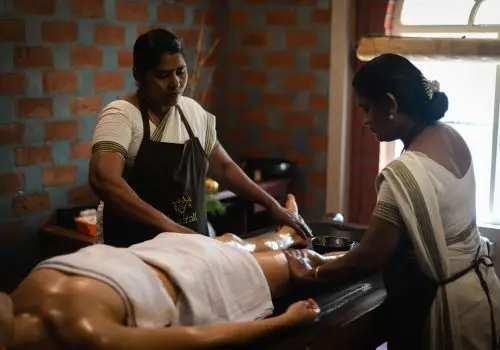
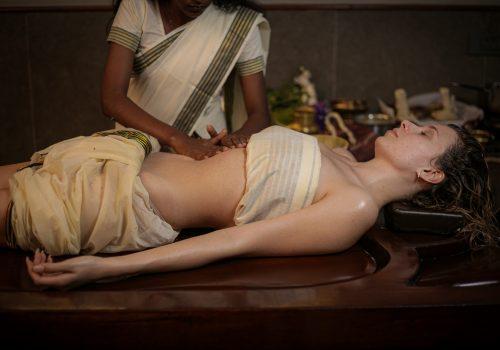
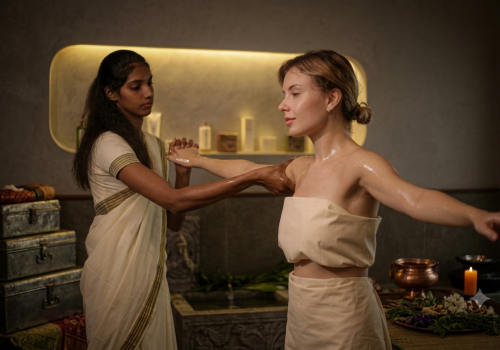
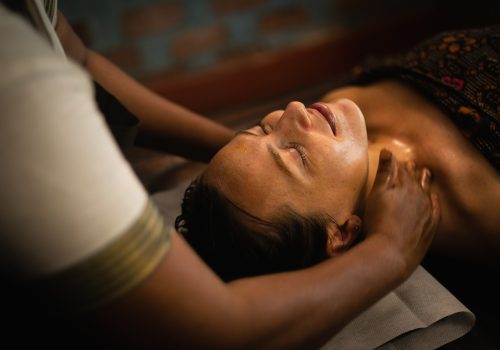
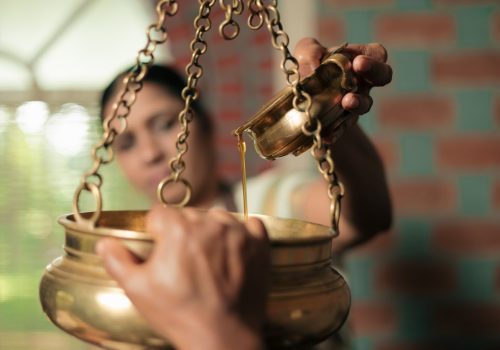
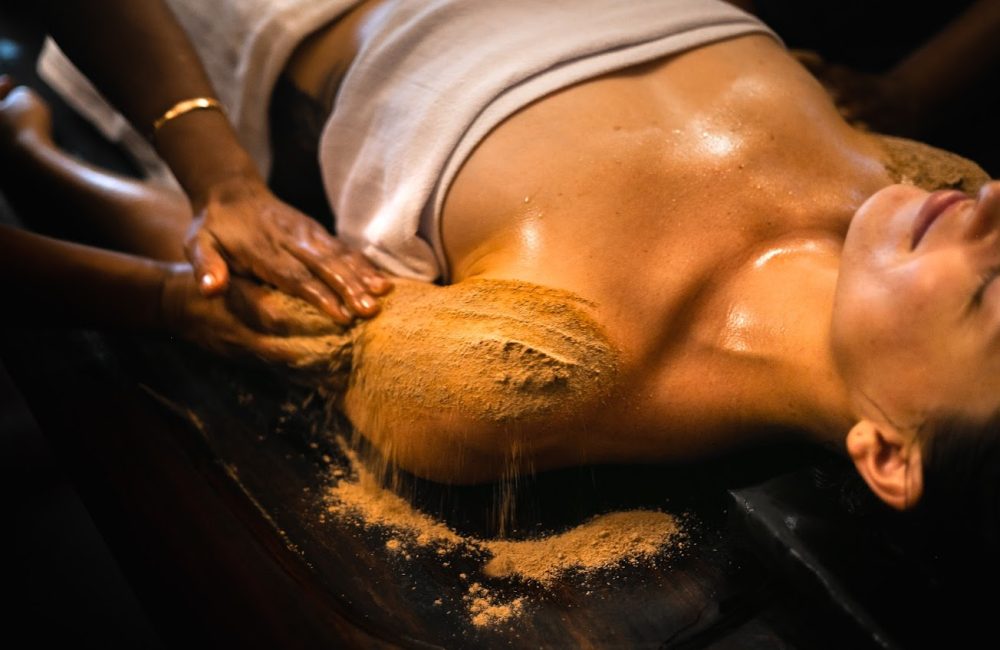
In a classical Ayurvedic setting, Panchakarma is not simply a collection of massages or cleansing treatments chosen from a menu. Assessment by an Ayurvedic physician determines whether Panchakarma is appropriate, which procedures are considered, and how they fit into the wider programme of diet, daily routine, rest and therapeutic care.
That complexity can make Panchakarma more difficult to study. But it also makes careful research more necessary.
What this means in a physician-led setting such as Kairali
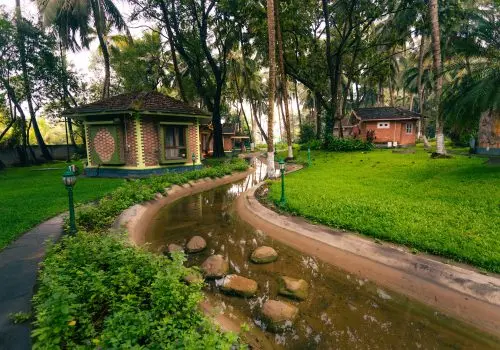
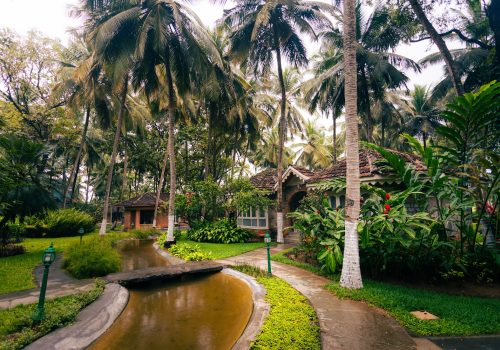
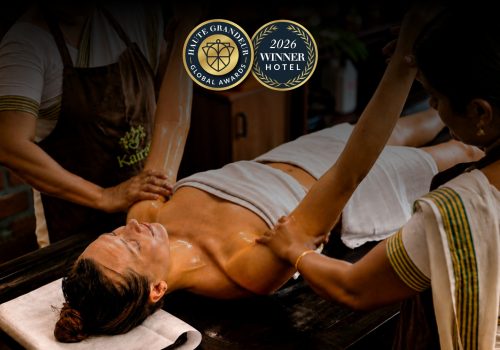
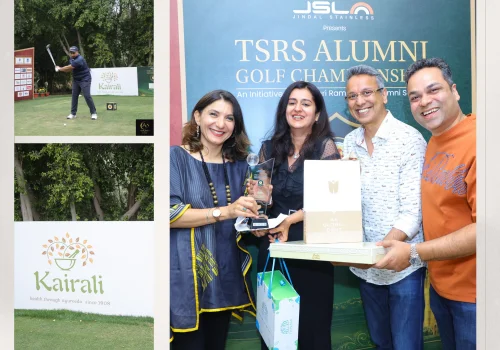
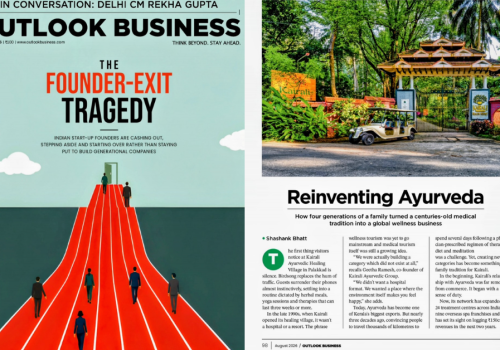
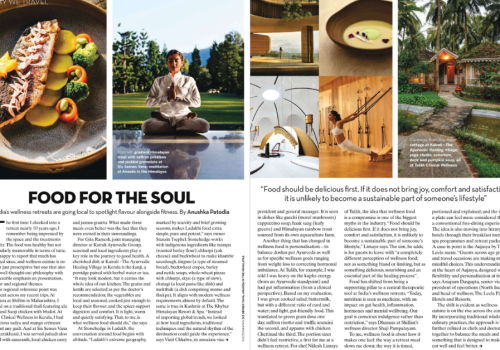
At Kairali – The Ayurvedic Healing Village in Palakkad, Kerala, Panchakarma is delivered within a physician-led clinical framework rather than as a standard wellness package.
Kairali is an NABH-accredited Ayurvedic hospital-resort, and its Panchakarma programmes are supervised within an Ayurvedic clinical setting.
That does not mean the findings reported by The Tribune can automatically be applied to Kairali’s programmes.
Nor does it mean that a person undergoing Panchakarma should expect a particular oxidative-stress result.
The relevance is more fundamental.
Research such as the study reported this week reinforces the importance of evaluating Ayurveda as it is actually practised: with physician assessment, defined procedures, appropriate supervision and measurable outcomes.
For international patients considering Panchakarma, that distinction should matter.
The useful question is not simply, “Does this retreat offer Panchakarma?”
It is: Who evaluates me, why are these particular procedures being selected, how are they supervised, and what can reasonably be expected from them?
Those questions are far more informative than a list of treatments.
Ayurveda needs more research, not bigger claims
Ayurveda sometimes finds itself caught between two unhelpful extremes.
One treats every traditional practice as scientifically proven simply because it has a long history.
The other assumes that anything that has not yet accumulated large modern clinical trials has no value worth investigating.
Neither position is particularly useful.
Traditional use can tell researchers where to look. Clinical observation can generate questions. Small studies can provide signals. Controlled trials can test those signals more rigorously. Repeated research can then show whether an effect is consistent, clinically meaningful and applicable beyond the original study population.
That is how an evidence base develops.
The study reported by The Tribune is therefore interesting not because it settles the question of Panchakarma and oxidative stress, but because it asks a question that can be studied further.
Future research would be more informative with clearly described participant characteristics, standardised outcome measures, appropriate comparison groups, recognised oxidative-stress biomarkers, transparent statistical reporting and longer follow-up.
For Ayurveda, this kind of methodological clarity is not a threat to tradition.
It is how traditional clinical knowledge can be examined seriously in a modern healthcare environment.
What should readers take away?
The current report should not be read as proof that Panchakarma prevents disease or universally lowers oxidative stress.
It should be read as an early contribution to a much larger research question.
Can carefully selected Ayurvedic procedures produce measurable physiological changes?
If so, which procedures?
For whom?
Under what clinical circumstances?
And are those changes meaningful over time?
Those are the questions worth pursuing.
For people considering Panchakarma themselves, the practical lesson is simpler: choose a programme where the process begins with qualified clinical assessment rather than with a predetermined package of therapies.
Considering Panchakarma?
Kairali offers physician-led Panchakarma programmes at its NABH-accredited Ayurvedic facility in Palakkad, Kerala. Programmes are selected following Ayurvedic assessment rather than offered as a uniform protocol.
Enquire about Kairali’s Panchakarma programme.
Website: www.ktahv.com
Call: +91-9555156156


Leave a Reply