


















There is a point in every difficult yoga posture when effort becomes revealing.
In Aṣṭāvakrāsana, or Eight-Angle Pose, that moment can arrive quickly. The arms are working, the hips must organise themselves around the shoulders, the core has to remain active, and the breath is asked to stay steady while several parts of the body negotiate an unfamiliar load.
For experienced practitioners, that complexity is part of the appeal. But within an Ayurvedic approach to yoga, the question is not simply whether the posture can be achieved.
The more useful questions are: What happens to the breath under pressure? Where does unnecessary tension appear? Does concentration become sharper, or does effort turn into frustration? And perhaps most importantly, does the practitioner recognise when to continue and when to stop?
At Villa Raag in Goa, advanced yoga is best understood in that context. A difficult posture can be a milestone, but it is not the objective of the practice.
Aṣṭāvakrāsana Is More Than an Arm Balance
Eight-Angle Pose asks for a combination of strength, mobility and concentration.
The wrists and shoulders need sufficient stability to bear weight. The hips and hamstrings need enough mobility to allow the legs to position themselves without forcing. The trunk must remain active enough to organise the body around a relatively small base of support.
And throughout all of this, the breath remains important.
It is easy to think of advanced yoga in terms of visible achievement: the feet leave the floor, the posture is held, the photograph is taken.
The less visible part is often more instructive.
A practitioner may technically complete the pose while holding the breath, gripping through the jaw or pushing discomfort into the wrists. Another may not complete the full posture but remain attentive, controlled and responsive throughout the attempt.
From the perspective of a thoughtful practice, the second experience may be the more useful one.
Are the Foundations There?
Advanced postures tend to expose weaknesses that simpler movements can hide.
Before working towards Aṣṭāvakrāsana, it helps to look honestly at the basic requirements underneath it.
Can you maintain a stable plank without allowing the lower back to collapse?
Can you move through Chaturanga with control and without pain?
Can the shoulders support weight without the neck becoming tense?
Can you sit comfortably with an easy breath, rather than treating stillness as something to endure?
And after a demanding practice, how do you recover?
Recovery is particularly important. A strong session that leaves someone unusually agitated, depleted or unable to settle later in the day may have exceeded what was useful, even if every posture was technically completed.
This is where an Ayurvedic approach adds something valuable to yoga practice: intensity is not considered in isolation. The person’s constitution, current state, sleep, digestion, energy and ability to recover all influence what an appropriate practice looks like on a given day.
At Villa Raag, that can mean moving away from the original ambition of the session.
A guest may arrive expecting an “advanced” sequence and instead spend more time on mobility, foundational strength, breath regulation or restorative work.
That is not necessarily a regression.
Sometimes it is the preparation that makes genuinely advanced practice possible.
Looking at Practice Through Vāta, Pitta and Kapha
Ayurveda describes three functional principles, or doṣas: Vāta, associated with movement; Pitta, associated with transformation and metabolic activity; and Kapha, associated with structure and stability.
These concepts are often simplified into personality types, particularly in contemporary wellness culture. In practice, they are more useful as a way of noticing tendencies than as fixed labels.
That distinction matters in yoga.
Someone showing stronger Vāta qualities may be enthusiastic about complex movement but benefit from repetition, stability and a slower progression. Constantly changing the sequence or repeatedly attempting a difficult balance may create more agitation than useful challenge.
Someone showing stronger Pitta qualities may respond very differently. The challenge itself can become compelling. One more attempt, one longer hold, one cleaner transition.
For that practitioner, the more advanced lesson may be to reduce unnecessary effort: soften the face, allow the breath to remain unforced and recognise the point at which discipline has quietly turned into competitiveness.
Where Kapha qualities are more pronounced, the body may respond well to strength and sustained work but require a more energetic beginning to overcome inertia and establish momentum.
None of these observations means that Vāta, Pitta or Kapha determines who can or cannot practise an arm balance.
The purpose is simply to adapt the practice to the person rather than asking every person to adapt to an identical practice.
Preparing for Eight-Angle Pose
Aṣṭāvakrāsana does not begin when the feet leave the floor.
A considered sequence usually starts with preparing the joints and movement patterns that the final posture will demand.
Begin with the wrists, shoulders and spine
Wrist circles, gentle palm stretches and controlled weight-bearing movements can prepare the hands and forearms.
Cat-Cow variations help mobilise the spine, while slow Sun Salutations can gradually introduce load through the shoulders and arms.
Speed is not necessary here.
A slower warm-up gives the practitioner time to notice how the body feels that day. If the wrists are unusually sensitive or the breath is already becoming laboured during relatively simple movements, that information should influence what follows.
Develop core control and hip mobility
Low Boat Pose, or Ardha Nāvāsana, can help develop trunk control without requiring the complexity of an arm balance.
Seated twists introduce rotation and help the practitioner organise the torso, while hip-opening movements such as Lizard Pose or figure-four variations can prepare the lower body for the compact positioning required in Aṣṭāvakrāsana.
This is also a useful stage for checking effort.
If the breath shortens repeatedly, the jaw tightens or the face begins to strain, reducing intensity may be more productive than simply continuing.
Introduce arm-balance work gradually
Preparatory postures such as Bakāsana, or Crow Pose, can build familiarity with shifting weight into the hands.
Side Plank variations develop lateral trunk stability.
From there, the practitioner can explore the mechanics of Eight-Angle Pose gradually, sometimes with blocks, bolsters or folded towels used to reduce the fear of falling.
Props are not evidence that the posture is being practised “less well”.
If reducing fear allows someone to move with better control and less unnecessary bracing, the prop is serving the practice.
The Difference Between Effort and Strain
Strong yoga involves effort. Avoiding effort altogether would make many postures impossible.
The more useful distinction is between effort and strain.
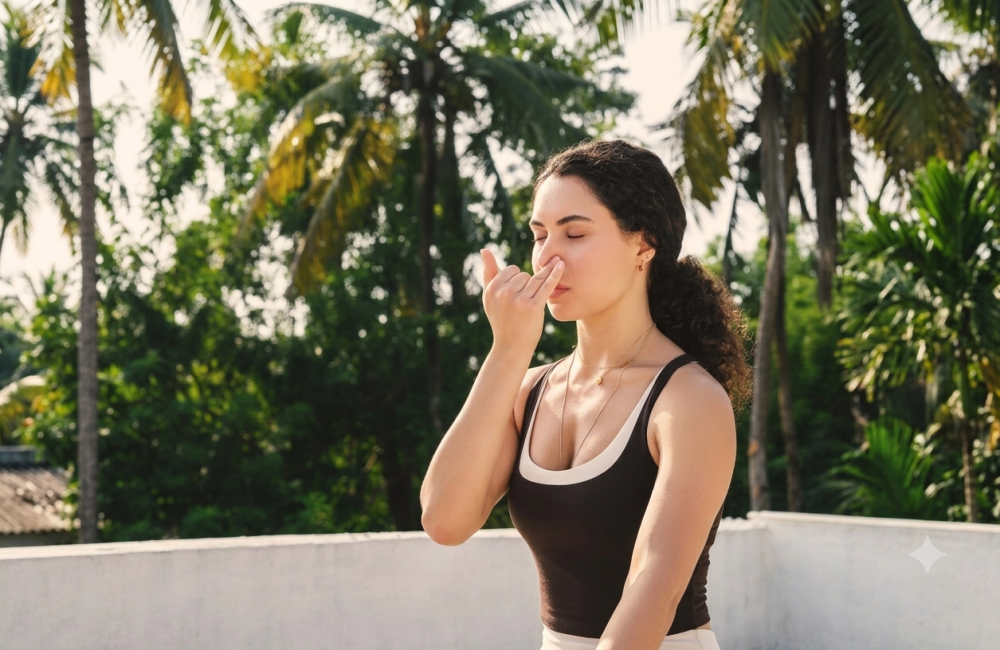
Breath is one of the clearest signals.
Breathing may naturally become stronger during demanding physical work, but repeatedly holding the breath or gasping through a posture often suggests that the intensity needs to change.
Joint sensation matters too.
Muscular fatigue is different from sharp pain in the wrist, elbow or shoulder. Advanced postures should not require someone to ignore warning signals simply because leaving the pose feels disappointing.
Then there is the mental response.
Difficult postures can bring frustration to the surface very quickly. Fear, impatience and competitiveness are not unusual when the body is being asked to do something unfamiliar.
The objective is not to suppress those reactions.
It is to notice them early enough that they do not begin making decisions for the practitioner.
Sometimes another attempt is appropriate.
Sometimes the more skilful choice is to leave the posture entirely.
Why Recovery Is Part of Advanced Practice
One of the weaknesses of pose-centred yoga culture is that recovery can appear secondary to performance.
From an Ayurvedic perspective, the relationship between exertion and recovery deserves equal attention.
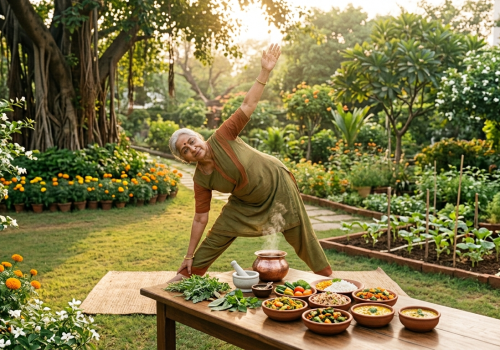
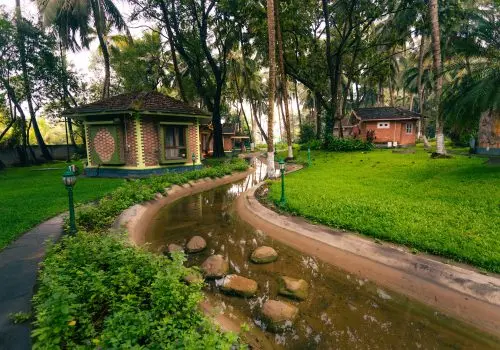
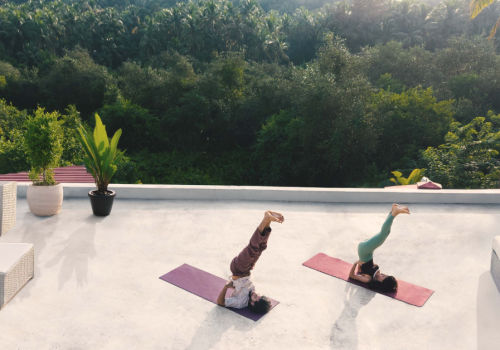
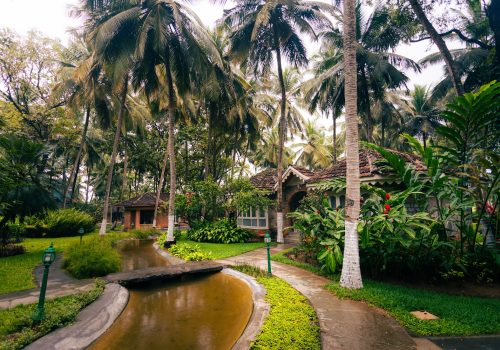
Yoga at Villa Raag sits within a broader wellness setting where the rhythm of the day can include Ayurvedic therapies, rest, meals and quieter periods between practices.
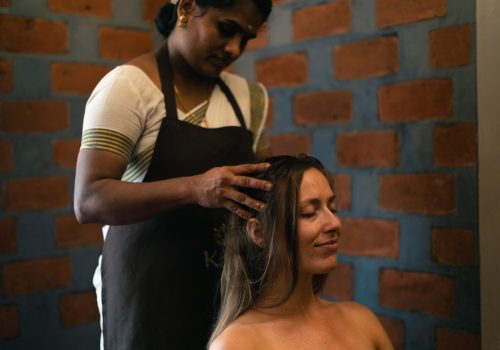
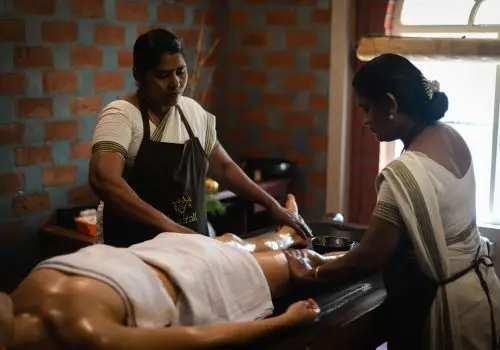
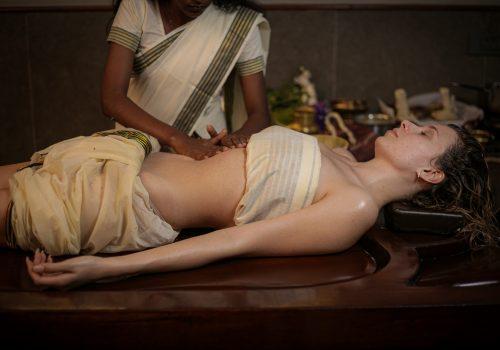
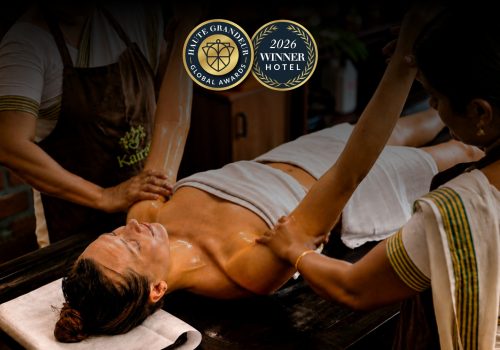
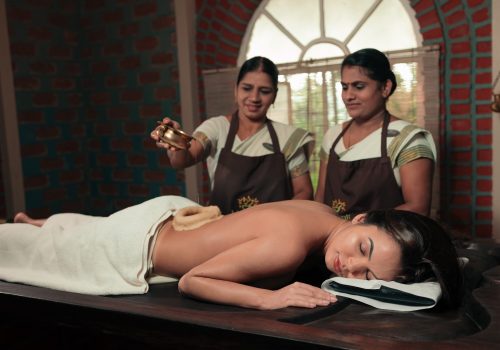
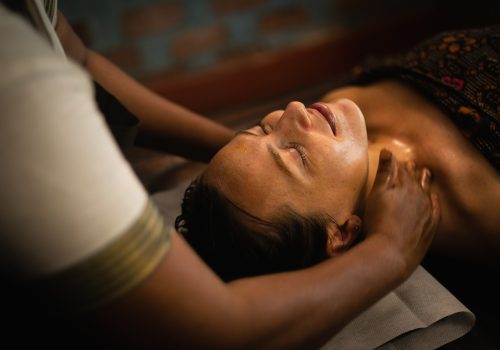
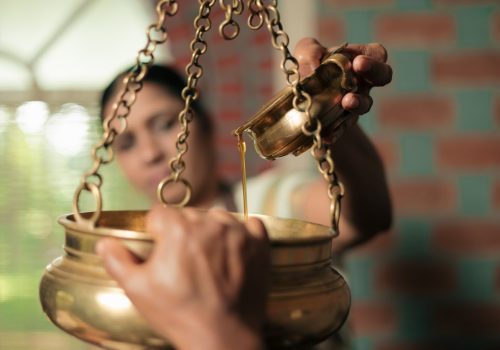
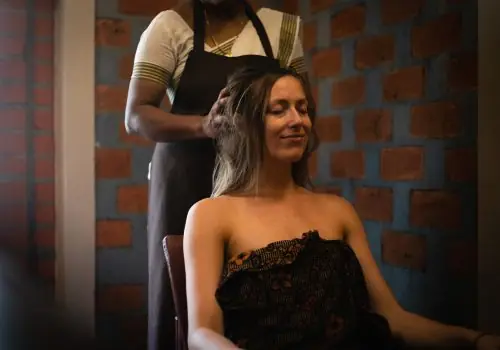
Abhyanga, the traditional application of warm oil to the body, may form part of an Ayurvedic programme. It should not be thought of simply as a reward after difficult yoga, nor as a guaranteed method of correcting muscular strain.
More importantly, the wider structure encourages a different relationship with exertion.
The strongest practice of the day does not have to dominate everything that follows.
Rest is part of the programme rather than evidence that the programme has stopped.
That can be particularly useful for experienced yoga practitioners who have become accustomed to measuring progress by increasing difficulty.
Bringing the Same Principle Home
A retreat environment can make attentive practice easier, but the underlying principle does not depend on being in Goa.
The same approach can be used in a studio or at home.
Warm up adequately before attempting complex arm balances. Let the quality of the breath influence how far the practice progresses. Treat advanced postures as possibilities rather than obligations. Balance demanding sessions with sufficient recovery.
And distinguish between the desire to explore a difficult posture and the need to prove that you can perform it.
Aṣṭāvakrāsana can be an impressive expression of strength, mobility and concentration.
But perhaps the more interesting measure of progress is what happens before the final shape appears.
Can effort remain organised?
Can the breath remain available?
Can ambition coexist with attention?
And can the practitioner recognise when today’s practice has already given enough?
Those questions may reveal considerably more than whether the feet eventually leave the floor.




Leave a Reply