
































Most holidays are designed around doing more. More places to see, more food to try, more activities to fit into the day. Even when the goal is rest, travel can easily become another schedule to manage.
A residential Ayurvedic stay works differently. The pace is slower, meals are more regular, treatments follow a plan, and rest becomes part of the day rather than something left for the end of it. But Ayurveda is not simply about slowing down. The real value of a quieter routine is that it gives the body and the physician more time to observe what is happening.
At Kairali – The Ayurvedic Healing Village in Palakkad, Kerala, this slower pace sits within a physician-led structure. Kairali is an NABH-accredited Ayurvedic hospital and Panchakarma clinic, where the programme begins with assessment rather than with a list of treatments chosen by the guest.
That changes the purpose of the stay. A person may arrive concerned about poor sleep, stress, digestive discomfort, fatigue or simply the feeling that their daily routine has become difficult to manage. Ayurveda looks at these concerns as part of a wider pattern. Sleep, appetite, digestion, activity, food habits and the person’s overall constitution are considered together.
In daily life, many of these patterns are easy to ignore. People get used to eating late because of work, sleeping at irregular hours, rushing through meals or spending most of the day moving between screens. After a while, these habits begin to feel normal.
A residential Ayurvedic programme creates some distance from that routine. Meals happen at more regular times. Treatments follow a schedule. Rest has a place in the day. The body can be observed over several days instead of through one short consultation.
This is where slowing down becomes useful. It allows small changes to become easier to notice. Appetite may change. Sleep may become more regular. Energy levels may feel different at different times of the day. These observations help create a clearer picture of how the body responds when everyday habits become more consistent.
Ayurveda has always placed importance on daily routine. The classical idea of dinacaryā refers to the way everyday habits are organised, from waking and eating to movement, rest and sleep. The principle is simple: what we repeat every day matters.
That is also why an Ayurvedic stay should not be judged only by how many treatments it includes. More treatments do not automatically mean better care. The time between therapies can be just as important as the therapies themselves because the programme is designed to work as a whole.
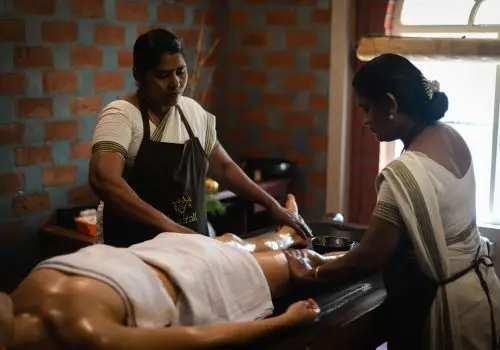
This is especially relevant when people talk about Panchakarma. It is often described casually as a detox, but that is too narrow. Panchakarma is a structured Ayurvedic process that may include preparation, selected procedures and a period of recovery. The exact approach depends on the individual.
Not everyone needs the same treatment. Not every procedure is suitable for every person. This is why physician supervision is important. The value of a therapy does not come only from the treatment itself, but also from the judgement behind when it is used, how it is sequenced and how the person responds.
Kairali – The Ayurvedic Healing Village also holds the Government of Kerala’s Green Leaf classification for Ayurveda centres. Together with its NABH accreditation, this provides useful context for travellers looking for a structured Ayurvedic setting. These credentials do not promise a particular result, but they help indicate the standards within which care is delivered.
Food is another important part of the experience. In Ayurveda, meals are not treated as a separate wellness feature. What a person eats, when they eat, how well they digest and how their appetite changes are all considered relevant.
The same is true of sleep, rest and physical activity. Ayurveda looks at the relationship between these parts of daily life rather than treating them as separate concerns. This is why the programme often feels quieter than a conventional retreat. The aim is not to fill every hour, but to create a routine that can be observed and adjusted.
The surroundings can support this process, but they are not the treatment. Kerala naturally offers a slower setting than many large cities, and the environment at Kairali’s Healing Village in Palakkad can make it easier to step away from familiar habits.
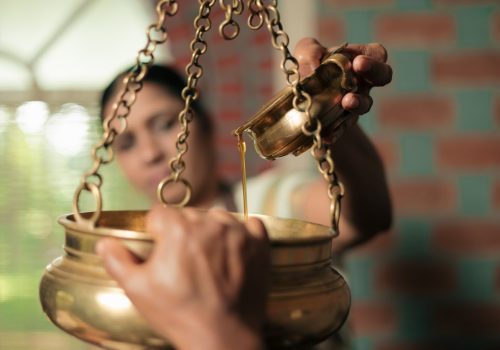
But a peaceful landscape cannot replace physician assessment. A traditional treatment room does not automatically make a therapy appropriate. An oil massage, by itself, is not the same thing as a complete Ayurvedic programme.
What matters is the structure behind the experience. Who conducts the assessment? How are treatments selected? Is the programme reviewed as it progresses? How are food, rest and routine considered alongside therapies?
These are more useful questions than simply asking how many treatments are included.
It is also important to look at how an Ayurvedic centre talks about results. Responsible care should not promise dramatic transformations or guaranteed outcomes. Different people respond differently, and modern evidence is stronger in some areas than in others.
Ayurveda should also not be presented as a replacement for necessary conventional medical care. A credible centre should be comfortable with that distinction.
This is where the idea of an “Ayurveda reset” becomes more meaningful. A reset does not mean undoing years of habits in a few days. It does not mean escaping ordinary life. It means creating enough distance from the usual routine to see it more clearly.
For one person, that may mean noticing how irregular meals have become. For another, it may be recognising how little attention has been given to sleep. Someone else may realise that every quiet moment has been filled with work, messages or screens.
The residential setting creates a temporary pause. What matters is what that pause reveals.
Eventually, normal life returns. Work resumes, responsibilities come back and everyday routines take over again. The useful question is not whether retreat life can be copied exactly at home.
It is whether anything learned from that slower rhythm can be carried back.
That may be the best way to understand an Ayurveda reset. Not as a dramatic transformation, and not as simply doing less, but as a period of structured attention.
At Kairali – The Ayurvedic Healing Village, slowing down matters because it gives assessment, treatment, food, rest and routine the space to work together.
The quiet is not the destination. It is what allows you to notice what needs attention.
Book free doctor consultation at +91-9555156156 or visit our site www.ktahv.com
An Ayurveda reset is best understood as a temporary shift in routine. In a residential setting, meals, rest, therapies and daily habits are organised more deliberately, giving both the guest and physician more space to observe patterns.
No. Slowing down creates the conditions for a more structured routine, but it is not a treatment on its own. In Ayurveda, physician assessment, appropriate therapies, food, rest and daily habits are considered together.
The exact structure varies by individual, but it may include physician consultations, selected Ayurvedic therapies, planned meals, rest and guidance around daily routine. The programme should be based on assessment rather than a fixed treatment menu.
Ayurvedic therapies are not suitable for everyone in the same way. Physician supervision helps ensure that the programme is selected and adjusted according to the individual’s constitution, current condition and response.
Look for qualified Ayurvedic physicians, individualised programmes, clear clinical supervision, realistic health claims and recognised standards. At Kairali – The Ayurvedic Healing Village, care is delivered within an NABH-accredited Ayurvedic hospital and Panchakarma clinic setting.








Leave a Reply