













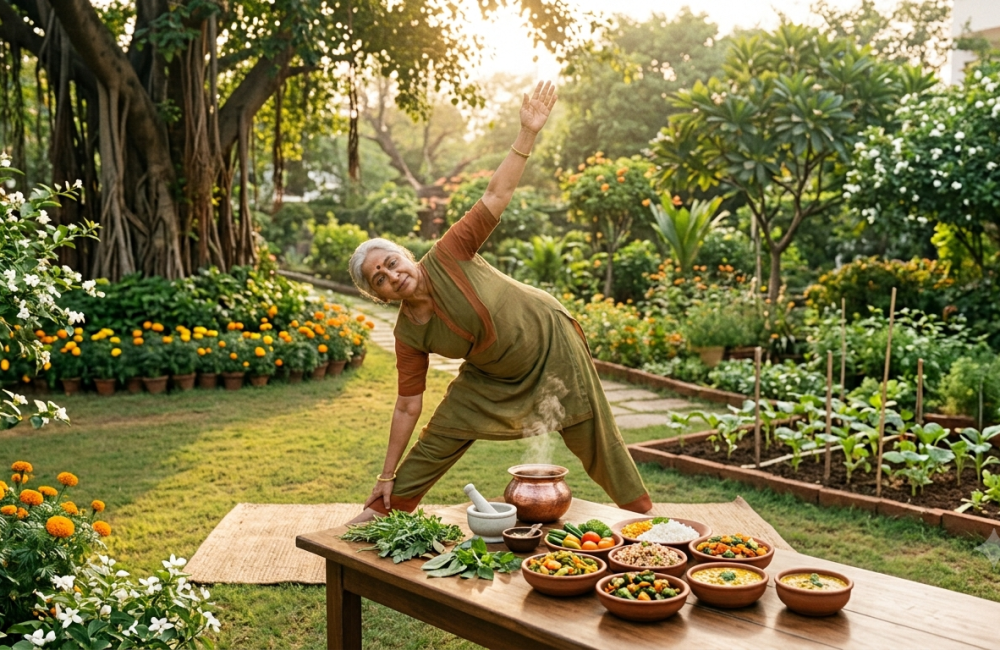
On International Day of Older Persons 2026, the global conversation is shifting from how long we live to how well we are able to live those additional years. Ayurveda has something useful to contribute to that discussion, provided longevity is not confused with a promise to resist ageing itself.
On 1 October, the United Nations marks the International Day of Older Persons under the theme “The Age of Longevity: Rethinking Systems for Longer Lives.” The World Health Organization is using the occasion to ask a deceptively simple question: as people live longer, how can those additional years also become years of health, dignity and meaningful participation?
It is an increasingly important distinction.
Longevity has become one of the dominant ideas in contemporary wellness. It is discussed through biomarkers, supplements, exercise protocols, diagnostics and increasingly sophisticated attempts to measure biological ageing. Much of that work deserves serious attention.
But a longer lifespan and a better experience of ageing are not automatically the same thing.
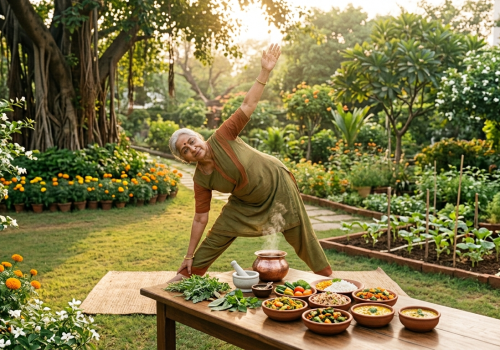
For an older person, health may be expressed in decidedly practical terms: being able to move with greater confidence, sleeping adequately, eating and digesting comfortably, maintaining social engagement, coping with stress, continuing familiar routines and retaining as much independence as circumstances allow.
That is where the conversation about healthy ageing with Ayurveda becomes more interesting.
Ayurveda does not begin with the idea that ageing is a disease
Ayurveda has always understood human life as changing across time. Age modifies strength, digestion, sleep, recovery, tissue quality, appetite, mobility and tolerance to physical or mental strain.
The important point is that Ayurvedic care does not generally approach an older person as simply a younger adult requiring more intervention.
Assessment is individual.
Two people of the same chronological age may have very different constitutions, medical histories, levels of mobility, digestive capacity, sleep patterns, medications, emotional circumstances and functional goals. What is appropriate for one may be excessive, unnecessary or unsuitable for another.
This individualisation is one reason Ayurveda can make a useful contribution to the modern longevity discussion. It shifts attention from the abstract ambition to “live longer” towards a more immediate question:
What does this person need to function as well as possible at this stage of life?
That question does not promise immortality, age reversal or freedom from illness. Nor should it.
It asks instead how food, routine, rest, movement, therapeutic interventions and medical supervision can be adapted to the individual rather than prescribed through a universal formula.
Healthy ageing is not one programme
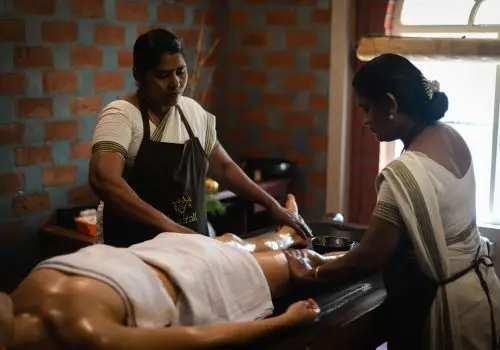
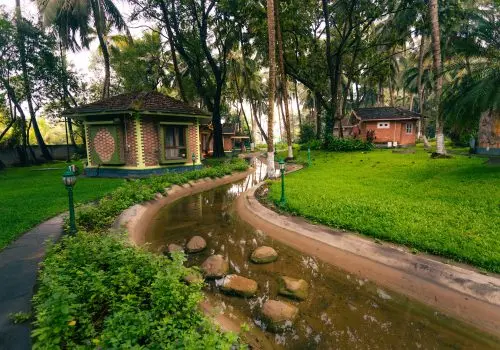
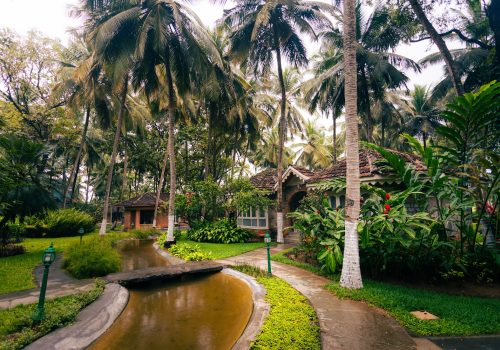
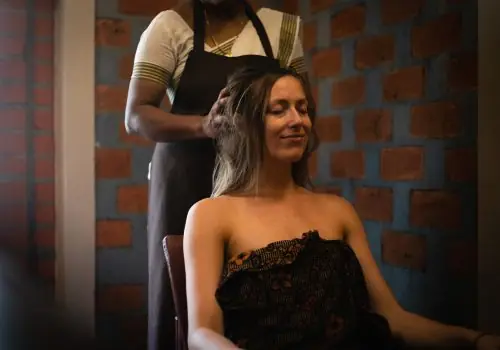
At Kairali – The Ayurvedic Healing Village in Palakkad, Kerala, this principle of individualisation is central to the clinical approach. Kairali is an NABH-accredited Ayurvedic hospital and Panchakarma clinic, rather than a wellness property where every guest receives an identical treatment schedule.
For older guests in particular, that distinction matters.
Age alone does not determine an Ayurvedic programme. A physician must consider the person’s existing health status, medical history, strength, sleep, digestion, mobility, medications and reasons for seeking care before deciding what is appropriate.
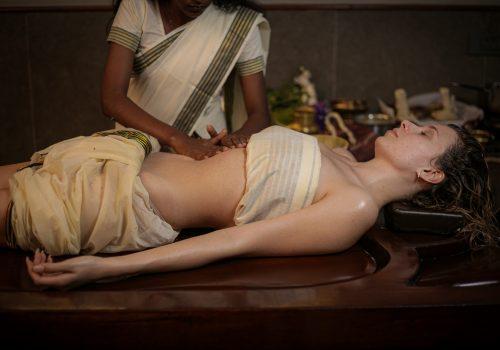
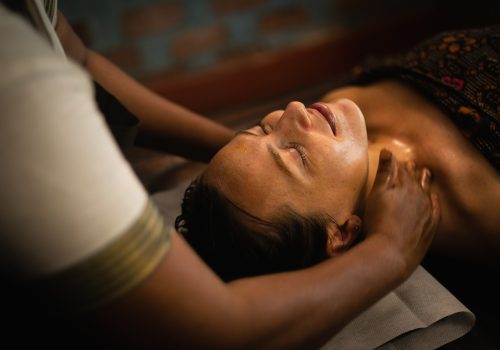
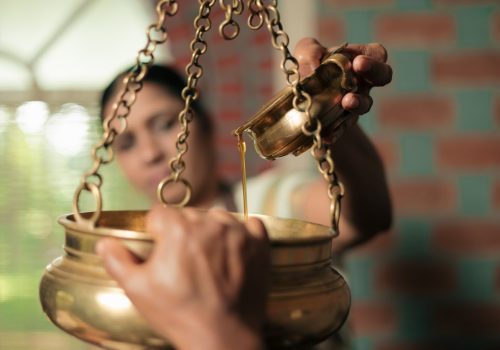
Kairali’s Personalized & Customized Program reflects this approach. Rather than beginning with a predetermined package of therapies, the emphasis is on assessment followed by an individualised programme.
Other existing Kairali programmes may be relevant depending on the person’s needs. The Comprehensive Stress Relief & Mental Wellness Program, for example, provides a structured context for people seeking support around stress, rest and mental wellbeing. The Joint Rehabilitation & Arthritis Treatment programme addresses a different set of concerns associated with joints, mobility and physical function.
These programme categories should not be read as a suggestion that every older person needs intensive Ayurvedic intervention. They illustrate precisely the opposite point: ageing is too varied to be addressed by a single “longevity programme”.
For some people, the priorities may centre on mobility. For others, accumulated stress and disrupted sleep may be more significant. Another person may require considerable caution because of frailty, medication use or an existing medical condition.
The appropriate response begins with assessment, not with the name of a therapy.
Function may be a more useful measure than the language of “anti-ageing”
The global growth of longevity medicine has also produced a vocabulary that deserves scrutiny.
“Anti-ageing” implies that ageing itself is an adversary. “Age reversal” suggests that biological time can be meaningfully turned backwards. These ideas can make normal physiological change appear to be a personal failure requiring correction.
Ayurveda offers a different frame.
Its traditional interest in longevity is closely connected with maintaining capacity across the lifespan: nourishment, resilience, appropriate activity, mental steadiness and adaptation to changes in the body.
That is not the same as claiming that Ayurvedic therapies can extend lifespan or reverse biological ageing. Modern evidence does not justify such sweeping conclusions.
Nor should traditional concepts be repackaged as scientific proof simply because longevity has become fashionable.
The more credible contribution Ayurveda can make is methodological: care should change as the person changes.
An intervention suitable for a robust person in midlife may not be appropriate for someone considerably older with reduced strength. Food recommendations must account for appetite and digestion. Exercise must reflect mobility and balance. Therapeutic intensity must be considered carefully. Recovery time matters. Existing conventional treatment must be taken into account.
Personalisation here is not a luxury add-on. It is part of responsible care.
Longer lives also require us to think beyond treatment
The 2026 International Day of Older Persons is deliberately broader than medicine. The United Nations’ framing emphasises dignity, participation, security and the ability of older people to continue contributing to families and communities. The UN notes that the global population aged 60 and above is projected to increase from around 1.2 billion today to 2.1 billion by 2050.
That matters because healthy ageing cannot be created by a clinic alone.
An individual may receive excellent medical care and still struggle if their environment discourages movement, social contact, independence or meaningful activity. Conversely, supportive families, accessible spaces, good nutrition, appropriate healthcare and social participation can substantially shape the experience of later life.
Ayurveda’s emphasis on daily routine can sit productively within this wider framework.
Regular meals, appropriate movement, consistent sleep patterns, attention to digestion, adequate rest and adaptation to seasonal and individual needs may sound less dramatic than a new longevity technology. But ageing well is often built from repeated, ordinary behaviours rather than occasional extreme interventions.
The value of such practices is also not uniquely Ayurvedic. Modern healthy-ageing guidance similarly places considerable emphasis on physical activity, nutrition, social connection, preventive healthcare and maintaining functional ability.
The useful conversation therefore is not Ayurveda versus modern medicine.
It is about where carefully practised Ayurveda can complement a broader, medically responsible approach to ageing.
Where caution matters more with age
Older adults are also precisely the population for whom careless wellness advice can carry greater risk.
Many people live with multiple medical conditions or take several prescription medicines. Herbal preparations can interact with medicines. Certain therapeutic procedures may be inappropriate for people who are frail, acutely unwell or medically unstable. What appears gentle in a wellness brochure is not automatically suitable for every individual.
This is why supervised Ayurvedic care should not be replaced by self-prescribed protocols found online.
It is equally important that Ayurveda not become a substitute for necessary conventional diagnosis, medication or specialist care. Older adults experiencing new, persistent or worsening symptoms require appropriate medical assessment.
A credible model of healthy ageing should be able to accommodate both realities: the usefulness of traditional systems of care and the limits of what they can responsibly claim.
The real longevity question
Perhaps the most useful feature of this year’s International Day of Older Persons is that it asks societies to think beyond the achievement of longevity itself.
Living longer is significant. But the years gained matter differently depending on how they are lived.
Can a person continue to participate in family and community life? Can they maintain meaningful routines? Is their healthcare designed around their actual needs rather than assumptions about age? Are interventions proportionate to their strength and circumstances? Are dignity and autonomy treated as health considerations rather than social extras?
Ayurveda cannot answer all of those questions.
What it can contribute is a longstanding insistence that care should take account of the individual, the stage of life they are in, their changing capacities and the conditions in which they live.
At Kairali, The Ayurvedic Healing Village, that principle translates into physician-led assessment and programmes adapted to the individual rather than a universal prescription for ageing.
And that may be a more useful ambition than “anti-ageing” itself.
The goal is not to make older people younger.
It is to take the health of older people seriously enough to recognise that more years of life should also mean a serious effort to make those years as functional, supported and dignified as possible.
Considering Ayurvedic care in later life?
Ayurvedic programmes should be selected according to individual health status, medical history and current treatment. Speak with a Kairali Ayurvedic physician to understand what form of supervised care, if any, may be appropriate for you.
Ayurvedic care should complement, not replace, appropriate conventional medical assessment and treatment.
Website: www.ktahv.com
Call: +91-9555156156



Leave a Reply