





























At Kairali, food is understood as part of daily health, not as a separate wellness trend
Ayurveda is often associated with herbal medicines, therapies and specialist retreats. But many of its basic ideas are already present in everyday Indian cooking.
A bowl of dal tempered with cumin, buttermilk served in summer, ginger added during the monsoon, or khichdi prepared when digestion feels weak all reflect a simple principle: food should suit the person, the season and the appetite.
This does not mean every Indian recipe is Ayurvedic. It also does not mean food can replace medical care.
It means that Indian kitchens have preserved many of Ayurveda’s practical ideas without always naming them as Ayurveda.
Food is more than a list of ingredients
Modern wellness culture often focuses on individual ingredients such as turmeric, ghee, amla or Ashwagandha.
Ayurveda asks a wider set of questions.
How is the food prepared? Is it suitable for the season? Is the person hungry? Is the meal too heavy, dry, oily or spicy for them? Can they digest it comfortably?
This is where the Ayurvedic idea of agni, or digestive capacity, becomes important.
In Ayurveda, a food that suits one person may not suit another. The same meal may also feel appropriate in winter but uncomfortable in summer.
For this reason, Ayurvedic food is not based on a fixed list of “healthy” foods. Context matters.
The everyday logic of Indian spices
The Indian spice box is a good example of this approach.
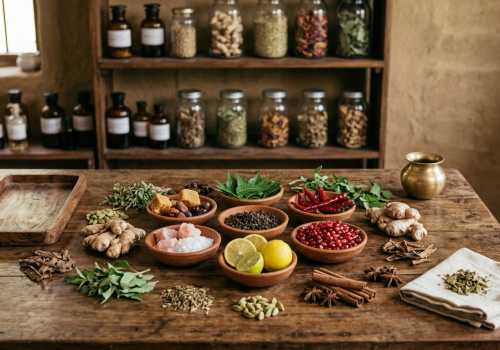
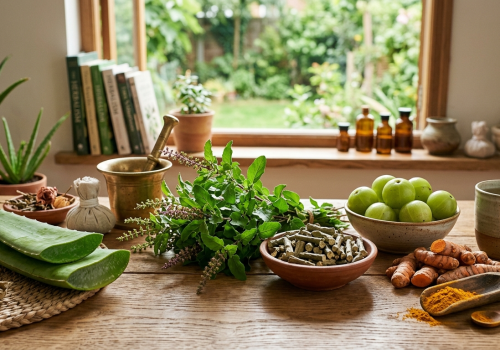
Cumin, coriander, ginger, turmeric, mustard seeds, fenugreek and asafoetida are used for flavour. But they are also chosen according to the dish, the weather and the way the meal is meant to feel.
Cumin may be added to lentils. Ginger may be used more during cold or rainy weather. Mustard seeds and curry leaves may appear in buttermilk or coconut-based dishes.
These spices are usually used in small quantities as part of a meal. They are not treated as miracle ingredients.
This measured use of spices is closer to Ayurvedic thinking than the modern habit of isolating one ingredient and presenting it as a universal solution.
Preparation changes the meal
Ayurveda also pays attention to how food is prepared.
The same ingredient can be cooked in several ways and may feel very different in each form.
Moong dal can be prepared as a dry dish, a light soup or a soft khichdi. Rice can be served freshly cooked, fermented into batter or made into a thin porridge.
Soaking, grinding, fermenting, roasting, steaming and slow cooking all change the texture and character of food.
This is one reason traditional Indian meals offer so many variations of the same grain, pulse or vegetable. The method changes according to the season, appetite and need.
Eating according to the season
Seasonal eating is not new to Indian households.
Summer meals are often lighter and may include watery vegetables, curd or diluted buttermilk. During the monsoon, freshly cooked food and warming spices are commonly preferred. Winter meals may include sesame, millets, nuts, ghee or jaggery, depending on the region.
Ayurveda calls this seasonal discipline ṛtucaryā, or seasonal routine.
The idea is simple: weather affects appetite, digestion and energy. Food should change accordingly.
This does not produce one standard Ayurvedic menu. Kerala, Rajasthan, Bengal, Punjab and Tamil Nadu have different climates and food traditions.
Ayurvedic eating is therefore local and adaptable.
How this appears in Kairali’s approach
At Kairali, food is not treated as an extra service placed beside Ayurvedic care.
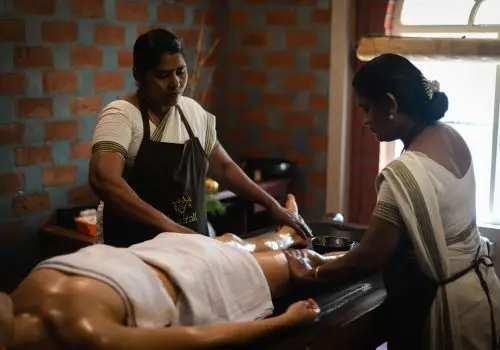
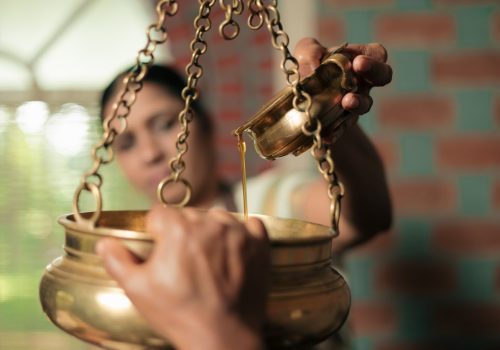
It forms part of the wider routine, along with physician consultation, treatment, rest and movement.
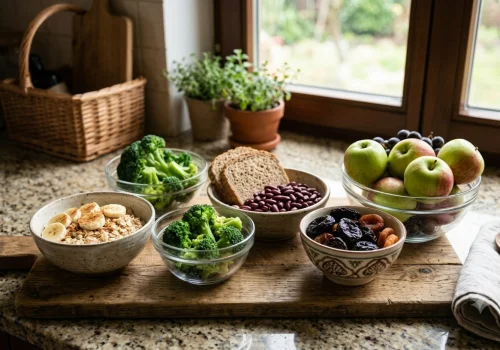
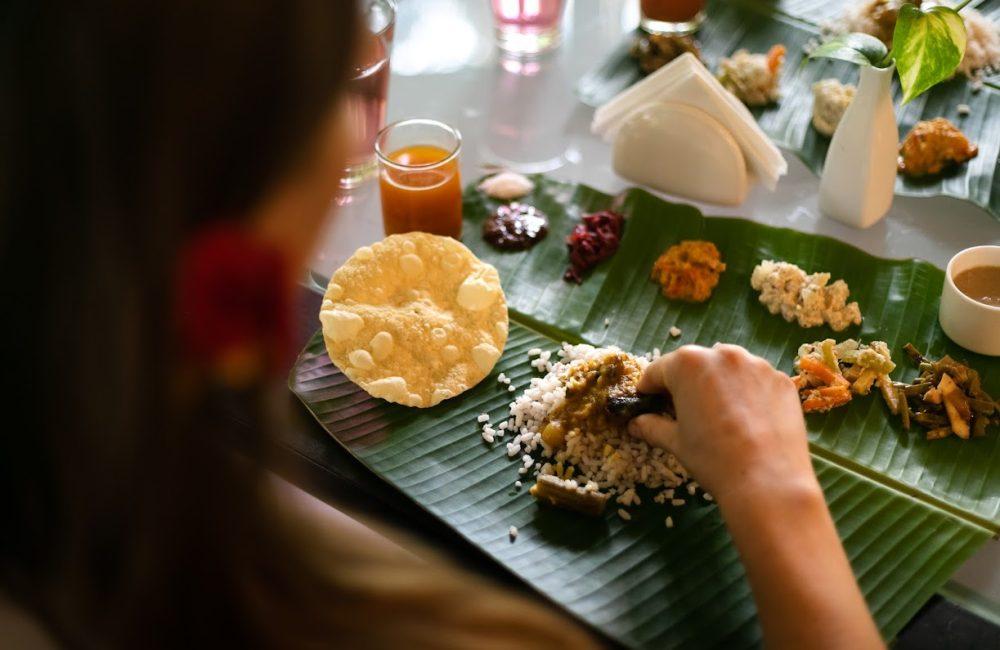
Meals may include familiar foods such as rice, lentils, vegetables, soups, chutneys and lightly spiced preparations. The difference lies in how they are selected and prepared.
A meal may be made lighter, softer, warmer or less oily. Ingredients and combinations may be adjusted according to the season, appetite and individual assessment.
The aim is not to make food unusual. It is to make it appropriate.
This approach also reflects the work of Kairali co-founder Gita Ramesh, an Ayurvedic chef and scholar whose work has helped place food at the centre of Kairali’s understanding of daily Ayurvedic practice.
Food is not a cure
It is important not to exaggerate the role of traditional food.
Turmeric in a curry does not make the dish a treatment. Ginger tea is not a substitute for medical care. Ghee, herbs and spices should not be promoted as cures for health conditions.
There is also a clear difference between using an ingredient in cooking and taking it in concentrated medicinal form.
People who are pregnant, taking medication or managing a health condition should seek professional guidance before using Ayurvedic formulations or supplements.
Responsible Ayurveda begins by recognising these limits.
What the Indian kitchen has preserved
The strongest Ayurvedic ideas in Indian cooking are not complicated.
Eat according to appetite.
Adjust food to the season.
Use spices with purpose.
Choose preparation methods carefully.
Avoid making every meal excessively heavy or complex.
Pay attention to how the body responds.
These habits are practical, not dramatic. They do not depend on imported superfoods or rigid diet plans.
They are already visible in dal, khichdi, buttermilk, seasonal vegetables and the simple habit of changing a meal according to the weather.
Ayurveda does not have to be added back into the Indian kitchen as a new trend. Much of it is already there.
The real task is to recognise the thinking behind the plate.