































A long weekend. A week by the beach. Eight hours of uninterrupted sleep.
For many professionals, these are no longer enough.
At Kairali – The Ayurvedic Healing Village, one pattern has become increasingly familiar. Guests often arrive believing they simply need more rest. Yet many describe the same experience: they have already rested. They have taken holidays, reduced their workload temporarily, and tried to sleep longer. The exhaustion remains.
This distinction matters because Ayurveda does not see recovery as the opposite of work. It sees recovery as the restoration of physiological balance. And sometimes, that requires more than simply stopping.
Burnout Is More Than Being Busy
The language of burnout has entered everyday conversation, but it often reduces a complex problem to emotional fatigue or workplace stress.
Modern medicine increasingly recognises burnout as a consequence of prolonged occupational stress that affects mental and physical wellbeing. Ayurveda approaches the same pattern through a different framework—not as a diagnosis that replaces conventional medicine, but as another way of understanding why recovery sometimes becomes difficult.
From an Ayurvedic perspective, the question is not only How much are you working?
It is also:
- How regular are your daily rhythms?
- How well are you digesting food?
- Is your sleep restorative?
- Has your body retained its capacity to recover?
These questions shift the conversation from simply managing stress to understanding resilience itself.
Recovery Is an Active Physiological Process
One of the misconceptions surrounding exhaustion is that recovery happens automatically whenever work stops.
Ayurveda suggests otherwise.
Classical texts describe health as the result of balanced digestion, efficient tissue nourishment, restorative sleep, appropriate activity, and emotional equilibrium. When these processes become disrupted over months or years, simply adding more hours of sleep may not fully restore energy.
This helps explain why two people working similar jobs may experience entirely different levels of fatigue.
Recovery depends not only on time away from work but also on whether the body’s restorative systems continue to function efficiently.
The Ayurvedic Idea of Ojas
Among Ayurveda’s foundational concepts is Ojas, traditionally regarded as the refined essence that supports vitality, resilience, and stability.
Ojas is not a laboratory measurement, nor does it correspond directly to a single concept in contemporary physiology. Instead, it represents an Ayurvedic understanding of the body’s reserve capacity—its ability to adapt, recover, and maintain equilibrium under physical and psychological demands.
Classical Ayurvedic literature suggests that consistent nourishment, healthy digestion, adequate sleep, emotional stability, and appropriate daily routines contribute to preserving Ojas. Chronic stress, irregular eating, sleep disruption, and prolonged overexertion are traditionally understood to diminish it over time.
Viewed this way, professional exhaustion is not simply about depleted energy. It may reflect diminished resilience.
Why Lifestyle Matters More Than Occasional Rest
Many professionals attempt to compensate for chronic stress with occasional breaks.
Ayurveda places greater importance on what happens every day.
Irregular meal timings, continuous digital stimulation, inadequate movement, inconsistent sleep schedules, and sustained psychological pressure gradually influence digestion, metabolism, and the body’s internal rhythms.
These small disruptions rarely produce immediate illness. Instead, they accumulate quietly until recovery itself becomes less efficient.
The result is a pattern many people recognise: waking tired despite sleeping, difficulty concentrating, emotional irritability, and a feeling that energy never fully returns.
A Physician-Led, Individualised Approach
At Kairali – The Ayurvedic Healing Village, assessment begins with understanding the individual rather than the symptom alone.
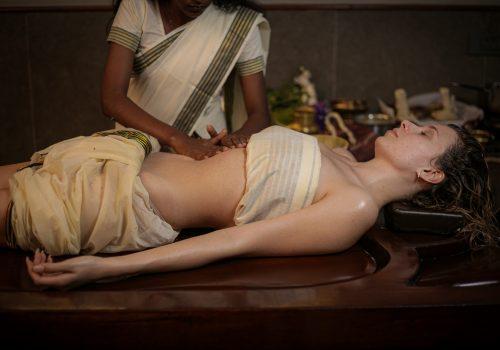
Ayurvedic physicians evaluate constitutional tendencies, daily routines, digestive health, sleep quality, stress patterns, and broader lifestyle factors before recommending an individualised plan. Depending on clinical assessment, this may include dietary guidance, structured daily routines, therapeutic procedures, relaxation practices, and other classical Ayurvedic interventions where appropriate.
The emphasis is not on providing a quick boost in energy. It is on supporting the conditions that allow the body to restore balance over time.
Because every individual presents differently, Ayurveda does not regard exhaustion as a one-size-fits-all condition.
Integrating Ancient Principles with Modern Understanding
Professional exhaustion has become one of the defining health challenges of contemporary working life.
Modern medicine continues to deepen our understanding of stress physiology, sleep, and occupational health. Ayurveda contributes another perspective—one that places daily routine, nourishment, digestion, recovery, and resilience at the centre of long-term wellbeing.
These approaches need not compete.
For many people, they can complement one another, particularly when Ayurvedic care is provided by qualified physicians within an accredited clinical setting.
Looking Beyond Sleep
Perhaps the most valuable lesson Ayurveda offers is that rest and recovery are not always the same thing.
Sleep remains essential. Time away from work matters. But when exhaustion persists despite both, it may be worth asking a different question.
Instead of simply wondering “How can I rest more?”, Ayurveda invites us to ask:
“What has prevented my body from recovering in the first place?”
That shift—from chasing temporary relief to understanding the foundations of resilience—has shaped Ayurvedic thinking for centuries and continues to guide the physician-led approach at Kairali – The Ayurvedic Healing Village today.
Website: www.ktahv.com
Call: +91-9555156156
Ordinary tiredness usually improves after a good night’s sleep or a short break. Professional exhaustion often persists despite adequate rest and may be accompanied by reduced concentration, emotional fatigue, disrupted sleep, or a feeling of being unable to recover. Persistent symptoms should be assessed by a qualified healthcare professional.
Ayurveda views recovery as more than sleep alone. It considers factors such as daily routine, digestion, nutrition, stress, and overall physiological balance. When these are disrupted over time, the body may not recover efficiently, even if a person is getting enough sleep.
No. Professional exhaustion is a modern descriptive term rather than a classical Ayurvedic diagnosis. Instead, Ayurveda evaluates each person’s constitution, lifestyle, digestive function, sleep patterns, and overall health before understanding the underlying imbalance through its own clinical framework.
At Kairali, qualified Ayurvedic physicians begin with an individual assessment rather than assuming the same cause for every person. Depending on the clinical evaluation, recommendations may include dietary guidance, structured daily routines, relaxation practices, and classical Ayurvedic therapies where appropriate. Each care plan is individualised.