





























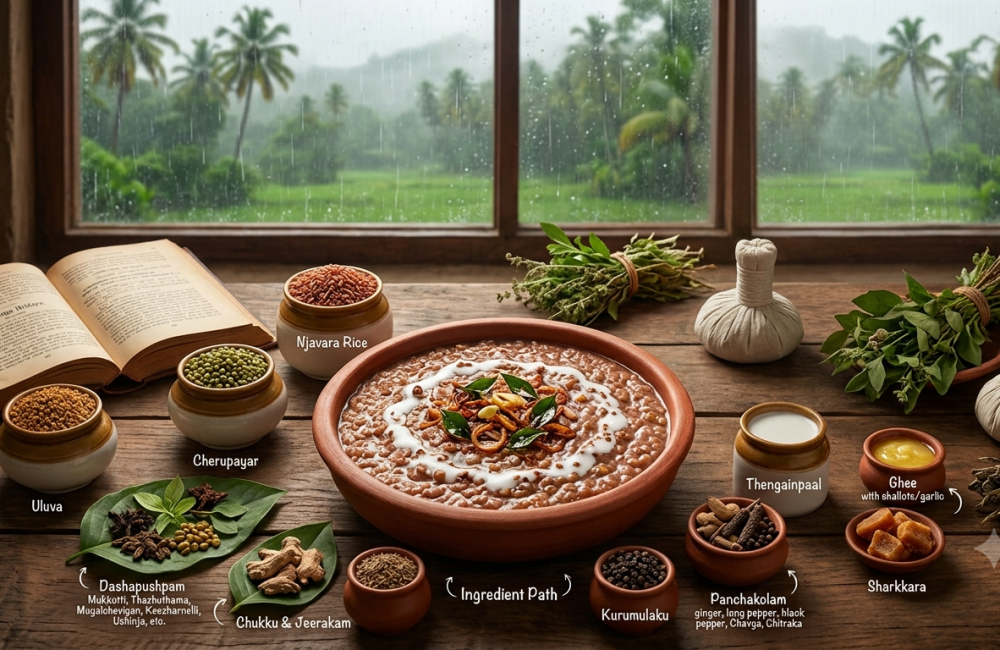

As the southwest monsoon settles over Kerala, a familiar preparation returns to many kitchens across the state: Karkidaka Kanji, a warm rice gruel made with herbs and spices.
Its appearance marks more than a seasonal change in the household menu. For generations, families have prepared this porridge during Karkidakam, the final month of the Malayalam calendar. The season has traditionally been associated with rest, measured eating and the restoration of strength after the physical demands of the monsoon.
To someone encountering it for the first time, Karkidaka Kanji may appear to be a simple bowl of rice cooked with herbs. Within Kerala’s Ayurvedic food culture, however, it represents a practical application of Varṣā ṛtucaryā (the Ayurvedic seasonal routine for the rainy period).
The reasoning is straightforward: when appetite and digestive comfort are unsettled, meals should become simpler rather than more elaborate.
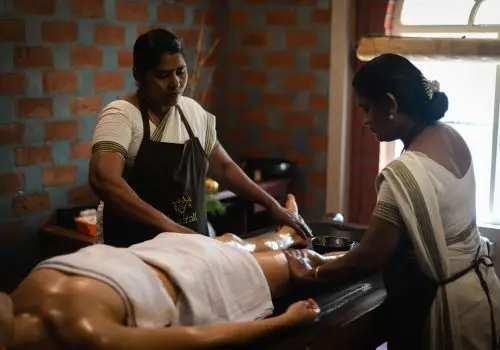
At Kairali, The Ayurvedic Healing Village, this seasonal porridge is understood within a broader approach to food. It is not presented as a cure or as a substitute for medical care. It is a warm, lightly spiced preparation designed to be nourishing without placing an unnecessary burden on digestion.
Why Karkidakam calls for a different way of eating
Kerala’s monsoon brings cooler days, persistent rainfall and high humidity. These conditions can affect appetite, activity levels and digestive comfort. Foods that feel manageable in a drier season may seem heavier during prolonged wet weather.
Ayurveda describes digestive capacity through the concept of agni, often translated as digestive or metabolic fire. During the rainy season, agni is traditionally understood to become less steady. Vāta doṣa, associated with movement, dryness and irregularity, may also become disturbed during seasonal transitions.
This does not mean that everyone experiences the monsoon in the same way. Constitution, health status, age, activity and local conditions all matter. The general seasonal principle is nevertheless one of moderation: freshly prepared food, served warm, with enough spice to support digestion but not so much that the meal becomes irritating or excessive.
Common recommendations associated with monsoon eating include:
- choosing foods that are warm and relatively easy to digest
- eating freshly prepared meals rather than food stored for long periods
- using spices such as ginger, cumin, coriander and black pepper in moderation
- maintaining regular meal timings
- limiting excessively oily, heavy or highly processed foods
- adjusting recipes to the individual rather than following a single formula rigidly
Karkidaka Kanji fits naturally within this framework. Its soft texture, warmth and measured use of spices make it particularly suited to a season in which the appetite may be variable.
What goes into Karkidaka Kanji?
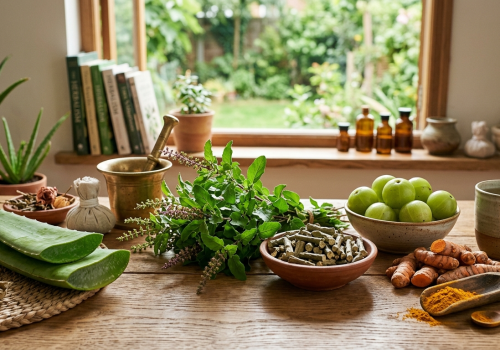
There is no single recipe followed by every family. Ingredients vary between regions, households and Ayurvedic traditions. Some preparations are simple, while others include a larger combination of herbs.
The value of the dish lies not in any one “miracle” ingredient, but in the way its components work together to create a warm and digestible meal.
Njavara rice
Njavara is a traditional rice variety associated closely with Kerala’s Ayurvedic culture. It is used both as food and in certain supervised Ayurvedic preparations.
In Karkidaka Kanji, the rice provides the body of the meal. When cooked with sufficient water, it develops a soft consistency that is generally easier to eat than a dry or heavily seasoned rice dish.
Njavara is often described casually as “medicinal rice.” A more careful description is that it is a traditional rice variety with a recognised place in Kerala’s food and Ayurvedic practices. Its exact nutritional composition can vary according to cultivation, processing and preparation.
Daśamūla
Daśamūla literally means “ten roots.” It refers to a classical Ayurvedic grouping of ten plant roots used in several traditional formulations.
In Ayurvedic practice, Daśamūla is commonly associated with balancing vāta and supporting physical comfort. It may be included in some versions of Karkidaka Kanji, although it is not a compulsory ingredient in every household recipe.
Because Daśamūla is a formulation rather than a single herb, its preparation and use require care. The proportions, sourcing and suitability of the ingredients matter. People who are pregnant, taking medication or managing a medical condition should seek professional guidance before using concentrated herbal preparations.
Ginger
Ginger is among the most familiar digestive spices used in Kerala cooking. Ayurveda classifies it as warming and frequently uses it in preparations intended to support appetite and digestion.
Fresh and dried ginger are not treated as identical in Ayurvedic practice, but both may be used according to the recipe and the person consuming it. In a porridge, ginger contributes warmth and flavour while helping to prevent the dish from feeling bland or excessively heavy.
Black pepper and long pepper
Black pepper and long pepper provide gentle pungency. In Ayurvedic terminology, such ingredients are commonly associated with dīpana, the support of appetite and digestive function, and pācana, the processing of food that has not been digested comfortably.
Their role is not to make the porridge intensely spicy. Used carefully, they bring warmth and balance to a preparation that is otherwise soft and mild.
People with gastritis, reflux, mouth ulcers or sensitivity to pungent foods may require a modified recipe.
Cumin, coriander and fenugreek
Cumin and coriander are used widely in Indian cooking and are often included in meals intended to remain light and aromatic.
Fenugreek contributes a distinct bitterness. In small quantities, it adds complexity to the flavour of the porridge. Excessive fenugreek, however, can dominate the preparation and may not suit every person.
As with the rest of the recipe, proportion matters. Ayurvedic cooking is not based on the assumption that adding more herbs automatically makes a meal more therapeutic.
Is Karkidaka Kanji a complete treatment?
No. Karkidaka Kanji is a seasonal food preparation, not a treatment for a diagnosed condition.
It may form part of a broader seasonal routine that includes regular sleep, appropriate physical activity, freshly cooked meals and practitioner-guided care where necessary. Its benefits should therefore be understood in context.
A bowl of porridge cannot correct an unsuitable diet, persistent sleep deprivation or an untreated medical problem. Nor is the same herbal mixture appropriate for every constitution.
This distinction is important because traditional foods are sometimes promoted online using exaggerated language. Karkidaka Kanji does not need such claims to remain valuable. Its significance lies in a quieter idea: when the season changes, the way we eat may need to change with it.
How Kairali approaches the tradition
At Kairali – The Ayurvedic Healing Village, seasonal eating is considered alongside the individual’s constitution, appetite, health status and treatment plan.
During Karkidakam, physicians and the kitchen team may draw upon the principles of ṛtucaryā when planning meals. This does not mean serving an identical preparation to every guest. The ingredients and consistency may be adjusted according to digestive capacity and clinical suitability.
This is where the kitchen and the consultation room meet. The physician assesses the person; the kitchen translates that assessment into food that is practical, appropriate and carefully prepared.
The broader lesson of Karkidaka Kanji is not that one recipe can solve every seasonal complaint. It is that food can be selected with greater attention to climate, appetite and individual need.
In Kerala, that principle has survived not because it is fashionable, but because it remains useful. The monsoon arrives, the kitchen adjusts, and a simple bowl of warm porridge becomes part of the household rhythm once again.
Karkidaka Kanji is a warm rice porridge traditionally prepared in Kerala during the monsoon season. It is usually made with rice, digestive spices and, in some recipes, selected Ayurvedic herbs.
No. Recipes vary between families, regions and Ayurvedic traditions. Some versions are simple, while others include ingredients such as Njavara rice, ginger, pepper, cumin, fenugreek or Daśamūla.
Ayurveda traditionally considers the rainy season a time when digestive capacity may become less steady. Warm, freshly prepared and relatively light foods are therefore preferred, and Karkidaka Kanji fits this seasonal approach.






Leave a Reply