

































The monsoon changes more than the weather.
Humid days, irregular meal times, reduced physical activity, and a greater appetite for fried snacks can leave some people feeling heavy or bloated after eating. Food and water hygiene also need closer attention during periods of heavy rain.
Ayurveda responds to seasonal change through ṛtucaryā, meaning a routine adapted to the season. During the rainy period, this often includes warm, freshly prepared food and simple drinks made with familiar kitchen spices.
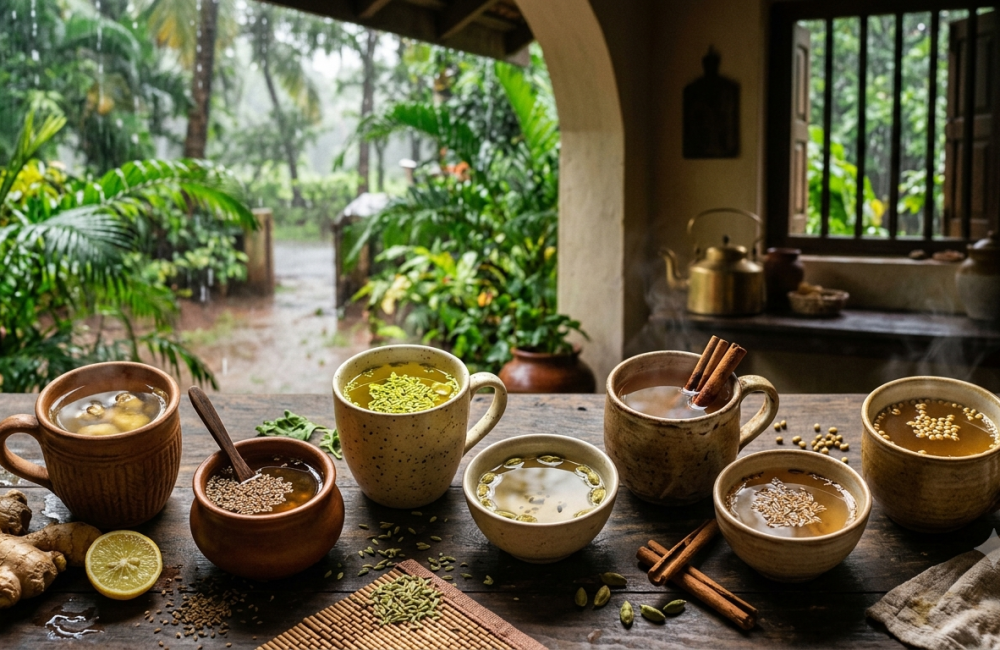
A recent Femina feature suggested seven herbal teas for digestive comfort during the monsoon: ginger, fennel, cumin with coriander, tulsi, cardamom, cinnamon, and ajwain. These ingredients all have a place in Indian food traditions, but they should not be treated as medicines for every stomach problem.
Here is a closer look at what each tea may offer, how to prepare it gently, and when caution is needed.
Why digestion may feel different during the monsoon
Ayurvedic texts describe the rainy season as a period when digestive capacity may become less predictable. Contemporary lifestyle factors can add to this discomfort.
People may eat at irregular times, drink less water, move less, or consume more rich and fried food. Warm beverages can feel comforting in damp weather, but their value depends on the ingredients, the quantity, and the person drinking them.
A herbal tea may help with occasional heaviness or provide a useful alternative to a sugary drink. It cannot diagnose or treat infection, persistent acidity, severe abdominal pain, or chronic digestive disease.
1. Ginger tea
Ginger is one of the most familiar digestive ingredients in Indian kitchens.
In Ayurveda, fresh ginger is commonly used before or with meals when a warming preparation is considered appropriate. The Femina story describes ginger tea as a drink that may support digestion and ease occasional nausea or bloating.
Modern research has studied ginger most closely for nausea. Some evidence suggests that ginger supplements may help with pregnancy-related nausea, although studies have generally examined concentrated products rather than an ordinary cup of tea. Ginger may also cause heartburn, abdominal discomfort, or diarrhoea in some people.
Simple preparation: Simmer a few thin slices of fresh ginger in water. Strain and drink warm.
People who already experience acid reflux may find strong ginger tea irritating.
2. Fennel tea
Fennel seeds have a mild sweetness and are often chewed after meals in India.
The Femina article presents fennel tea as a soothing drink for gas, bloating, and post-meal discomfort.
Within Ayurvedic food practice, fennel is often considered gentler than strongly pungent spices. Its flavour can make it suitable for people who find ginger or ajwain too intense.
Simple preparation: Lightly crush fennel seeds, add them to hot water, cover briefly, and strain.
A tea made from a kitchen quantity of fennel is different from concentrated fennel extracts or essential oils. Concentrated products require greater caution, especially during pregnancy or when taking medication.
3. Cumin and coriander tea
Cumin and coriander are widely used together in Indian cooking.
Femina describes their combination as a traditional Ayurvedic blend used for digestive balance during the rainy season.
Cumin has a warm, earthy taste, while coriander is milder and more aromatic. Together, they make a light infusion that may be easier to tolerate than a strongly spiced drink.
Simple preparation: Lightly crush equal small amounts of cumin and coriander seeds. Simmer in water, then strain.
This drink is best understood as a culinary infusion. Claims that it removes toxins or corrects a dosha imbalance should not be made without individual assessment.
4. Tulsi tea
Tulsi, or holy basil, is used in households across India as both a culinary and traditional wellness herb.
The source article associates tulsi with antioxidant and antimicrobial properties and suggests that a warm infusion may support digestion.
Laboratory findings about antioxidant or antimicrobial activity do not automatically show that tulsi tea can prevent or treat an infection in people. During the monsoon, diarrhoea, vomiting, or fever may require medical care rather than a home drink.
Simple preparation: Steep washed tulsi leaves in hot water and strain.
Tulsi products vary considerably. A mild leaf infusion is not equivalent to a concentrated extract, capsule, or essential oil.
5. Cardamom tea
Cardamom adds aroma without the sharp heat of some other spices.
Femina suggests cardamom tea for occasional acidity and stomach discomfort.
It can be used on its own or added to another mild infusion. Some people find its flavour refreshing after a heavy meal.
Simple preparation: Gently crush one or two cardamom pods, steep them in hot water, and strain.
Cardamom tea should not be relied on for frequent heartburn. Repeated acidity, difficulty swallowing, vomiting, or unexplained weight loss needs medical assessment.
6. Cinnamon tea
Cinnamon is warming, aromatic, and commonly used in sweet and savoury dishes.
The Femina article recommends it for feelings of heaviness after meals.
Cinnamon is safe for most people in ordinary food quantities. However, cassia cinnamon can contain coumarin, a compound that may be a concern when consumed regularly in large amounts, particularly for people with liver disease. Cinnamon products may also interact with medicines.
Simple preparation: Simmer a small piece of cinnamon bark in water and strain.
A lightly flavoured tea is preferable to concentrated cinnamon powders or extracts used repeatedly without professional advice.
7. Ajwain tea
Ajwain, or carom seed, has a strong and distinctly pungent flavour.
It is commonly used in Indian households after rich meals or in dishes considered difficult to digest. Femina includes ajwain tea as a traditional option for occasional indigestion and stomach discomfort.
Because ajwain is intense, more is not necessarily better.
Simple preparation: Add a small pinch of lightly crushed ajwain to hot water, allow it to infuse, and strain.
People with frequent acidity or a sensitive stomach may find a strong ajwain drink uncomfortable.
How to choose the right tea
There is no single monsoon tea that suits everyone.
A person who feels cold and heavy may prefer a mild ginger or cinnamon infusion. Someone who finds pungent spices irritating may tolerate fennel or coriander better.
The most useful approach is to begin with one simple ingredient rather than combining several herbs at once. This makes it easier to notice how the body responds.
A herbal tea should also remain a small part of the diet. It should not replace meals, plain drinking water, or prescribed treatment.
More herbs do not make a better tea
Kitchen herbs are often combined into elaborate “detox” drinks.
This can make the beverage unnecessarily strong and may increase the chance of heartburn, nausea, or medication interactions. The purpose of a seasonal infusion is not to force digestion or cleanse the body.
Choose one mild tea, prepare it freshly, and stop using it if it causes discomfort.
Adding large amounts of honey or sugar can also turn a light drink into a significant source of added sugar.
Who should be cautious?
Speak to a qualified healthcare professional before using herbal drinks regularly when:
- pregnant or breastfeeding;
- taking prescription medicines;
- living with liver, kidney, heart, or metabolic conditions;
- preparing for surgery;
- giving herbal preparations to a young child; or
- managing a diagnosed digestive disorder.
Herbs used in food quantities are not the same as concentrated extracts. Products sold as powders, capsules, oils, or “therapeutic teas” may contain much larger amounts.
When tea is not enough
Monsoon stomach discomfort is sometimes blamed on weak digestion when the cause may be contaminated food, unsafe water, infection, or another medical condition.
Seek medical advice for:
- persistent vomiting or diarrhoea;
- blood in the stool;
- severe abdominal pain;
- fever;
- signs of dehydration;
- repeated acidity;
- unexplained weight loss; or
- symptoms that continue despite dietary changes.
Children, older adults, pregnant women, and people with existing medical conditions may become dehydrated more quickly and should not delay care.
A seasonal practice, not a cure
Herbal teas can be a pleasant part of a monsoon routine.
Ginger, fennel, cumin, coriander, tulsi, cardamom, cinnamon, and ajwain each bring a different taste and traditional use. A warm infusion may offer comfort after an occasional heavy meal, particularly when it replaces a sugary beverage.
The more important Ayurvedic lesson is moderation.
Eat freshly prepared food. Keep meal times reasonably regular. Choose a tea that suits your digestion. Avoid turning a simple kitchen practice into an aggressive cleansing routine.
Seasonal care does not need to be complicated to be useful.
There is no single tea that suits everyone. Ginger or cinnamon may feel warming, while fennel or coriander may feel milder. Choose according to your digestion and comfort.
A mild herbal tea can be taken regularly by many healthy adults. Avoid very strong preparations, large quantities, or several herbs mixed together without guidance.
Herbal tea may offer comfort after an occasional heavy meal. It should not be used to treat persistent bloating, pain, acidity, vomiting, or diarrhoea.
Not every herb is suitable during pregnancy. Speak with a qualified healthcare professional before using herbal teas regularly, especially concentrated blends or extracts.
Seek medical advice for severe pain, fever, blood in the stool, repeated vomiting, dehydration, unexplained weight loss, or symptoms that do not improve.








Leave a Reply