































As another Indian summer brings record temperatures, digestive discomfort is becoming almost as common as dehydration. Ayurveda’s centuries-old emphasis on seasonal eating offers practical guidance that remains remarkably relevant today.
When temperatures climb, many people notice subtle but persistent digestive changes. Appetite decreases. Heavy meals become uncomfortable. Acidity, bloating and sluggish digestion seem to appear even in those who rarely experience digestive problems during cooler months.
Modern physiology offers one explanation: the body works harder to regulate temperature during extreme heat, often influencing appetite, hydration and digestive comfort. Ayurveda approaches the same seasonal shift through a different framework, recognising that summer is naturally associated with an increase in Pitta, the dosha linked with heat and transformation.
Although the explanatory models differ, both perspectives arrive at a similar practical conclusion: what we eat should change with the season.
Why Ayurveda Places So Much Importance on Seasonal Eating
One of Ayurveda’s foundational principles is Ritucharya—adapting daily habits, food choices and routines according to seasonal changes.
Rather than recommending the same diet throughout the year, Ayurveda encourages people to respond to their environment. Foods that feel nourishing during winter may become unnecessarily heavy during peak summer, while naturally cooling fruits and vegetables become more appropriate as temperatures rise.
This seasonal flexibility remains one of Ayurveda’s most practical dietary principles and aligns with broader nutritional advice encouraging people to eat fresh, locally available produce throughout the year.
A Summer Plate Built Around Cooling Foods
During the hotter months, Ayurvedic dietary guidance generally favours foods that are naturally light, hydrating and easy to digest.
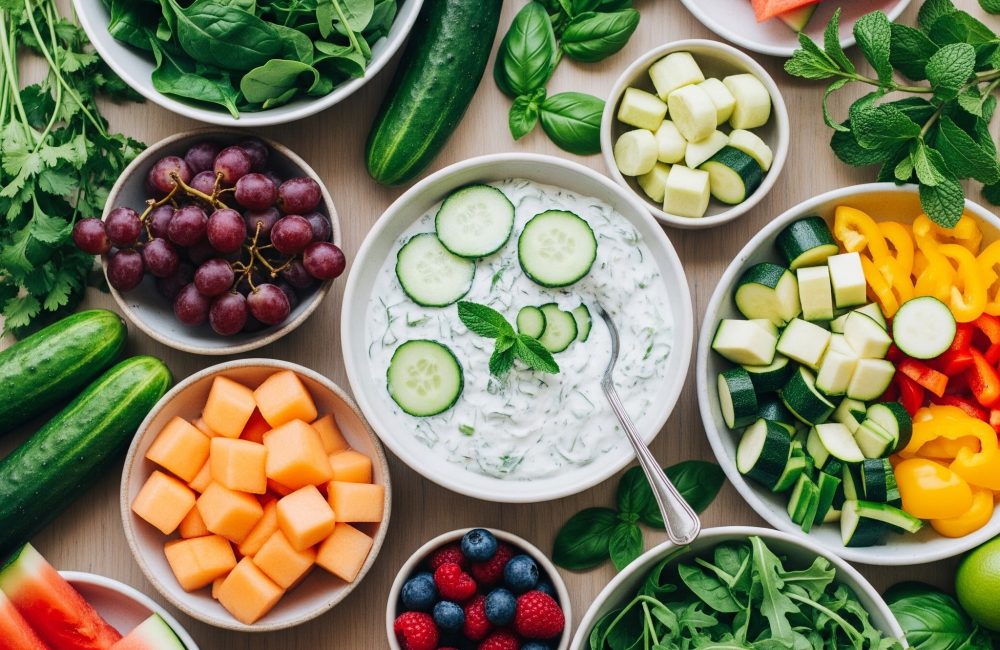
Seasonal fruits including watermelon, grapes and sweet ripe mangoes are traditionally enjoyed during summer, while vegetables such as cucumber and leafy greens frequently appear in daily meals.
These foods contribute fluids, vitamins and minerals while offering refreshing alternatives to heavier meals that many people find less appealing during periods of intense heat.
Simple meals prepared from fresh seasonal ingredients are often easier to digest than rich, heavily processed or excessively spicy foods.
Supporting Gut Health with Traditional Fermented Foods
Digestive health depends not only on what we eat but also on maintaining a balanced intestinal environment.
Fresh homemade curd has long been valued in Indian households and remains one of the most accessible fermented foods. Ayurveda traditionally recommends consuming fresh curd during the daytime rather than at night, while many households also include lightly seasoned buttermilk alongside lunch.
Buttermilk, when prepared traditionally, is often regarded in Ayurveda as a useful summer beverage because it is lighter than curd while complementing meals.
As with all foods, individual tolerance varies, and those with specific digestive conditions or lactose intolerance should seek personalised dietary advice.
Hydration Begins with Food
Water alone is not the only source of hydration during summer.
Many seasonal fruits naturally contain high amounts of water alongside potassium, vitamins and other nutrients that support normal body function during hot weather.
Common summer choices include:
- Watermelon
- Muskmelon
- Cucumber
- Kakdi
- Tender seasonal vegetables
- Fresh coconut water where appropriate
Including these foods regularly can contribute to overall fluid intake while making meals lighter and more refreshing.
Why Ayurveda Recommends Moderation with Extremely Cold Drinks
One traditional Ayurvedic recommendation that often surprises people is avoiding ice-cold drinks immediately with meals.
Classical Ayurvedic texts describe digestion as depending on Agni—the body’s digestive capacity. While this concept differs from modern physiological terminology, the practical recommendation is straightforward: avoid anything that may interfere with comfortable digestion around mealtimes.
For many people, room-temperature water or lightly cooled beverages are easier to consume than ice-cold drinks during meals. Individual preferences vary, and hydration should always remain the priority during periods of extreme heat.
Similarly, heavily fried foods and meals rich in chilli may feel less comfortable for some individuals during very hot weather.
The Continuing Relevance of Traditional Foods Like Sattu
Few foods demonstrate seasonal eating as effectively as sattu.
Prepared from roasted gram, sattu has been consumed across parts of India for generations during the hottest months of the year. It is filling without feeling excessively heavy and can be incorporated into refreshing drinks or simple meals.
Its continued popularity illustrates an important Ayurvedic principle: seasonal diets do not need to be complicated. Often, traditional regional foods evolved precisely because they suited local climate conditions.
Ayurveda and Modern Nutrition Often Meet in the Kitchen
While Ayurveda and modern nutritional science describe digestion differently, there are several areas where practical advice overlaps.
Both encourage:
- Eating seasonal produce.
- Staying adequately hydrated.
- Choosing minimally processed foods.
- Avoiding excessive intake of heavily fried meals.
- Paying attention to how the body responds to food choices.
Rather than viewing these systems as competing explanations, many people find value in recognising where traditional dietary wisdom and contemporary nutrition reinforce one another.
Practical Summer Eating Habits
For most healthy adults, simple daily habits can make summer meals more comfortable:
- Begin the day well hydrated.
- Include seasonal fruits and vegetables with high water content.
- Choose freshly prepared meals whenever possible.
- Avoid overeating during the hottest part of the day.
- Eat according to appetite rather than habit alone.
Small adjustments are often more sustainable than dramatic dietary changes.
A Seasonal Reminder Worth Revisiting
Heatwaves are becoming an increasingly familiar part of life across India. While no single food can prevent heat-related illness, thoughtful seasonal eating remains one of Ayurveda’s enduring recommendations for supporting digestive comfort.
The principle is remarkably simple: let the season influence the plate.
Fresh fruits, cooling vegetables, traditional fermented foods, adequate hydration and mindful eating continue to represent practical advice that has remained relevant across generations.
Ayurveda generally recommends seasonal, water-rich foods that are light and easy to digest during hot weather. Fruits such as watermelon, grapes, and ripe mangoes, along with vegetables like cucumber and leafy greens, are commonly included in a summer diet. Traditional foods such as buttermilk and sattu are also widely consumed during the season.
Many people notice a reduced appetite or digestive discomfort during periods of extreme heat. Ayurveda explains this through seasonal changes that influence digestion, while modern nutrition also recognises that high temperatures can affect appetite, hydration, and digestive comfort. Choosing lighter meals and staying well hydrated may help support normal digestion.
Traditional Ayurveda considers freshly prepared buttermilk a suitable summer beverage because it is light and easy to digest when consumed as part of a balanced meal. It has long been used in Indian diets to complement digestion. Individual tolerance varies, so people with dairy intolerance should seek personalised advice.
Ayurveda generally recommends limiting very spicy, heavily fried, and overly rich foods during peak summer. Ice-cold drinks are also traditionally consumed in moderation around meals, as Ayurveda considers comfortable digestion an important part of overall wellbeing.