






















Every July, Kerala begins to move differently.
The rain arrives with remarkable consistency. The pace of village life slows. Kitchens prepare Karkidaka Kanji from recipes handed down through generations. Families gather in the evenings to read the Adhyatma Ramayanam. And across the state, Ayurvedic hospitals see a familiar pattern unfold: people seeking seasonal care during what has long been regarded as Karkidaka Masam—the month traditionally associated with rejuvenation.
It is also the time when misconceptions about Ayurveda become most visible.
For many, Karkidaka Masam has become synonymous with “the best month for Panchakarma” or, more recently, a seasonal “detox.” Wellness packages appear across Kerala, promising cleansing, renewal and transformation. The language is compelling. The reality, however, is more nuanced.
Ayurveda has never regarded healing as something determined by the calendar alone.
The significance of Karkidaka Masam lies not in the belief that one month possesses extraordinary therapeutic powers, but in a much older principle: human physiology changes with the seasons, and our routines should change with it.
That idea remains as relevant today as it was centuries ago.
A Season That Invites Slowness
Long before seasonal wellness became a global trend, Ayurveda recognised that the body responds to changes in climate, temperature, daylight and humidity. These observations form the basis of Ritucharya—the classical Ayurvedic framework for seasonal living.
The southwest monsoon marks a profound environmental shift across Kerala. After months of intense summer heat, the rains alter not only the landscape but also daily life. Physical activity changes. Appetite often fluctuates. Digestive comfort may feel different. Sleep patterns may shift. These are ordinary human responses to seasonal transition.
Ayurveda interprets these changes through its own clinical framework, describing the monsoon as a period in which digestive strength (Agni) may become less robust while Vata Dosha, accumulated during the preceding summer, can become more active. Rather than viewing these changes as illness, Ayurveda sees them as signals that daily habits—including food, activity and therapeutic interventions—may need adjustment.
This is the context in which Karkidaka Masam acquired its enduring place in Kerala’s Ayurvedic tradition.
More Than Panchakarma
One of the most persistent misunderstandings about Karkidaka Masam is that everyone should undergo Panchakarma during the monsoon.
Classical Ayurveda does not make that recommendation.
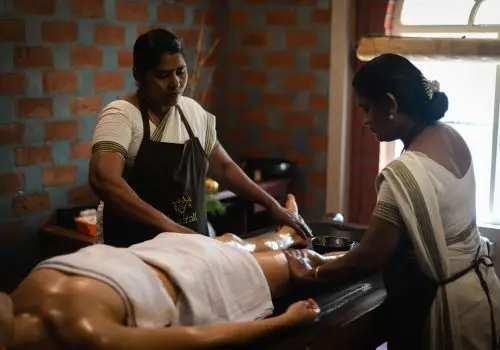
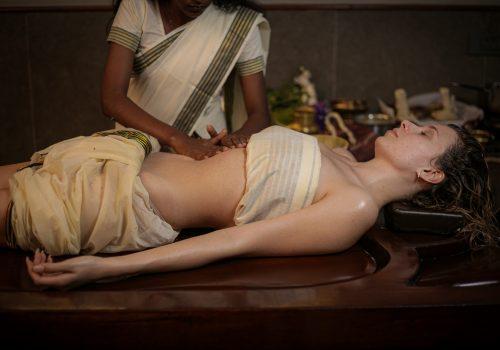
Panchakarma is not a seasonal ritual performed because the calendar reaches July. It is a physician-directed therapeutic process designed around the individual’s constitution, clinical presentation, digestive capacity, strength, age and medical history. Two people arriving at the same Ayurvedic hospital during Karkidaka Masam may receive entirely different recommendations. One may benefit from a structured Panchakarma programme, while another may be advised to focus on dietary modifications, external therapies, restorative treatments or simply seasonal lifestyle adjustments.
This individualisation is not an exception to Ayurvedic practice; it is one of its defining characteristics.
Reducing Karkidaka Masam to a “detox season” overlooks that principle and risks turning a sophisticated medical tradition into a seasonal marketing message.
The Wisdom Preserved in Everyday Practice
Perhaps the most remarkable aspect of Karkidaka Masam is that its traditions extend far beyond clinical settings.
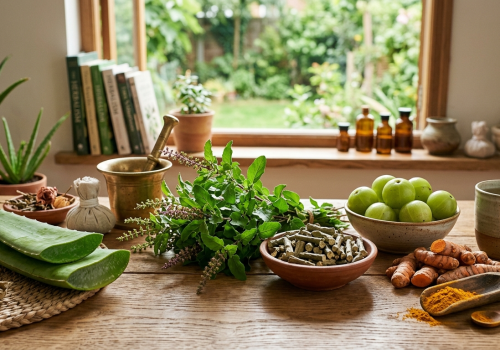
Across Kerala, many households continue to prepare Karkidaka Kanji, a nourishing rice gruel made with ingredients that vary according to local custom and family practice. While recipes differ, the underlying intention remains consistent: to provide warm, easily digestible nourishment during a season traditionally associated with reduced digestive resilience.
Similarly, the month has long encouraged simpler meals, moderated routines and greater attention to rest. These practices remind us that Ayurveda has always placed as much importance on everyday living as it has on specialised therapies.
In an age where wellness is often packaged as an experience to be purchased, Karkidaka quietly reinforces a different idea—that health is shaped by the cumulative effect of ordinary daily choices.
Why Kerala Continues to Matter
Although Ayurvedic practice exists throughout India, Kerala has become uniquely associated with seasonal rejuvenation.
This reputation did not emerge because the state possesses a single miraculous month. It developed through the convergence of climate, continuous physician traditions, medicinal plant knowledge and generations of institutions that preserved Panchakarma as a supervised clinical discipline rather than a spa treatment.
That continuity remains one of Kerala’s greatest contributions to contemporary Ayurveda.
For international visitors, Karkidaka Masam offers something that is increasingly difficult to find elsewhere: the opportunity to experience seasonal Ayurvedic care within the environment in which many of these traditions have been practised for generations.
At Kairali, the Season Begins with Assessment
At Kairali – The Ayurvedic Healing Village, Karkidaka Masam has never been approached as a fixed package built around the calendar.
The starting point is always the physician.
Every guest undergoes a detailed Ayurvedic consultation before any programme is recommended. Constitution (Prakriti), current imbalance (Vikriti), digestive capacity, medical history, medications, age and individual goals all inform clinical decision-making. The result is that no two seasonal programmes are necessarily alike, even during the same month.
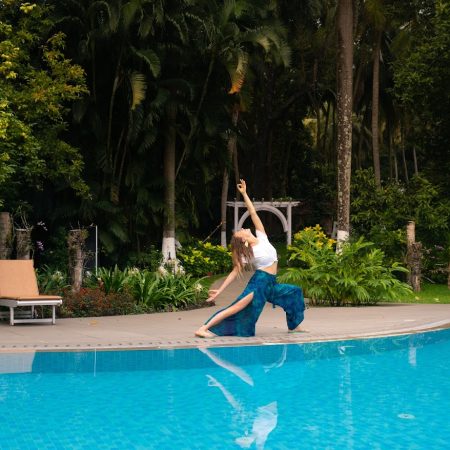
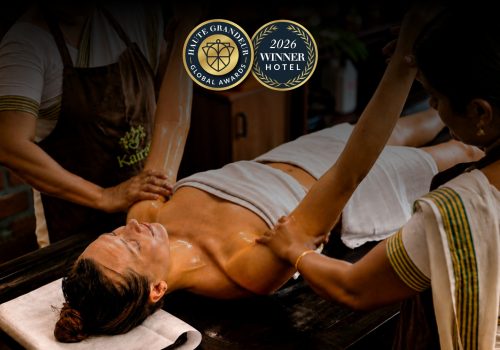
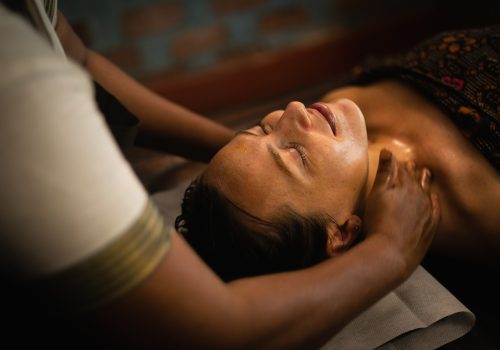
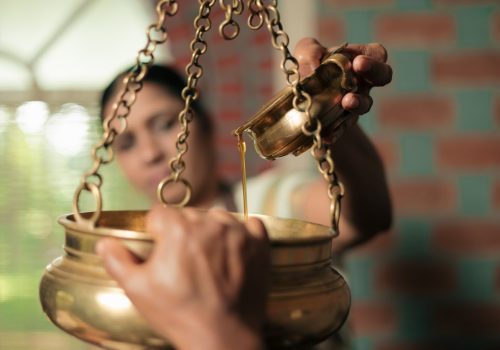
For some guests, physician-supervised Panchakarma may be appropriate. Others may benefit from restorative therapies, personalised nutrition, yoga, guided breathing practices or carefully structured daily routines designed to support adaptation to the season.
This approach reflects an important distinction.
The season informs the treatment.
It does not determine it.
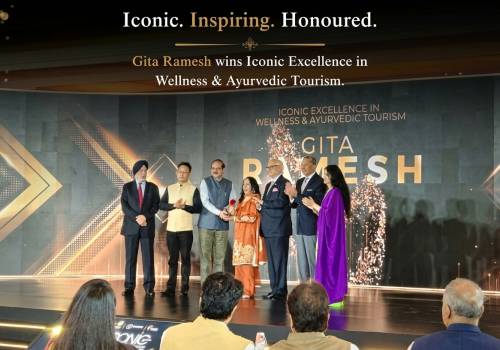
As a NABH-accredited Ayurvedic hospital and Green Leaf-certified centre, Kairali continues to approach Karkidaka through the lens of clinical individualisation rather than seasonal uniformity. That philosophy is consistent with both classical Ayurvedic thinking and contemporary expectations of responsible, patient-centred care.
Tradition Meets Contemporary Expectations
Today’s visitors arrive with questions that previous generations did not ask.
They want to understand what evidence exists for Ayurvedic therapies. They expect transparency about what is known, what remains uncertain and where Ayurveda complements rather than replaces conventional medical care.
These are reasonable expectations.
Ayurveda does not become more credible by promising certainty where none exists. Its credibility rests on careful clinical assessment, appropriate patient selection, qualified practitioners and honest communication about realistic outcomes.
Seasonal care during Karkidaka Masam should therefore be understood as part of a broader approach to health rather than a universal solution. Individuals living with chronic medical conditions, those who are pregnant, or those taking prescription medications should seek appropriate medical advice before undertaking intensive Ayurvedic therapies.
Responsible Ayurveda has always recognised that context matters.
A Month That Still Has Something to Teach Us
Karkidaka Masam has endured not because people believed that one month could transform health overnight.
It has endured because it preserved an older insight that modern healthcare is increasingly rediscovering: human wellbeing is shaped not only by disease, but also by rhythm, environment and season.
Whether someone chooses physician-supervised Panchakarma, adopts a simpler seasonal diet or simply becomes more attentive to the relationship between climate and daily routine, the enduring lesson of Karkidaka Masam is remarkably contemporary.
Health is not static.
Neither are we.
Perhaps that is why, even today, Kerala’s monsoon continues to draw people in search of something quieter than a wellness trend and more enduring than a seasonal promise—a reminder that sometimes the most meaningful interventions begin not with dramatic change, but with paying closer attention to the season we are living through.
Book free doctor consultation at +91-9555156156 or visit www.ktahv.com for more information
Karkidaka Masam is the last month of the Malayalam calendar, usually falling between July and August. In Kerala, it is traditionally associated with seasonal Ayurvedic care, nourishing diets, and lifestyle practices that support the body’s adaptation during the monsoon.
It can be, but not for everyone. Ayurveda recommends Panchakarma only after a qualified physician assesses your constitution, current health, digestive strength, and treatment goals. The season supports care, but the individual determines the treatment.
Karkidaka Chikitsa refers to the seasonal Ayurvedic regimen followed during Karkidaka Masam. It may include dietary guidance, external therapies, yoga, herbal preparations, and, when appropriate, physician-supervised Panchakarma.
Kerala has preserved a strong tradition of physician-led Ayurveda. Many people visit during Karkidaka Masam to experience seasonal programmes that combine classical Ayurvedic principles with personalised clinical assessment in a traditional setting.
At Kairali – The Ayurvedic Healing Village, every programme begins with an Ayurvedic consultation. Treatments are tailored to the individual, ensuring that seasonal therapies are based on clinical assessment rather than the calendar alone.