





























Whether Ayurveda “works” depends on what outcome you are evaluating, how treatment is delivered, and what standards of evidence you apply.
Ayurveda is one of the world’s oldest continuously practised systems of medicine, with a documented history spanning more than two millennia. Today, millions of people across India and around the world continue to use Ayurvedic approaches for lifestyle management, preventive health, recovery, and overall wellbeing.
Modern research has investigated various Ayurvedic interventions for areas such as stress, sleep quality, quality of life, and certain aspects of chronic symptom management. Some findings are promising, while other areas require stronger and more rigorous research. As with many traditional medical systems, the evidence base is not uniform across every therapy, herb, or condition.
The more useful question may not be “Does Ayurveda work?” but rather: For whom, under what circumstances, and for which health goals might Ayurvedic care be beneficial?
Why the Debate Around Ayurveda Persists
Few healthcare systems generate as much debate as Ayurveda.
Supporters point to centuries of continuous practice, growing global interest, and the experiences of patients who report improvements in wellbeing, resilience, sleep, digestion, and overall quality of life. Critics often highlight the need for more large-scale clinical trials and greater standardisation across research methodologies.
Both perspectives contain valid points.
Modern medicine and Ayurveda operate from different frameworks. Conventional medicine often focuses on diagnosing and treating specific diseases. Ayurveda traditionally focuses on understanding patterns of imbalance, lifestyle factors, diet, daily routines, and individual constitution.
Because these systems ask different questions, evaluating them requires nuance rather than simplistic conclusions.
What Modern Research Says
The current scientific literature on Ayurveda is mixed but evolving.
Research has explored areas including:
- Stress management and psychological wellbeing
- Sleep quality
- Lifestyle-related health concerns
- Yoga and meditation practices commonly integrated with Ayurvedic care
- Certain Ayurvedic herbs and formulations
- Quality-of-life outcomes during integrative care
Several studies have reported positive findings in some of these areas. At the same time, researchers continue to call for larger, better-designed clinical trials, longer follow-up periods, and improved standardisation.
This does not mean Ayurveda is ineffective. It means that the strength of evidence varies depending on the intervention being studied.
A responsible discussion of Ayurveda acknowledges both the encouraging findings and the limitations of the current evidence base.
The Importance of Context: Ayurveda Is More Than Herbs
One reason people often misunderstand Ayurveda is that they evaluate it solely through the lens of herbal supplements.
Traditional Ayurvedic care is rarely built around a single herb.
Instead, it may include:
- Detailed physician consultations
- Dietary guidance
- Daily routine recommendations
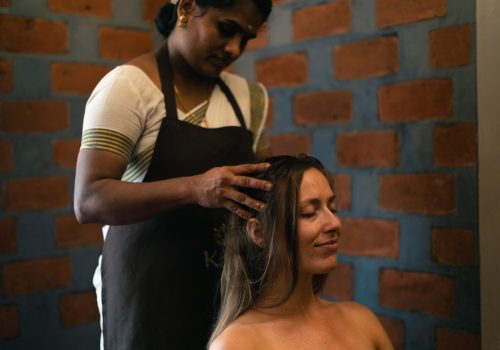
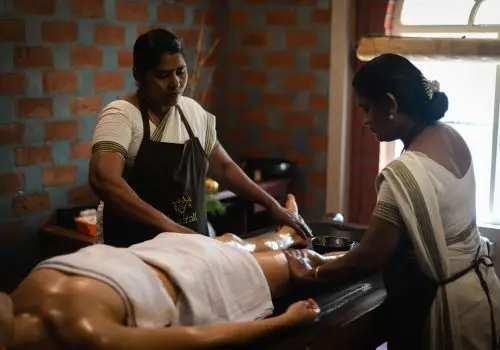
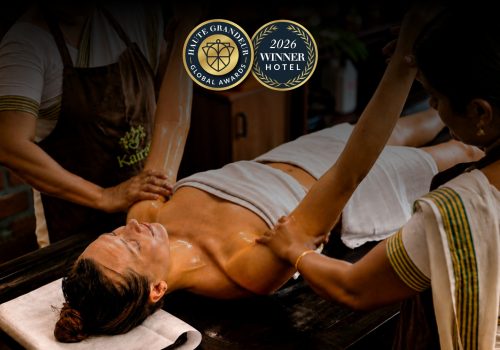
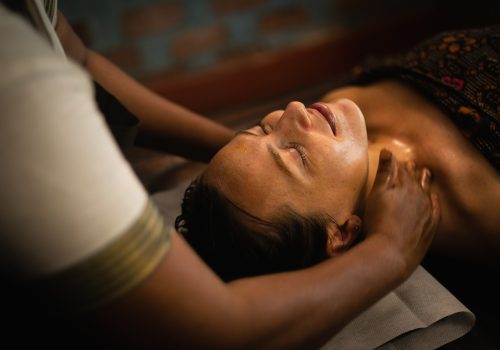
- Therapeutic body treatments
- Movement practices such as yoga
- Breathing techniques
- Rest and recovery protocols
- Ongoing observation and adjustments
This comprehensive approach makes Ayurveda difficult to evaluate through the same model used to study a single pharmaceutical intervention.
In many cases, outcomes may result from the combined effect of multiple lifestyle and therapeutic changes rather than one isolated component.
Why People Travel to Kerala for Ayurvedic Care
When international travellers seek Ayurvedic treatment, Kerala remains one of the most recognised destinations globally.
The state’s long-standing Ayurvedic tradition, practitioner training infrastructure, and concentration of specialised treatment centres have contributed to its reputation as a leading Kerala Ayurveda destination.
For many visitors, the appeal is not simply treatment itself. It is the opportunity to step away from daily demands and engage in a structured health programme under professional supervision.
This is where the setting matters.
Ayurveda was historically practised as a complete system involving food, environment, routines, practitioner oversight, and therapeutic procedures. A dedicated residential setting can often support greater adherence to these principles than attempting lifestyle changes in the middle of a demanding work schedule.
How Kairali Approaches Authentic Ayurvedic Care
At Kairali – The Ayurvedic Healing Village in Palakkad, Kerala, Ayurveda is practised within a structured clinical environment rather than as a spa experience alone.
Kairali is a NABH-accredited Ayurvedic hospital and holds Kerala’s Green Leaf classification, the state’s highest category for Ayurveda centres.
What distinguishes a physician-led Ayurvedic programme from a wellness holiday is the emphasis on assessment, individualisation, and supervision.
A typical stay may involve:
- Consultation with qualified Ayurvedic physicians
- Personalised treatment planning
- Therapeutic procedures when appropriate
- Dietary recommendations
- Yoga and breathing practices
- Ongoing monitoring throughout the stay
This reflects the traditional Ayurvedic principle that care should be adapted to the individual rather than delivered as a standardised package.
For travellers seeking authentic Ayurvedic treatments, that distinction is often significant.
Can Ayurveda Replace Conventional Medicine?
In most situations, the answer is no.
Ayurveda and conventional medicine are best understood as different systems with different strengths.
Many people use Ayurveda as part of a broader health strategy that may also include conventional medical care, physiotherapy, nutrition counselling, mental health support, or other evidence-based interventions.
Responsible Ayurvedic practitioners generally encourage patients to maintain communication with their healthcare providers and to seek appropriate medical attention when needed.
A balanced approach recognises that healthcare does not have to be an either-or choice.
What Outcomes Are Realistic?
One of the biggest mistakes wellness marketing makes is promising dramatic transformations.
A more realistic expectation is that individuals may experience improvements in aspects of wellbeing such as:
- Stress resilience
- Sleep quality
- Energy levels
- Daily routines
- Mindful eating habits
- General quality of life
Results vary considerably between individuals, and no responsible practitioner can guarantee specific outcomes.
The most credible Ayurvedic centres focus on process, consistency, and professional guidance rather than promises.
The Bottom Line: Does Ayurveda Treatment Really Work?
The evidence suggests that Ayurveda can offer meaningful value for many people, particularly when it is delivered as a comprehensive, practitioner-led approach rather than reduced to isolated products or quick fixes.
At the same time, Ayurveda should not be viewed as a universal solution, nor should it be evaluated through exaggerated claims.
The strongest position is also the most honest one: Ayurveda appears to help many people improve aspects of wellbeing and lifestyle when practised appropriately, but outcomes vary, research continues to evolve, and expectations should remain realistic.
For travellers seeking a structured holistic wellness retreat, an established Kerala Ayurveda destination, or professionally supervised Ayurvedic wellness Kerala experiences, the most important question is not whether Ayurveda works in theory, but whether the care is delivered with qualified practitioners, appropriate standards, and a commitment to evidence-informed practice.
About Kairali – The Ayurvedic Healing Village
Located in Palakkad, Kerala, Kairali – The Ayurvedic Healing Village is a NABH-accredited Ayurvedic hospital and wellness destination that combines physician-led Ayurvedic care, therapeutic treatments, yoga, dietary guidance, and residential programmes within a traditional Kerala setting. Founded as part of Kairali Ayurvedic Group’s 35+ year journey, KTAHV draws on a multi-generational Ayurvedic lineage while maintaining a contemporary focus on quality standards, practitioner supervision, and responsible wellness tourism.
Research on Ayurveda is growing, but the strength of evidence varies across therapies, herbs, and treatment approaches. Some Ayurvedic interventions have shown promising results in areas such as stress management and quality of life, while other areas require further study. Ayurveda is best understood through both its traditional foundations and emerging modern research.
Kerala has a long-established Ayurvedic tradition, a large concentration of qualified practitioners, and specialised treatment centres. Many travellers choose Kerala because they can experience Ayurvedic care within a structured environment that includes physician consultations, therapeutic treatments, dietary guidance, and daily wellness practices.
A credible Ayurvedic centre should have qualified practitioners, recognised quality standards, transparent treatment processes, and clear communication about what Ayurveda can and cannot do. Accreditation, practitioner credentials, and patient safety protocols are important factors to consider.
A wellness retreat may focus on relaxation, fitness, or general wellbeing. Traditional Ayurvedic care is typically more structured, involving physician assessment, individualised recommendations, therapeutic procedures, and ongoing monitoring based on Ayurvedic principles.
Many people choose to use Ayurveda as part of a broader approach to wellbeing that may also include conventional medical care. Anyone considering Ayurvedic treatment should inform their healthcare providers and seek guidance from qualified practitioners when making health-related decisions.