

























Travelling alone for an Ayurvedic retreat can be an appealing prospect: time away from everyday routines, structured care, and the chance to experience Ayurveda in Kerala, where the system has a particularly strong institutional presence.
For a woman travelling alone, however, choosing a retreat involves more than comparing therapies, rooms and programme lengths.
You should also know what information you are entitled to before booking, how your personal details should be handled, what boundaries you can set during treatments, and where to seek help if a problem arises.
For international guests in particular, knowing these basics before arrival can make an unfamiliar healthcare and hospitality setting much easier to navigate.
1. You Have the Right to Clear Information Before You Pay
In India, consumers have rights relating to safety, information, choice, fair treatment and redressal under the consumer-protection framework.
The National Consumer Helpline summarises these as including the right to be informed, the right to safety and the right to seek redressal where services fall short or unfair practices occur.
For an Ayurveda retreat, this means you should be able to understand what you are actually purchasing.
Before making payment, ask for written information covering:
- programme inclusions and exclusions;
- accommodation category;
- taxes and additional charges;
- transfer costs;
- consultation arrangements;
- cancellation and refund conditions;
- therapies included in the programme;
- and any services that carry an additional fee.
Be cautious of health claims promising guaranteed results or cures.
An Ayurvedic programme may describe its traditional purpose or the areas of wellbeing it is intended to support, but an award-winning resort, attractive brochure or physician consultation does not guarantee a particular medical outcome.
Keep the booking confirmation, invoices and written correspondence. If there is later a disagreement over what was promised, this paper trail matters.
2. Ask How Your Personal and Health Information Will Be Used
A residential Ayurvedic programme may require more personal information than an ordinary hotel stay.
You may be asked for passport or identification details, contact information, medical history, current medication, allergies and other information needed for consultations.
India’s Digital Personal Data Protection framework now provides a national structure governing the processing of digital personal data. The final Digital Personal Data Protection Rules, 2025 were notified in November 2025, with different provisions coming into effect on a phased timetable.
Among the framework’s principles is the expectation that organisations explain what personal data they collect and why they are processing it. Certain operational requirements under the rules are still subject to their statutory commencement dates, so it is better to describe the regime accurately rather than assume every provision is already fully enforceable in the same way.
As a guest, sensible questions include:
- Why is this information required?
- Who can access my health questionnaire?
- How is it stored?
- Is it shared with another provider?
- How can I correct inaccurate information?
- Who do I contact about a privacy concern?
A professional retreat should be able to answer these questions without making them sound unusual.
3. Consent Still Matters During an Ayurvedic Treatment
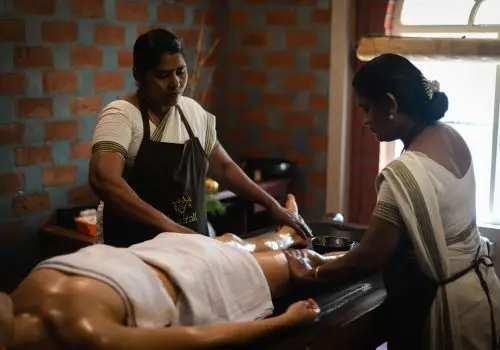
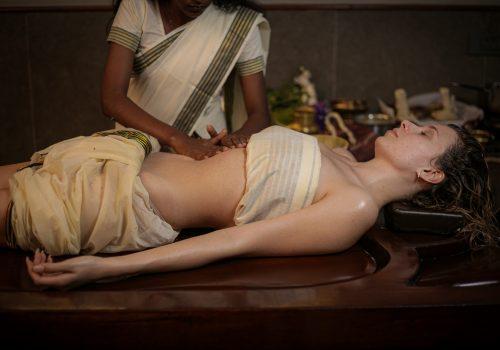
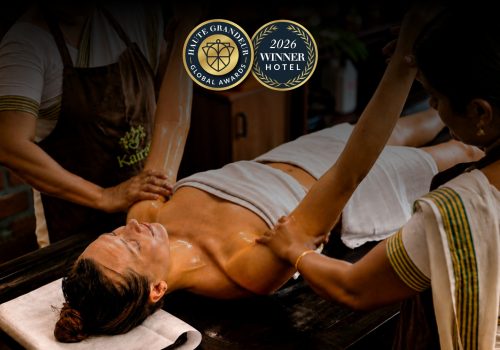
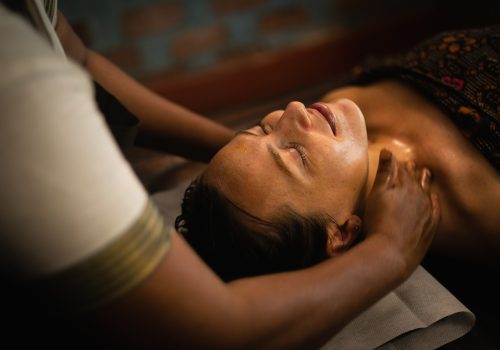
Many Ayurvedic therapies involve oil application or physical contact. That does not reduce your right to understand what is happening or to set boundaries.
Before a treatment begins, you should know what the procedure involves and what parts of the body it requires the therapist to work on.
You can also ask practical questions such as:
- Can I request a female therapist?
- What clothing or draping is used?
- Who will be present in the treatment room?
- Can I stop the treatment if I feel uncomfortable?
- Who should I speak to if I have a concern?
A treatment should not continue simply because it appears on an itinerary.
If something feels unclear, ask before the session begins.
For solo travellers, it is useful to discuss preferences regarding therapist gender and privacy at the booking stage rather than waiting until treatment day.
4. Understand the Difference Between Property Policy and Legal Rights
This distinction is particularly important.
A retreat may have strong internal safeguarding policies, staff codes of conduct, grievance procedures, CCTV in common areas or protocols for entering guest rooms. Those can all be important safety measures.
But an internal policy should not automatically be presented as a statutory right unless the law actually provides that right in the particular circumstances.
For example, India’s workplace sexual-harassment framework creates duties for employers and workplaces. A solo traveller who experiences harassment should not assume that a workplace Internal Committee is necessarily the only, or even the appropriate, statutory route available to her as a guest.
If there is immediate danger, assault, threatening behaviour or another serious safety issue, contacting the police or emergency services may be more appropriate.
5. Know the Emergency Numbers Before You Need Them
Kerala Police currently identifies 112 as its emergency-response number. Its published contact information also lists women’s assistance and Pink Patrol services.
For most international travellers, the simplest number to remember is:
Emergency in India: 112
Kerala’s Pink Police initiative is designed to improve safety for women and children in public places and operates alongside the emergency-response system.
Save key numbers before travelling rather than searching for them during an emergency.
It is also sensible to keep your retreat’s front-desk or duty-manager contact readily accessible.
6. If a Service Problem Occurs, Start With a Written Record
Not every complaint is an emergency.
If the issue concerns billing, accommodation, a service that was not provided, or a disagreement about what was included in your package, begin by raising it directly with the retreat.
Whenever possible, put the complaint in writing.
State:
- what happened;
- when it happened;
- what you were originally promised;
- what resolution you are seeking;
- and attach relevant receipts or booking confirmations.
Written complaints are easier to escalate if the matter is not resolved.
7. The National Consumer Helpline Is a Useful Next Step
If a consumer dispute remains unresolved, India’s National Consumer Helpline provides a pre-litigation grievance route.
The helpline currently accepts grievances through 1915, its online portal, WhatsApp and other channels. The official service lists phone support from 8 a.m. to 8 p.m., except on national holidays.
The helpline can be useful for disputes involving services, payments or unresolved consumer complaints.
It is not a replacement for emergency or criminal reporting where personal safety is involved.
8. International Travellers Also Have Access to the Tourist Helpline
India’s Ministry of Tourism operates a multilingual tourist helpline on 1363 and 1800-11-1363.
The Ministry currently lists support in English, Hindi and a number of international languages, including Arabic, French, German, Italian, Japanese, Korean, Mandarin, Portuguese, Russian and Spanish.
This can be useful when an international visitor needs general guidance or assistance while travelling in India.
For more serious situations, your embassy or consulate may also be able to explain local procedures, provide lists of lawyers or medical facilities, or assist with lost travel documents.
Consular officials cannot normally resolve a private commercial dispute for you, but they can help you understand what support is available.
9. What Should a Solo Woman Ask Before Booking an Ayurveda Retreat?
Safety is easier to assess through specific questions than through broad assurances such as “women-friendly” or “completely safe.”
Before booking, consider asking:
- Are consultations conducted by qualified Ayurvedic physicians?
- Can I request a female therapist for body treatments?
- What is the protocol for staff entering guest rooms?
- Is there a duty manager available outside normal office hours?
- How are airport transfers arranged?
- Will I receive the driver’s name and contact details in advance?
- How are medical and identification records handled?
- What is the complaints procedure?
- What happens if I decide not to undergo a particular therapy?
- What is the cancellation or early-departure policy?
How clearly a retreat answers these questions can tell you more than a generic safety statement.
10. Keep a Few Practical Safeguards in Place
Solo travel does not require approaching every situation with suspicion. It does reward preparation.
Keep digital copies of your passport, visa, travel insurance and booking details separately from the originals.
Share your itinerary and transfer details with someone you trust.
Carry a record of medications and allergies if you are entering a residential health programme.
During transfers, use transport arranged through a provider you recognise or another reputable service, particularly for late-night arrivals.
And if you change your travel plans, let someone know.
These are ordinary solo-travel precautions, not Ayurveda-specific rules.
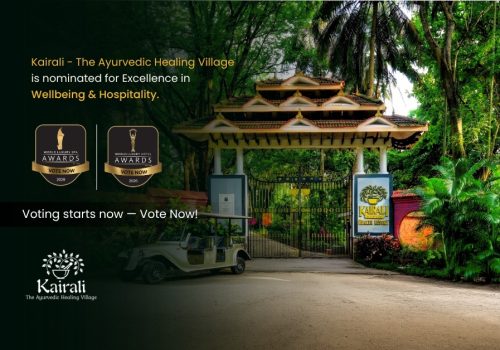
What About Kairali – The Ayurvedic Healing Village?
For someone considering a residential Ayurvedic programme in Palakkad, the same questions should apply to Kairali that would apply to any serious institution.
Kairali – The Ayurvedic Healing Village is an NABH-accredited Ayurvedic hospital, which provides one useful institutional marker when evaluating the centre.
Accreditation, however, should sit alongside practical questions about the individual stay: treatment consent, practitioner supervision, privacy, transfers, accommodation policies and grievance procedures.
Prospective guests should confirm any specific operational arrangements directly with the property before travelling, particularly requests involving female therapists, transfers, room access or additional support for solo travellers.
That is better than assuming a service is automatically included.
A Rights-First Approach Makes Wellness Travel Better
A retreat should never require a traveller to trade autonomy for care.
You can participate fully in an Ayurvedic programme while still asking questions, reading the terms, setting physical boundaries and knowing where your personal information goes.
For solo women travelling internationally, those are not signs of distrust. They are part of informed travel.
Ayurveda places considerable emphasis on care being suited to the individual. The same principle should extend beyond the treatment room.
Clear information, meaningful consent, privacy and accessible ways to raise concerns are part of what makes any healthcare or wellness setting worthy of trust.
Website: www.ktahv.com
Call: +91-9555156156