






























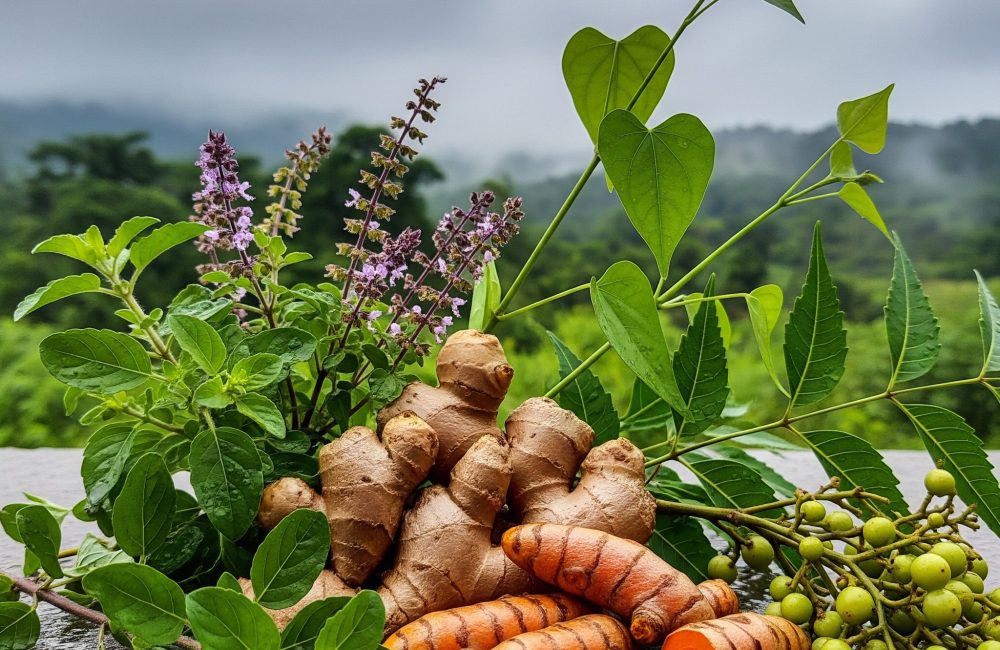

Tulsi, ginger, turmeric, guduchi and neem all have a place in Indian seasonal practice. But they should not be treated as simple shields against infection.
Every monsoon, the same advice returns.
Drink tulsi tea. Add turmeric to milk. Take giloy juice. Use neem. Boost your immunity.
A recent Netmeds feature follows this familiar pattern. It names tulsi, guduchi, turmeric, ginger and neem as five Indian herbs for monsoon health.
The herbs are not the problem. Each has a recognised place in Indian food culture, household practice or Ayurveda.
The problem is the phrase “immunity booster”.
It sounds useful because it is simple. But the immune system is not a switch that can be turned up. It is a complex network. It must respond strongly enough to threats, but not so strongly that it harms healthy tissue.
Ayurveda also does not approach the rainy season by asking which herb will increase immunity the most.
It asks a different question: what changes in the body during this season, and what kind of support is appropriate for the individual?
Monsoon health starts with the season
In Ayurveda, the rainy season is called varṣā ṛtu. It is often linked with weaker digestion, irregular appetite, heaviness and greater sensitivity to unsuitable food and water.
This is not the same as a modern medical explanation of monsoon illness. But there is some practical overlap.
Rainy weather may increase exposure to contaminated food and water. Stagnant water can support mosquito breeding. Seasonal outbreaks of dengue, malaria, stomach infections and respiratory illness may also become more common.
This means herbs should never replace basic precautions.
A tulsi drink cannot make unsafe water safe. Turmeric cannot prevent a mosquito bite. Neem cannot replace medical care for a persistent fever.
Any responsible monsoon routine must begin with clean water, freshly cooked food, mosquito control, adequate sleep and timely medical advice.
Tulsi: useful for comfort, not infection prevention
Tulsi is one of the most familiar herbs in Indian homes.
Its leaves are commonly used in warm infusions, teas and traditional preparations. Many people find a warm tulsi drink soothing when the throat feels uncomfortable during damp weather.
But this does not mean tulsi prevents viral or bacterial infections.
Most claims around tulsi are stronger than the human evidence allows. Laboratory studies are useful, but they do not prove that drinking tulsi tea will stop someone from falling ill.
There is also an important difference between a mild household infusion and a concentrated extract.
People who are pregnant, breastfeeding, taking regular medication or managing a health condition should seek professional advice before using strong tulsi products.
Ginger: one of the most practical monsoon ingredients
Ginger is easier to use sensibly because it can remain part of food.
Fresh ginger can be added to soups, dals, vegetables or warm water. Its pungent taste may suit the heavy, damp quality of the rainy season.
Modern research has most consistently examined ginger for nausea and digestive support. This makes it especially relevant for people who experience poor appetite, bloating or heaviness during humid weather.
But stronger is not always better.
Too much ginger may worsen heartburn, stomach irritation or heat sensitivity in some people. Those taking blood-thinning medicines should also be careful with concentrated supplements.
The safest approach is often the simplest one: use ginger as a culinary ingredient rather than as a high-strength extract.
Turmeric: food and supplements are not the same
Turmeric is part of everyday cooking in many Indian homes.
It adds colour and flavour to food. It also contains plant compounds, including curcumin, that have been widely studied for antioxidant and anti-inflammatory activity.
But a spoon of turmeric used in cooking is not the same as a concentrated curcumin capsule.
That difference matters.
Research on curcumin varies because products differ in strength, formulation and absorption. Some concentrated products may also cause digestive discomfort. Certain high-absorption formulations have been linked with liver injury.
Turmeric does not need to disappear from the kitchen. It simply needs to be described honestly.
Haldi in dal is food. A concentrated curcumin product is a biologically active supplement and may require professional guidance.
Guduchi: where the immunity claim becomes risky
Guduchi, also known as giloy, needs more caution than most monsoon listicles suggest.
In Ayurveda, guduchi is traditionally described within the broad category of rasāyana, substances used in specific contexts to support restoration and resilience.
During the COVID-19 pandemic, however, it was widely promoted as an immunity booster. Many people began taking it without supervision in the form of juice, tablets, powders and extracts.
That created a serious safety concern.
Cases of liver injury linked with Tinospora cordifolia products have been reported. The risk may be influenced by product quality, plant identification, individual sensitivity and existing health conditions.
This does not erase guduchi’s place in Ayurveda.
It means guduchi should be treated as a medicinal herb, not as a casual daily drink.
People with liver disease, autoimmune conditions or regular medication use should not self-prescribe it.
Neem: familiar does not mean suitable for daily use
Neem has a long history in Indian household practice.
It appears in skin care, scalp care, oral hygiene and traditional preparations. Laboratory research has also examined neem compounds for antibacterial and antifungal activity.
But laboratory activity does not prove that drinking neem juice prevents monsoon illness.
Internal use deserves particular caution.
Neem oil should never be swallowed. Concentrated neem products may also be unsuitable for children, pregnant women and people with certain liver, kidney or blood-sugar concerns.
Topical use also requires judgement.
A monsoon rash may be fungal, allergic, bacterial or caused by irritation. Applying a strong homemade paste without knowing the cause may make the problem worse.
Persistent itching, spreading rashes or painful skin changes should be examined by a healthcare professional.
Ayurveda does not need the “immunity booster” claim
The useful part of a five-herb monsoon list is not the promise of stronger immunity.
It is the reminder that seasonal health can be supported through ordinary, familiar practices.
Ginger and turmeric can remain part of food. Tulsi may be used as a mild household infusion. Guduchi should be approached as a medicinal herb. Neem should be used selectively rather than consumed routinely.
The foundations still matter more:
- Drink safe water.
- Eat freshly prepared food.
- Store leftovers properly.
- Prevent mosquito breeding.
- Sleep adequately.
- Seek medical care for persistent symptoms.
This is less dramatic than promising five herbs that boost immunity.
It is also more responsible.
Ayurveda asks us to observe the season, understand the person, choose the form carefully and avoid assuming that more intervention means better care.
Tulsi, ginger, turmeric, guduchi and neem are often used in Indian seasonal practice. Each has a different role, so they should not be treated as interchangeable “immunity boosters”.
No herb can guarantee protection from dengue, malaria, flu or stomach infections. Safe water, fresh food, mosquito control, good hygiene and timely medical care remain more important.
Guduchi should not be used casually as a daily drink or supplement. Reports of liver injury linked with some Tinospora cordifolia products mean it is best taken only with qualified professional guidance.
For most people, normal culinary use is generally different from taking concentrated extracts. Supplements may have stronger effects and may interact with medicines, so professional advice is recommended.