






















“Does Ayurveda really work?” sounds like a simple question.
It is not.
Ayurveda includes dietary practices, herbal medicines, manual therapies, structured procedures such as Panchakarma, yoga, breathing practices and detailed ideas about daily routine. Asking whether all of Ayurveda “works” is therefore a little like asking whether all of modern medicine works.
The more useful question is: which Ayurvedic practices have evidence behind them, which are supported primarily by traditional use, and where should we remain cautious?
That distinction matters, particularly as Ayurveda becomes more visible internationally.
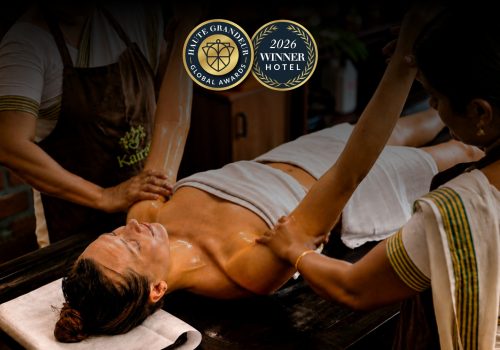
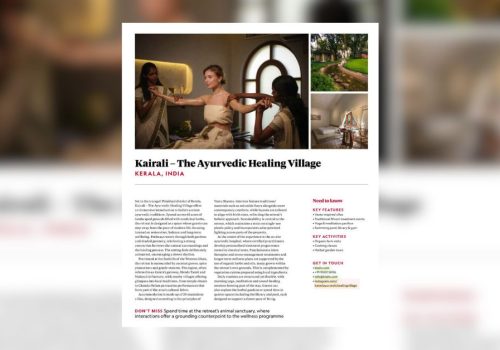
At Kairali, The Ayurvedic Healing Village in Palakkad, Kerala, Ayurveda is approached through physician consultation and individualised treatment rather than as a collection of standard wellness treatments. That provides a useful starting point for understanding what Ayurveda is actually trying to do.
What exactly is Ayurveda?
Ayurveda is a traditional system of medicine that developed in India and has been practised for more than two millennia.
The Sanskrit term Āyurveda is commonly translated as “knowledge of life”: āyus refers to life or lifespan, while veda refers to knowledge.
Its framework differs substantially from modern biomedicine.
Ayurvedic physicians traditionally consider an individual’s constitution, present symptoms, digestion, appetite, sleep, environment, routines and other factors when determining an approach to care.
Two concepts frequently used in this process are prakriti (individual constitution) and vikriti (the current pattern of imbalance).
Ayurveda also describes three organising principles known as the doṣas:
- Vāta, associated traditionally with movement and change
- Pitta, associated with transformation and metabolic processes
- Kapha, associated with structure and stability
These are Ayurvedic concepts, not anatomical structures or directly measurable biomedical entities. They should be understood within the system’s own diagnostic framework rather than treated as equivalents of hormones, nerves or organs.
So, does Ayurveda work?
The answer depends on what exactly is being evaluated.
Some components associated with Ayurvedic practice have received considerably more scientific investigation than others.
Yoga and meditation, for example, have substantial bodies of research examining areas such as stress, physical function and aspects of mental wellbeing.
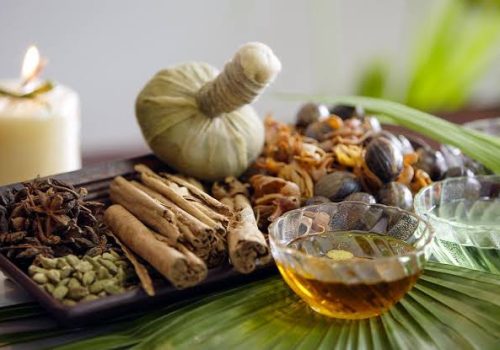
Certain Ayurvedic herbs have also been investigated individually. Ashwagandha (Withania somnifera) has been studied particularly in relation to stress and sleep, while turmeric and curcumin have been investigated for their effects on inflammatory pathways and a range of health outcomes.
But evidence for one herb or practice does not establish the effectiveness of Ayurveda as a whole.
Research quality also varies. Some studies are small, use different formulations or treatment protocols, lack strong controls, or have not been replicated sufficiently.
A credible discussion of Ayurveda therefore needs room for two statements at once:
Some Ayurvedic practices are promising or reasonably well studied. Others remain under-researched.
That is a more useful position than either declaring Ayurveda scientifically proven in its entirety or dismissing the entire system because parts of it have limited modern evidence.
Personalisation is central to Ayurvedic practice
One reason Ayurveda does not fit neatly into contemporary wellness marketing is its emphasis on individualisation.
A person visiting an Ayurvedic physician is not traditionally assigned a treatment simply because they selected “sleep”, “stress” or “weight management” from a menu.
The practitioner may ask about digestion, appetite, bowel habits, sleep, physical activity, previous illness, daily routine and other aspects of health.
Treatment can then vary accordingly.
This individualisation does not itself prove clinical effectiveness. But it is important for understanding how Ayurveda is intended to be practised.
The system is built around assessment before intervention.
What happens at an Ayurvedic retreat?
A residential Ayurvedic programme can make this approach particularly visible.
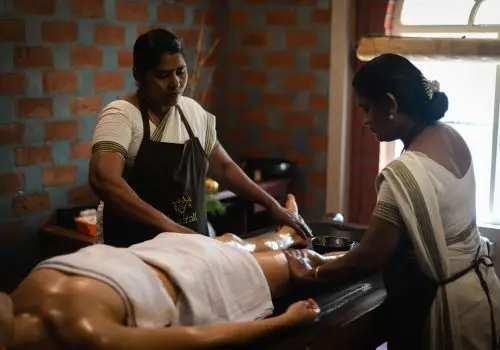
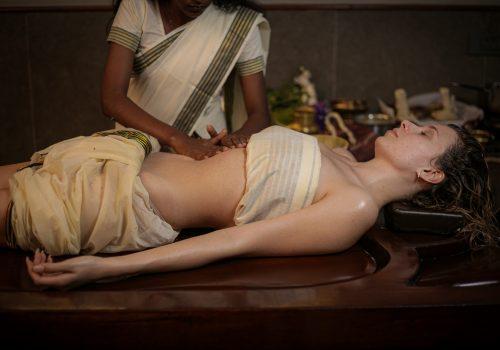
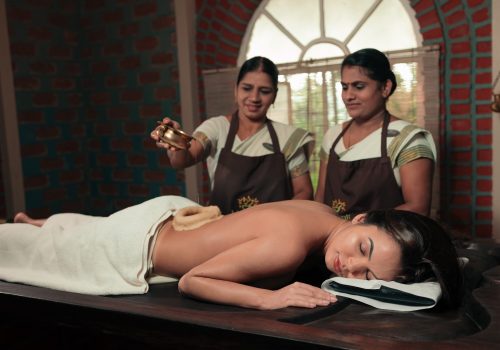
At Kairali, The Ayurvedic Healing Village, physician consultation can sit alongside Ayurvedic therapies, prescribed routines, food, yoga, breathing practices and rest.
KTAHV is an NABH-accredited Ayurvedic hospital and Panchakarma clinic in Palakkad. NABH accreditation relates to institutional healthcare standards; it should not be interpreted as a guarantee that a particular therapy will produce a specific outcome for every guest.
That distinction is important.
A serious Ayurvedic setting should not promise that a treatment will automatically resolve stress, insomnia, digestive problems, joint pain or other concerns within a predetermined number of days.
Responses vary, and some symptoms require conventional medical investigation.
Panchakarma is more than a “detox”
Perhaps no Ayurvedic term has been simplified more aggressively by contemporary wellness culture than Panchakarma.
It is often advertised as an Ayurvedic detox.
That description is incomplete.
Panchakarma refers to a physician-directed therapeutic framework involving preparatory procedures, specific interventions and post-treatment care. Not every person undergoes every procedure, and the programme should be determined according to individual assessment.
Claims that Panchakarma simply “flushes toxins” from the body convert traditional Ayurvedic concepts into biomedical statements that have not been established in those terms.
It is more accurate to describe what the programme involves than to use “detoxification” as proof of a physiological mechanism.
What about Ayurvedic herbs?
Herbal medicine is another important area where careful language matters.
Ayurvedic formulations have long histories of traditional use, and some individual herbs have attracted substantial scientific attention.
But “natural” does not mean automatically safe or appropriate.
Herbs may interact with medicines, be unsuitable during pregnancy or for certain health conditions, and vary considerably according to formulation and manufacturing quality.
Quality control is particularly important for international readers concerned about contamination and heavy metals in some Ayurvedic products.
Kairali Ayurvedic Products Pvt. Ltd. operates a WHO-GMP-certified Ayurvedic pharmaceutical manufacturing facility in Tamil Nadu. WHO-GMP certification refers to manufacturing standards; it does not mean every formulation has independently proven clinical efficacy for every traditional indication.
That distinction between manufacturing quality and therapeutic evidence should remain clear.
Ayurveda and conventional medicine are not mutually exclusive
Another unhelpful question is whether a person must choose between Ayurveda and conventional medicine.
In many situations, that is a false choice.
Ayurvedic approaches may be explored alongside conventional healthcare, provided practitioners know what treatments and medications a person is already receiving and potential interactions are considered.
There are also situations in which conventional diagnosis should come first.
Persistent unexplained pain, sudden weight changes, severe sleep disturbance, neurological symptoms, significant digestive symptoms or other ongoing health concerns should not be self-diagnosed as a dosha imbalance.
Responsible Ayurveda includes recognising when further medical investigation is necessary.
How can you judge an Ayurvedic centre?
As Ayurveda becomes more visible internationally, the word itself is used across everything from clinical facilities to hotel spas.
For readers considering residential Ayurvedic care, several questions are more useful than whether a centre calls itself “traditional” or “authentic”:
- Are qualified Ayurvedic physicians involved in assessment?
- Does consultation happen before treatment is prescribed?
- Are therapies individualised rather than sold as identical packages?
- Are contraindications and existing medications discussed?
- If Panchakarma is offered, is it physician-supervised?
- Are manufacturing and sourcing standards transparent where medicines are used?
- Does the centre make realistic claims rather than promising cures or guaranteed results?
Credentials can help answer some of these questions.
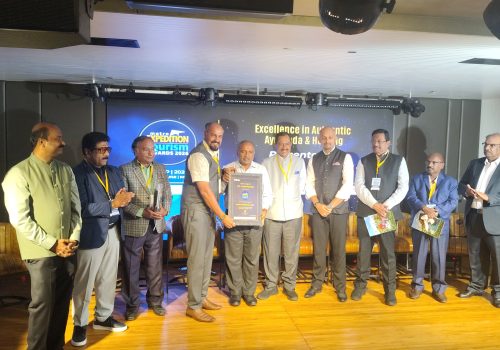
For example, Kairali – The Ayurvedic Healing Village holds NABH accreditation and the Government of Kerala’s Green Leaf Certification. These are specific quality signals and are more meaningful than broad claims about being “world-class” or “the best”.
Where Ayurveda is strongest
Ayurveda may be most useful when it encourages people and practitioners to look at health in context.
Sleep does not exist separately from routine.
Digestion does not exist separately from food and eating patterns.
Physical activity does not exist separately from recovery.
Stress does not exist independently of work, behaviour and environment.
Modern medicine also recognises many of these relationships, although it describes them through different frameworks.
Ayurveda’s distinctive contribution is the systematic attention it gives to patterns of daily living and to variation between individuals.
That does not mean every classical explanation has been validated by contemporary science.
It means some of its questions remain useful.
Does Ayurveda work? A better answer
Ayurveda should neither be accepted uncritically because it is old nor rejected automatically because its conceptual framework differs from contemporary medicine.
Its claims should be examined individually.
Where modern evidence exists, it should be presented accurately.
Where evidence is early or inconsistent, that uncertainty should be visible.
Where an idea belongs primarily to traditional Ayurvedic theory, it should be identified as such rather than translated into unsupported biomedical language.
And where people are seeking treatment for significant health concerns, qualified medical guidance matters.
Perhaps, then, “Does Ayurveda really work?” is not the question that takes us furthest.
A better set of questions is:
What is being recommended? For whom? On what evidence? Under whose supervision? And what are the limits of what we currently know?
Those questions make Ayurveda harder to market in a sentence.
They also make it considerably easier to take seriously.
Website: www.ktahv.com
Call: +91-9555156156