



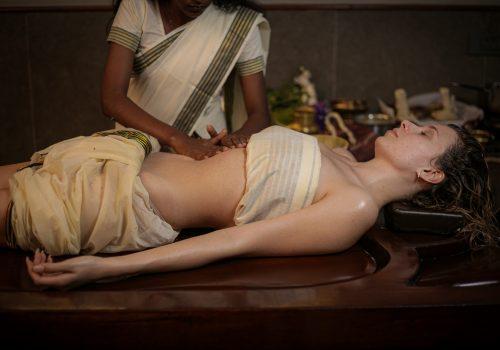












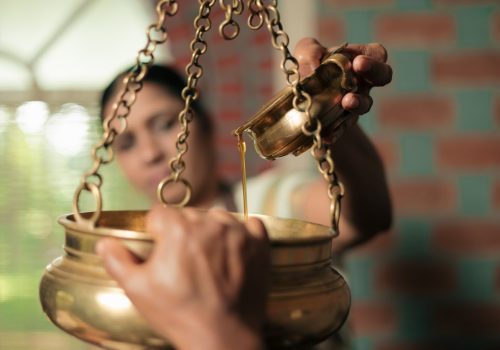















People often say that the golden rule of Ayurveda is balance.
That idea is useful, but it can also be too vague.
Ayurveda does not ask everyone to achieve the same ideal state. It asks what is appropriate for a particular person, in a particular season, at a particular stage of life.
A meal that suits one person may not suit another. A therapy that is helpful during one period may be unsuitable during another. Even a healthy routine can become unhelpful when it is followed without regard for changing needs.
The more accurate Ayurvedic principle is this:
Health depends on living in a way that supports your individual constitution while responding to your present condition.
Balance does not mean sameness
Ayurveda describes three functional principles known as the doṣas:
- Vāta, associated with movement and change
- Pitta, associated with transformation and heat
- Kapha, associated with structure and stability
Every person expresses all three. The proportions differ.
Ayurveda also distinguishes between prakṛti, a person’s underlying constitution, and vikṛti, their current pattern of imbalance.
This means the goal is not to make vāta, pitta and kapha equal.
The goal is to understand what is normal for the individual and what has changed.
A person may naturally have a strong pitta constitution without being unwell. Another may show signs of pitta aggravation because of stress, climate, food, medication or disrupted routine.
The same dosha label can therefore lead to different advice.
Why digestion matters
Ayurveda places great emphasis on agni, a term commonly translated as digestive or metabolic capacity.
This idea goes beyond whether a person can finish a meal. It includes appetite, digestion, assimilation and the way the body responds afterwards.
A food may be nutritious in general but still feel too heavy for a particular person. A meal may be suitable at lunchtime but uncomfortable late at night. A rich diet may be useful during recovery but excessive during a period of low activity.
Ayurvedic guidance therefore considers:
- appetite;
- digestive comfort;
- meal timing;
- quantity;
- food preparation;
- season; and
- the person’s present strength.
The practical lesson is simple: healthy eating is not only about choosing “good” foods. It is also about whether those foods suit the person and the moment.
Daily routine is part of treatment
Ayurveda does not separate health from daily life.
Sleep, meals, movement, work, rest and sensory stimulation all influence how a person feels. For this reason, dinacaryā, or daily routine, is an important part of Ayurvedic practice.
A supportive routine may include:
- eating at reasonably consistent times;
- allowing enough time for sleep;
- moving according to strength and ability;
- reducing unnecessary overstimulation;
- creating space for rest; and
- adjusting habits when the season changes.
This does not require a rigid timetable.
A routine is useful when it creates stability. It becomes unhelpful when it causes anxiety or ignores real-life responsibilities.
The season changes what balance looks like
Ayurveda also uses ṛtucaryā, or seasonal routine, to explain how food, activity and self-care may need to change through the year.
Hot weather, heavy rain and cooler months place different demands on appetite, hydration, sleep and physical activity.
This does not mean that everyone in the same season should follow the same diet.
It means that climate is one part of the assessment.
During humid weather, some people may prefer lighter meals. During colder months, warm cooked food may feel more comfortable. Travel, age, work and medical needs may alter these choices further.
Balance is therefore responsive rather than fixed.
Does balance mean “detox”?
Not necessarily.
The language of detoxification is widely used in wellness marketing, but it often lacks a clear medical meaning.
Ayurveda includes physician-directed procedures such as Panchakarma. These are not standard cleansing packages and should not be offered simply because a person feels tired or wants a reset.
Panchakarma requires assessment, preparation, supervision and follow-up. Some people may be suitable for selected procedures. Others may need a gentler programme or no intensive treatment at all.
The Ayurvedic principle is not to cleanse everyone in the same way.
It is to choose the least burdensome and most appropriate approach for the individual.
What about yoga and meditation?
Yoga, breathing practices and meditation may support an Ayurvedic programme, but they are not compulsory solutions for every problem.
A person recovering from illness may need gentle movement. Someone with anxiety may not respond well to forceful breathwork. A person with limited mobility may need a different practice from someone who is physically active.
The aim is not to collect as many wellness activities as possible.
The aim is to select practices that match the person’s capacity and support a sustainable routine.
How Kairali applies this principle
Kairali – The Ayurvedic Healing Village in Palakkad is an NABH-accredited Ayurvedic hospital within a residential setting.
Guests begin with an assessment by a qualified Ayurvedic physician. The consultation may consider health history, current concerns, constitution, digestion, strength, medication use and suitability for treatment.
The programme may then include physician-directed therapies, food guidance, rest, yoga or other practices where appropriate.
Two guests with similar goals may receive different recommendations.
That difference is not inconsistency. It is the basis of individualised Ayurvedic care.
What a balanced Ayurvedic programme should avoid
A responsible programme should not promise:
- complete cleansing;
- guaranteed disease prevention;
- permanent hormonal balance;
- immediate mental clarity;
- restored immunity; or
- the same result for every guest.
It should also avoid treating a dosha label as a diagnosis.
The more credible approach is to explain what is being recommended, why it is suitable, what the limitations are and how the person will be monitored.
Simple ways to apply the principle at home
Ayurveda does not need to begin with an intensive retreat.
Its central principle can be applied through small observations:
Eat according to appetite
Do not force large meals when digestion feels unsettled. Do not ignore genuine hunger because a diet rule says it is the wrong time.
Notice how food affects you
Pay attention to comfort, energy and fullness after meals. A recurring problem deserves more attention than a single uncomfortable meal.
Keep a workable routine
Regular sleep and meal times can be useful, but they should fit your life rather than control it.
Adjust with the season
Your food, clothing, activity and sleep may need to change when the weather changes.
Seek help when symptoms persist
Ayurvedic self-care should not delay medical assessment of ongoing pain, fatigue, digestive problems, sleep disturbance or other symptoms.
The real lesson behind “balance”
The golden rule of Ayurveda is often described in one word: balance.
A better interpretation is appropriate balance.
That balance is personal. It changes with age, season, health, work, recovery and environment.
Ayurveda does not offer a single perfect lifestyle for everyone. It offers a way to observe patterns, make careful adjustments and avoid treating the body as though it remains the same every day.
At Kairali, this principle appears in the simplest part of the clinical process: treatment begins with assessment, not assumption.
Website: www.ktahv.com
Call: +91-9555156156