






















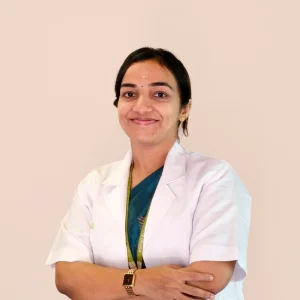
The question “Are Ayurvedic practitioners real doctors?” is common, but it is often framed too narrowly.
A useful answer depends on three things: the practitioner’s qualifications, the law in the country where they work, and the evidence supporting the treatment being offered.
In India, a properly qualified and registered Ayurvedic physician is a recognised medical professional within the Indian system of medicine. This does not mean that Ayurveda and modern biomedicine are the same, or that every Ayurvedic claim has been scientifically proven. It means that Ayurveda has a formal system of education, registration and clinical practice.
For patients, that distinction matters.
What qualifies someone as an Ayurvedic doctor in India?
The principal undergraduate qualification in India is the Bachelor of Ayurvedic Medicine and Surgery, or BAMS.
The programme generally includes four and a half years of academic and clinical study, followed by a one-year compulsory rotating internship. Students study Ayurvedic theory and diagnosis alongside anatomy, physiology, pathology, pharmacology and other medical subjects. Their training also covers Ayurvedic pharmacology, preventive healthcare, clinical assessment and supervised therapeutic procedures.
Ayurvedic medical education is regulated by the National Commission for Indian System of Medicine, or NCISM. The NCISM Act came into force in 2021, replacing the earlier regulatory framework overseen by the Central Council of Indian Medicine.
A recognised degree, however, is only one part of professional legitimacy. Practitioners should also be registered under the relevant national or state system.
Patients are entitled to ask:
- Where did the physician study?
- Is the qualification recognised?
- Is the practitioner registered?
- What clinical experience do they have?
- Are they working within an appropriate scope of practice?
The title “Ayurvedic doctor” should refer to a properly trained and registered physician, not simply to anyone offering herbs, massage or general wellness advice.
Are Ayurvedic doctors the same as MBBS doctors?
No.
BAMS and MBBS are separate professional pathways based on different medical systems.
An MBBS doctor is trained primarily in modern biomedicine. A BAMS physician is trained primarily in Ayurveda, while also studying a prescribed range of modern medical sciences. The two professions differ in diagnostic frameworks, pharmacology, treatment methods and legal scope.
Recognising both as medical professionals does not make their training interchangeable.
A responsible Ayurvedic physician should know when a patient requires laboratory investigations, emergency care, surgery or specialist biomedical treatment. In the same way, patients using Ayurvedic medicines should inform their other healthcare providers, especially if they are pregnant, managing a chronic condition or taking prescription medication.
What has the World Health Organization said about Ayurveda?
In February 2022, the World Health Organization published two benchmark documents relating to Ayurveda.
The WHO Benchmarks for the Training of Ayurveda outlines minimum standards that Member States may use when developing or strengthening Ayurveda education. It addresses practitioner competencies, patient safety, clinical training and the preparation of Ayurvedic medicines.
The companion document, WHO Benchmarks for the Practice of Ayurveda, provides reference standards for the safe and responsible delivery of Ayurvedic services. It covers practitioner categories, infrastructure, clinical procedures, health products, ethics, records and regulatory oversight.
These documents are important, but they should not be misrepresented.
They are not a blanket endorsement of every Ayurvedic theory, product or treatment claim. Their purpose is to help governments and regulators develop clearer standards for education, quality and patient safety.
That is a meaningful step for Ayurveda. Serious recognition depends not only on tradition, but also on regulation, accountability and professional standards.
Does professional recognition prove that every treatment works?
No.
The legitimacy of a practitioner and the effectiveness of a particular intervention are separate questions.
A physician may be properly qualified within a recognised medical system, while the evidence for a specific herb, procedure or treatment remains limited, mixed or still developing.
Research into Ayurveda varies considerably in quality. Some areas have been studied more closely than others. Common limitations include small sample sizes, inconsistent formulations, differing treatment protocols and the difficulty of standardising highly individualised care.
This is why broad claims that Ayurveda can cure, reverse or eliminate serious diseases should be treated with caution.
A credible Ayurvedic physician should be able to explain:
- what Ayurveda traditionally says about the recommended approach;
- what modern research does and does not establish;
- what risks or contraindications may apply;
- whether an Ayurvedic preparation may interact with prescribed medicines;
- and when conventional medical investigation or treatment is necessary.
The more serious the health concern, the more important this transparency becomes.
How is an Ayurvedic consultation different?
Ayurvedic assessment commonly considers prakṛti, an individual’s constitutional pattern, and vikṛti, the practitioner’s assessment of the person’s current imbalance.
A consultation may also examine digestion, sleep, appetite, daily routine, physical activity, stress, environment and seasonal influences.
This can make an Ayurvedic consultation feel broader than a conventional medical appointment. But individualisation should not be mistaken for informality.
Responsible practice still requires:
- appropriate examination;
- accurate clinical records;
- informed consent;
- attention to contraindications;
- and referral when a condition falls outside the practitioner’s competence.
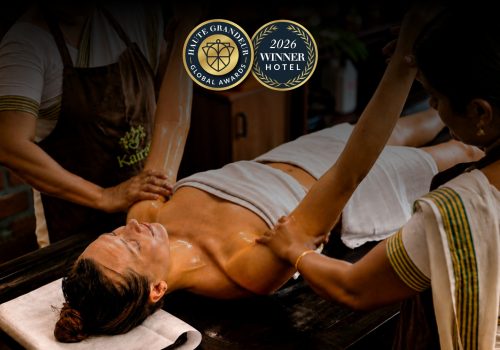
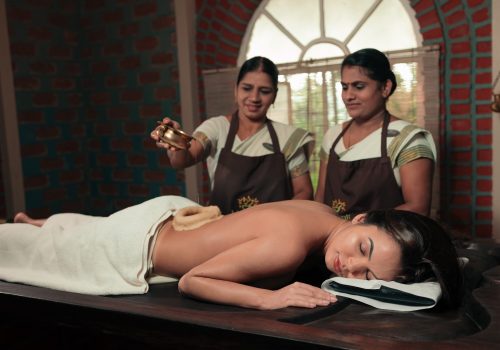
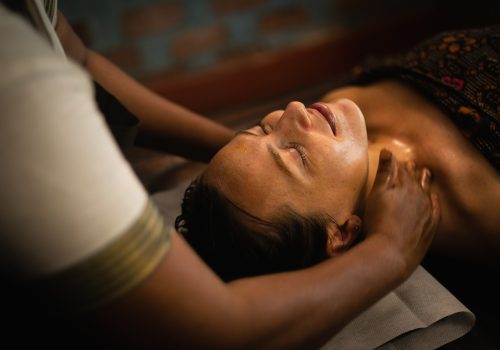
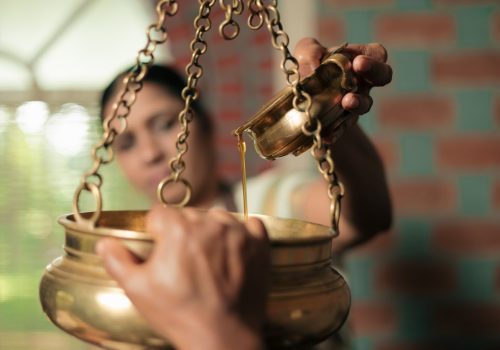
Panchakarma and other intensive procedures should be undertaken only after proper assessment and in an appropriately supervised setting. They should not be reduced to standardised spa packages or attempted through generic instructions found online.
Physician-led Ayurveda at Kairali
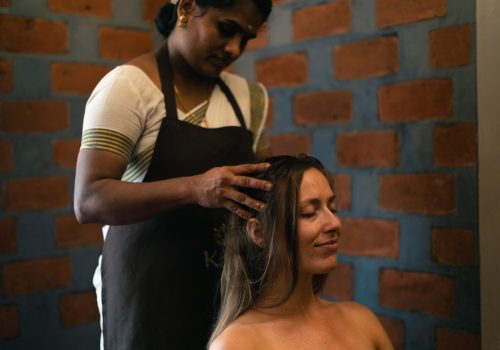
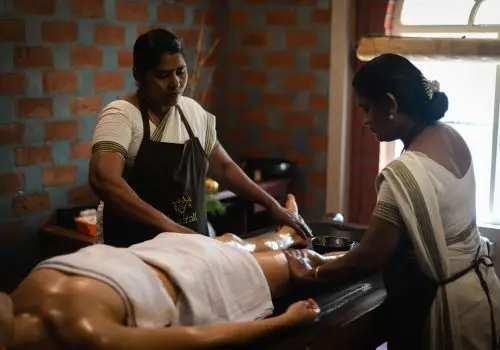
At Kairali – The Ayurvedic Healing Village in Kodumbu, Palakkad, guests are assessed by Ayurvedic physicians before an individual programme is planned.
The clinical approach considers the person’s constitution, current condition, lifestyle and suitability for specific procedures. Diet, daily routine, yoga and physician-directed therapies may be included where appropriate.
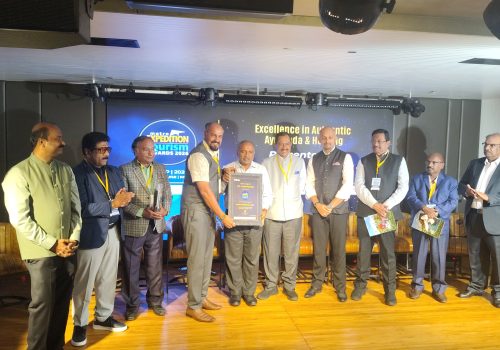
Kairali, The Ayurvedic Healing Village operates as an NABH-accredited Ayurvedic hospital and holds the Government of Kerala’s Green Leaf Certification. These credentials relate to institutional standards and the structured delivery of Ayurvedic care. They should not be presented as guarantees of a particular clinical result.
This physician-led model matters because it distinguishes clinical Ayurveda from loosely defined wellness services marketed under the Ayurvedic name.
The difference is not simply the setting. It is the presence of medical assessment, supervision, documentation and professional responsibility.
So, are Ayurvedic practitioners legitimate doctors?
In India, qualified and registered BAMS practitioners are recognised medical professionals within the Ayurvedic system of medicine.
Outside India, the answer varies. Legal recognition, protected titles and permitted scope of practice differ by country and, in some places, by state or province.
The most accurate answer is therefore not an unqualified yes or no.
A properly qualified Ayurvedic physician is a doctor of Ayurveda within the jurisdiction that recognises that qualification. That status deserves respect, but it should not be used to blur the differences between medical systems or to avoid legitimate questions about evidence, safety and professional boundaries.
Patients should look beyond labels.
Verify the practitioner’s degree and registration. Ask how treatment decisions are made. Expect a clear explanation of risks and limitations. Be cautious of guaranteed outcomes or universal cure claims.
Ayurveda is best served not by demanding unquestioning acceptance, but by demonstrating the standards expected of any responsible medical practice: sound education, clinical judgement, ethical conduct, patient safety and intellectual honesty.
Website: www.ktahv.com
Call: +91-9555156156





Excellent breakdown! Maybe add some visuals next time..
Helpful and concise writing…. Could use a bit more detail, but overall solid.馃憤
Interesting insights shared here.. Loved the way you summarized key points….