




















There is a form of tiredness that has little to do with physical exertion.
It comes from remaining mentally available all day.
Messages before breakfast. Decisions between meetings. Flights, deadlines and conversations that continue in your head long after the working day has technically ended.
For many men in demanding professional lives, the difficulty is not recognising that they need rest. It is knowing what to do when there is suddenly nothing to accomplish.
Even holidays can become another project: restaurants booked, activities scheduled, steps counted, workouts completed.
This is where yoga can offer something more interesting than exercise.
Not because a yoga session can remove the pressures waiting at home, and not because a few days away can resolve chronic stress. It cannot. But yoga can create a temporary interruption in the habit of treating every hour as something that needs to produce an outcome.
At Villa Raag in Agonda, Goa, that may be one of its most useful roles.
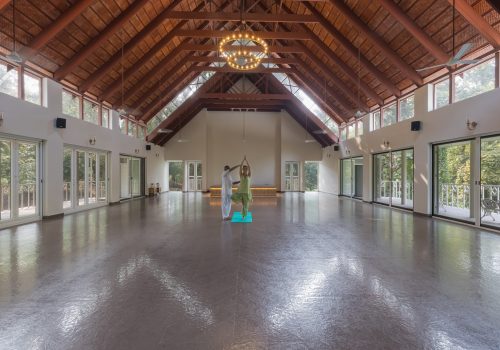
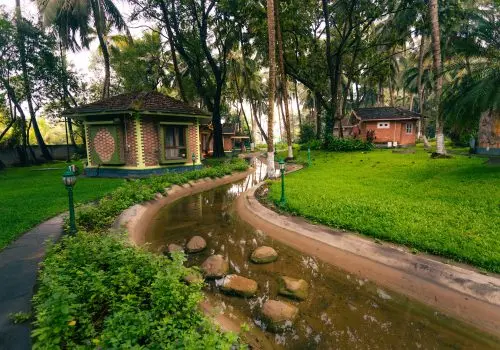
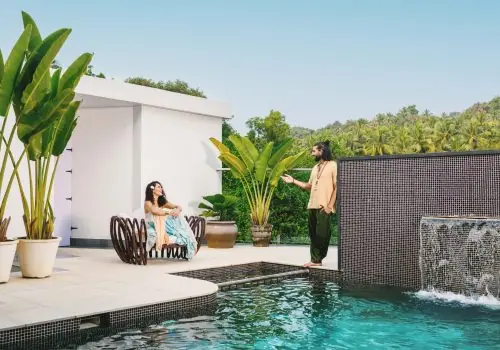
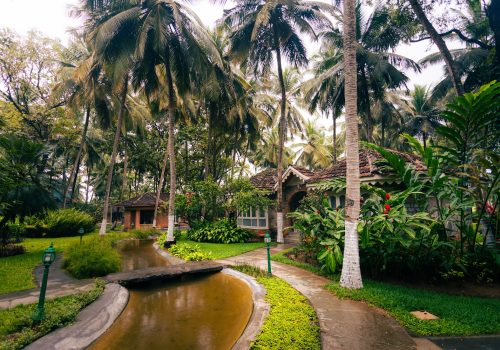
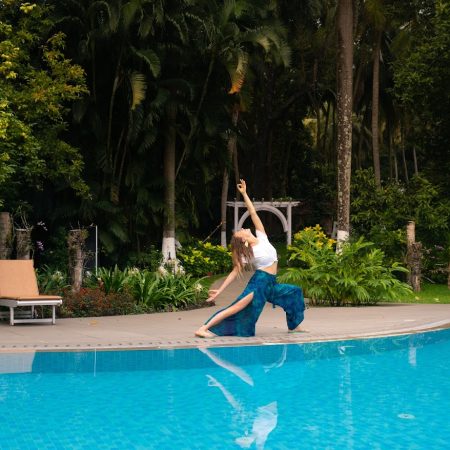
Villa Raag is a small coastal retreat designed around a quieter way of spending time. Its setting in Agonda places guests close to the beach while keeping the experience removed from the more crowded, activity-led parts of Goa. The property’s open spaces, pool and unhurried daily rhythm make it possible to move between yoga, meals, swimming, reading and time outdoors without turning the stay into a tightly managed programme. That matters because the value of a yoga practice often depends not only on what happens during the session, but also on whether the rest of the day allows the body and mind to remain at that slower pace.
When yoga stops being another performance
The modern presentation of yoga can be oddly competitive.
There are difficult postures to master, flexibility to acquire, sequences to complete and increasingly elaborate versions of the practice displayed online.
For someone whose working life is already organised around performance, it is easy to bring exactly the same mentality onto the mat.
How far can I stretch?
How long can I hold this?
Am I doing it correctly?
Was today’s practice better than yesterday’s?
But yoga does not have to operate that way.
For a beginner, particularly, the more useful practice may be considerably less dramatic: breathing steadily, moving attentively and noticing where unnecessary effort has accumulated.
You do not need unusual flexibility. You do not need to know Sanskrit posture names. You do not need to leave the session having achieved anything measurable.
That absence of measurement is not a weakness of the practice.
For some people, it may be the point.
Why yoga for stress does not need to be intense
Exercise often provides clear markers of progress: weight lifted, distance covered, speed improved, repetitions completed.
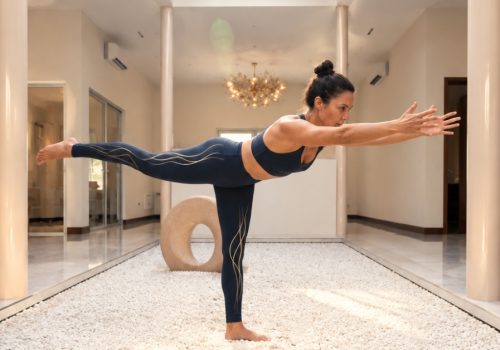
Yoga can certainly involve strength. Standing postures demand concentration. Controlled movement requires stability. Remaining in a posture without rushing out of it can be physically demanding.
But intensity is not the only route to a worthwhile practice.
A slower session can place attention somewhere modern working life rarely asks us to put it: on breathing, physical sensation and the pace at which we move.
That distinction matters.
Someone who spends the week pursuing targets does not necessarily need another target on Saturday morning.
Sometimes the more appropriate counterweight is movement without competition.
Strength without urgency.
Attention without a score attached to it.
The first hour of the day changes the practice
Agonda makes this easier to understand.
Early in the morning, before the beach gathers activity and before the heat builds, there is a quieter interval in which very little appears to require an immediate response.
A yoga practice in that setting does not need to begin dramatically.
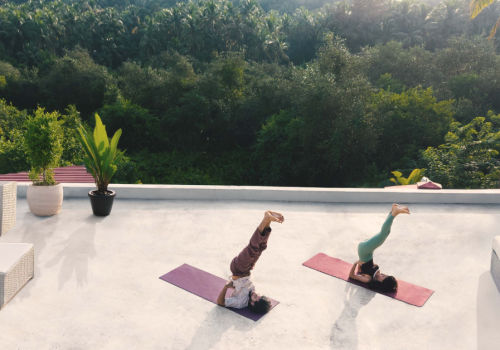
It might start with a few minutes of steady breathing, followed by gentle movement and a sequence that gradually wakes the body.
Some mornings may suit a stronger practice.
Others may call for little more than stretching and sitting quietly.
The useful part is having enough time to notice the difference.
That sounds simple, but it runs against a familiar habit: deciding in advance what the body should be capable of and then making it comply.
A slower morning allows a different question.
What kind of practice actually makes sense today?
What happens after the mat may matter just as much
One of the most revealing differences between practising yoga at home and practising while away is what happens when the session ends.
At home, the next obligation is often already waiting.
A commute.
A laptop.
School runs.
Calls.
Notifications accumulated during the hour you were unavailable.
On holiday, the transition can be deliberately less abrupt.
Breakfast can take longer.
You can walk towards the sea.
Read for an hour.
Swim.
Or sit with a cup of tea without deciding what should happen next.
Yoga does not have to occupy the entire day to affect its rhythm.
A morning practice may simply make it easier not to accelerate immediately afterwards.
That may be one reason the setting matters.
Rest is harder when we try to optimise it
There is now an enormous industry built around improving rest.
We track sleep.
Measure recovery.
Monitor heart rate.
Count steps.
Schedule mindfulness.
Optimise mornings.
None of these tools is inherently problematic. Some people find them genuinely useful.
But there is a contradiction worth noticing: even recovery can become another domain in which we judge ourselves.
Did I sleep well enough?
Was my meditation long enough?
Did I recover properly?
Was the holiday productive enough?
For men already accustomed to dashboards, targets and measurable outputs, the language of optimisation can follow them surprisingly far.
Yoga can become part of that system.
Or it can interrupt it.
The difference often lies less in the postures than in the attitude brought to them.
The environment cannot do the work for you
There is also a temptation in wellness travel to attribute too much to the destination.
A quiet beach, an uncluttered room or a morning yoga session cannot remove an unreasonable workload, repair a difficult workplace or address a mental-health condition that requires professional support.
A retreat is not a substitute for medical or psychological care where that is needed.
And returning home usually means returning to many of the same demands that existed before the trip.
That limitation matters.
The useful question is therefore not whether a few days in Goa can permanently “fix stress”.
It is whether a different environment can make certain habits easier to see.
At Villa Raag, the surroundings reduce some of the usual competition for attention. The slower pace of Agonda, proximity to the sea and absence of a conventional working-day structure create room for a different rhythm.
The setting does not create the practice.
It makes space for it.
Evening yoga asks a different question
Morning practice is often about beginning deliberately.
Evening practice can be about allowing the day to finish.
That distinction is particularly noticeable while travelling.
After swimming, reading, walking through Agonda or simply spending an afternoon without much structure, an evening session need not ask for more effort.
There may be fewer postures.
Longer pauses.
Slower movement.
More time lying still at the end.
Then dinner.
No commute home. No immediate return to email. No requirement to convert the session into something useful.
For people accustomed to remaining mentally available until they fall asleep, that ending can feel unfamiliar.
Perhaps usefully so.
Leave something unplanned
Modern travel often reproduces the habits of working life in a more attractive setting.
Every morning has an itinerary.
Every meal has a reservation.
Every afternoon has an activity.
Every sunset is documented.
The destination changes. The pace does not.
A yoga stay can offer another possibility, provided yoga itself does not become another obligation.
Practise because movement feels useful that morning.
Walk because the weather invites it.
Have a long breakfast.
Read ten pages and fall asleep.
Leave part of the afternoon empty.
The important thing may not be what fills that space.
It may be resisting the urge to fill it immediately.
What is worth taking home
The most useful part of a stay like this is probably not the part that depends on Goa.
Most people cannot recreate an Agonda morning once they return to work.
They can, however, keep something smaller.
Ten quiet minutes before opening the laptop.
A short period of movement without tracking it.
A few slower breaths between meetings.
An evening in which the next screen is not reached for automatically.
A morning in which the first question is not, “What do I need to get done?”
None of this needs to become another disciplined self-improvement programme.
That would rather miss the point.
For men who spend much of their lives being productive, responsible and available, yoga may be most useful when it offers something considerably less ambitious:
a period of the day in which nothing needs to be proved.
Villa Raag does not make that habit permanent.
But a few quieter mornings in Agonda can make it easier to remember what the alternative feels like.




Leave a Reply