
















Technology can organise information, identify patterns and support clinical work. But the most consequential parts of an Ayurvedic encounter still depend on human observation, judgement and presence.
Artificial intelligence can already generate a meditation script, suggest a meal plan and interpret data from a sleep tracker. It can summarise research, translate Sanskrit terminology and answer common questions about Ayurvedic concepts within seconds.
These are useful capabilities. They are not Ayurvedic care.
The distinction matters because the current conversation about AI and wellness often treats information as though it were the experience itself. Once a recommendation can be generated, the assumption is that the essential work has been done.
Ayurveda begins from a different premise. Knowing what a practice is called is not the same as knowing whether it is appropriate for a particular person, at a particular time, in a particular sequence.
That judgement cannot be reduced to a questionnaire alone.
A constitution is not a personality type
Digital wellness platforms often present prakṛti (an individual’s constitutional pattern) as a quick classification: answer a set of questions and receive a label such as Vata, Pitta or Kapha.
This may offer a useful introduction, but it is a considerable simplification of clinical assessment.
An Ayurvedic physician considers more than a person’s stated preferences or visible characteristics. Assessment may include medical history, digestion, sleep, appetite, strength, age, climate, current symptoms and the distinction between baseline constitution and present imbalance.
The physician may also examine the pulse, tongue, skin, eyes, speech and other observable signs. None of these findings is interpreted in isolation. Their significance depends on the wider clinical picture.
An algorithm can collect answers consistently. It cannot assume that the person answering has interpreted the questions correctly, disclosed everything relevant or distinguished a long-standing trait from a recent change.
Clinical judgement exists precisely because data does not interpret itself.
Observation is more than data collection
During an in-person Ayurvedic consultation, attention is directed not only towards what a patient reports, but towards how the person presents.
Are the symptoms recent or long-standing? Does the account remain consistent as the consultation develops? Is the person exhausted, agitated, withdrawn or struggling to describe what has changed? Does the proposed intervention suit their strength, age and present condition?
These are not mystical impressions. They are forms of attentive observation shaped by training and experience.
AI systems may become increasingly capable of detecting patterns in speech, movement and physiological measurements. They may help physicians organise records, identify omissions or monitor changes over time. Such tools could become valuable clinical aids.
But assistance is not responsibility.
A qualified practitioner must still decide what the information means, what should be prioritised, what may be unsafe and when Ayurvedic care should be coordinated with conventional medical evaluation.
A therapy is not simply a protocol
The difference becomes clearer in hands-on therapies.
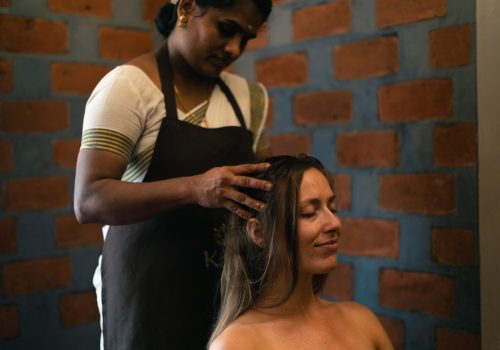
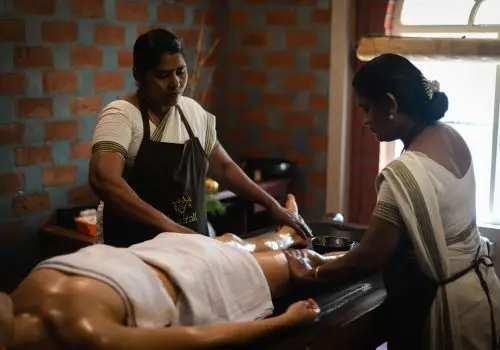
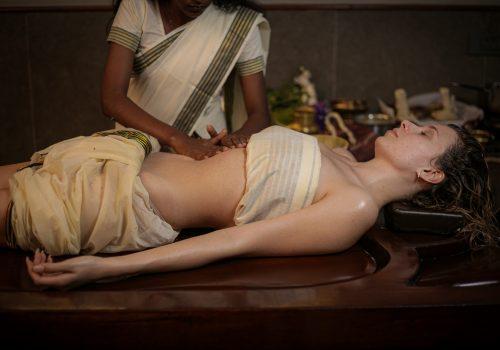
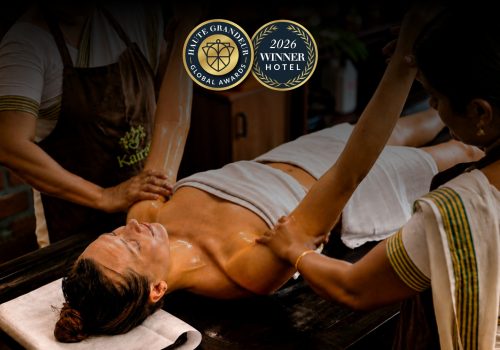
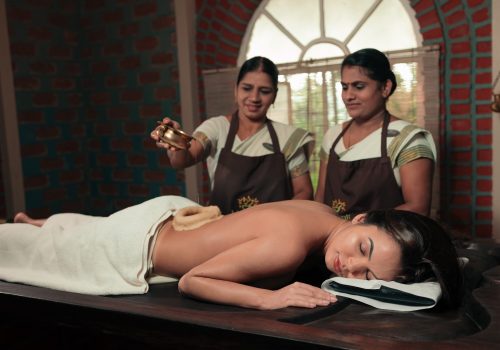
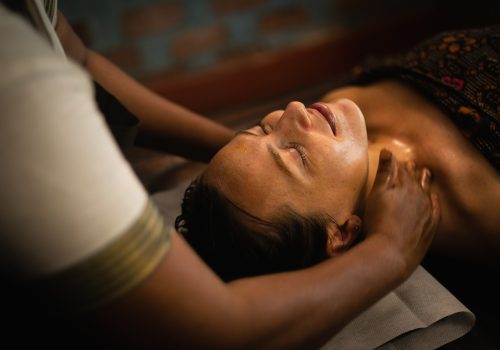
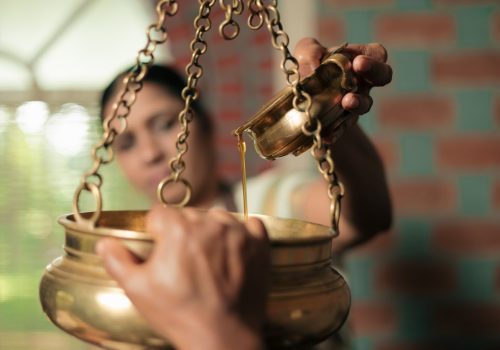
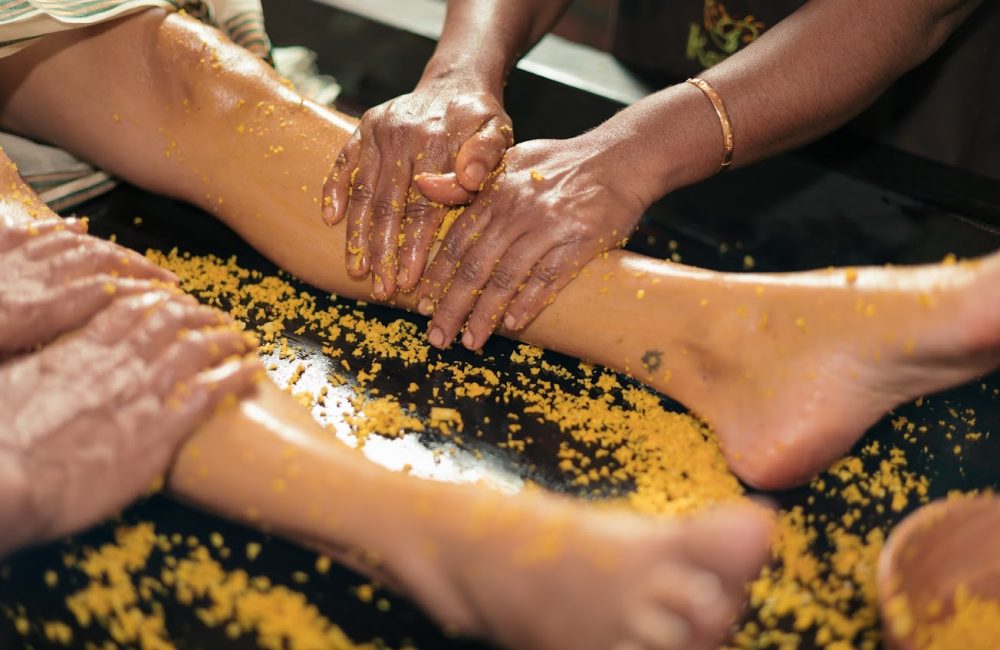
Abhyanga (therapeutic oil application or massage), for example, is often described online as though it were one standardised sequence. In clinical practice, the choice of oil, pressure, direction, duration and accompanying procedures may vary according to the physician’s assessment and the individual’s condition.
The therapist must also respond to the person during treatment. Discomfort, fatigue, temperature sensitivity, anxiety or changes in tolerance may require adjustment. A competent therapist does not merely complete a predefined sequence.
The same principle applies more broadly to supervised Pañcakarma procedures. Sequence matters. Preparation matters. Recovery matters. Whether a procedure is suitable at all matters more than whether it is currently popular.
A device might reproduce pressure or motion with mechanical consistency. It cannot yet replace the continuous human judgement through which a therapist notices, adapts and communicates with the supervising physician.
Presence has practical value
The word “presence” can sound vague in wellness writing, but in healthcare it has practical consequences.
A person is more likely to disclose relevant information when they feel heard. A practitioner who is paying close attention may notice hesitation, misunderstanding or a symptom the patient initially considered unimportant. A therapist who communicates clearly can reduce uncertainty before an unfamiliar procedure.
This relational dimension does not guarantee a particular outcome, nor is it unique to Ayurveda. It is part of good care across medical systems.
Ayurveda, however, places particular emphasis on individual context, daily routine, food, season, environment and the patient’s capacity to follow a programme. These factors are difficult to understand through isolated digital interactions because they emerge through conversation and continued observation.
The value of human presence is therefore not that it is mysterious. Its value is that it provides context.
AI can still strengthen Ayurvedic practice
Rejecting the replacement of practitioners does not require rejecting technology.
AI may help Ayurvedic institutions improve record-keeping, analyse outcomes, translate educational material, support research reviews and make general information more accessible. It may help patients prepare better questions before meeting a physician. It may also reduce administrative work, giving practitioners more time for clinical attention.
These are meaningful uses.
Problems arise when a support tool is presented as a substitute for assessment, or when a generated recommendation carries more certainty than the available information justifies.
A dosha quiz is not a diagnosis. A chatbot is not a physician. A remotely generated programme cannot know everything that an in-person practitioner might discover during examination and follow-up.
Technology is most useful when it makes careful practice more possible, not when it encourages us to remove the practitioner from it.
The future is not Ayurveda versus AI
The more productive question is not whether Ayurveda should resist artificial intelligence. It is where technology belongs within a system of care that depends on individual assessment.
AI is suited to retrieval, comparison, documentation and pattern recognition. Human practitioners remain responsible for interpretation, consent, adaptation, safety and the quality of the therapeutic relationship.
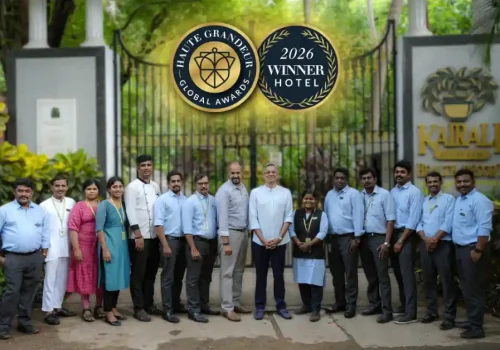
At Kairali – The Ayurvedic Healing Village in Palakkad, care is organised around physician consultation and supervised Ayurvedic procedures within an NABH-accredited setting. Technology may support parts of that work, but the clinical encounter remains centred on the practitioner and patient.
This is not nostalgia for a pre-digital world. It is a recognition that healthcare involves more than producing the correct information.
AI can describe an Ayurvedic therapy. It can help someone understand the questions they may wish to ask. It can even help practitioners work with information more efficiently.
What it cannot independently provide is the accountable human judgement through which that information becomes care.
AI-based questionnaires may offer a general introduction to prakṛti (constitution), but they cannot replace assessment by a qualified Ayurvedic physician.
An app can provide general information, but treatment decisions require clinical judgement, medical history and consideration of the person’s present condition.
AI may assist with documentation, research summaries, translation, education and outcome tracking when used under appropriate professional oversight.
Ayurvedic assessment considers factors such as pulse, digestion, sleep, strength, age, symptoms and behaviour together, rather than interpreting one data point in isolation.