





















A retreat can offer something ordinary life often does not: time to pay attention.
Time to notice how you sleep. How you eat. How much you move. How often you are distracted. And whether the routines that carry you through the week are actually supporting your wellbeing.
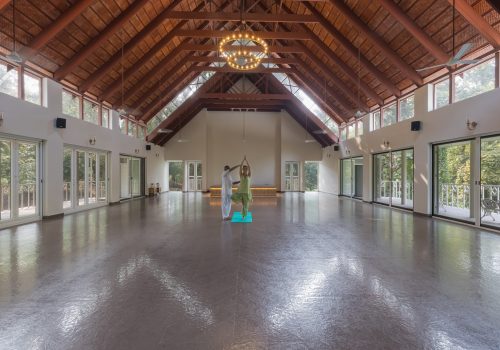
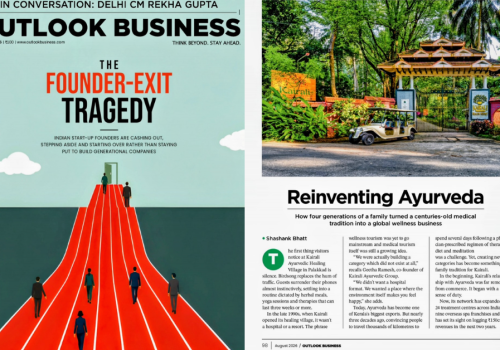
At Kairali – The Ayurvedic Healing Village in Palakkad, Kerala, yoga and meditation sit within a broader Ayurvedic setting that also includes physician consultation, therapies, food and rest.
The value of the experience is not that every guest follows the same wellness formula. It is that several parts of daily life are considered together.
Why combine yoga and Ayurveda?
Yoga and Ayurveda are distinct traditions, but they have long occupied overlapping cultural and philosophical ground.
In a residential Ayurvedic setting, yoga may complement physician-guided care by providing structured movement, breathing practices and periods of quiet attention.
Ayurveda, meanwhile, brings an individualised framework to the wider programme.
An Ayurvedic physician may consider prakriti (individual constitution), vikriti (the present pattern of imbalance), sleep, digestion, appetite, routine and other aspects of health before recommending therapies or lifestyle adjustments.
This means the retreat is not simply a sequence of yoga classes followed by massages.
The intention is to create a daily structure in which movement, food, treatment and rest relate to one another.
Yoga as part of the daily rhythm
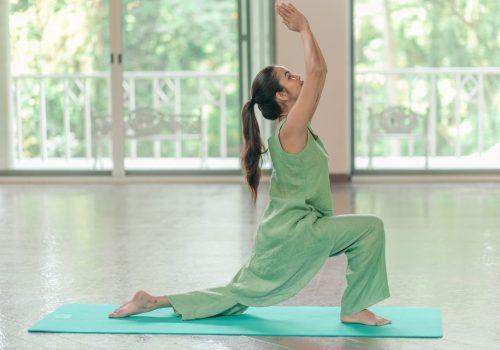
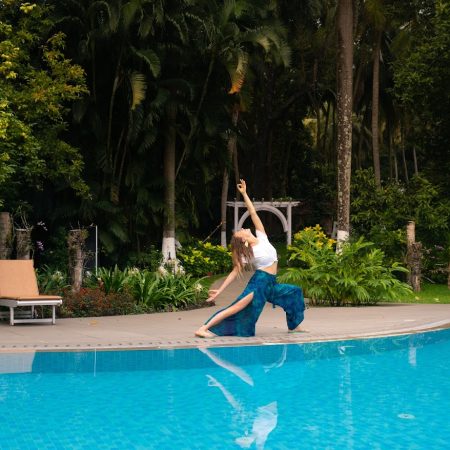
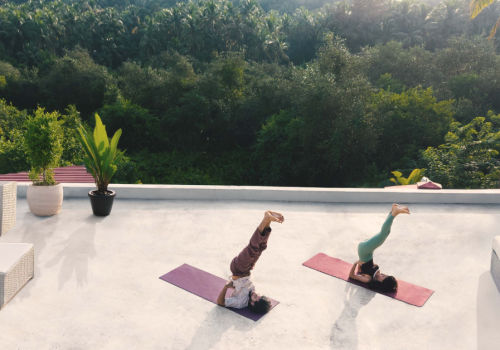
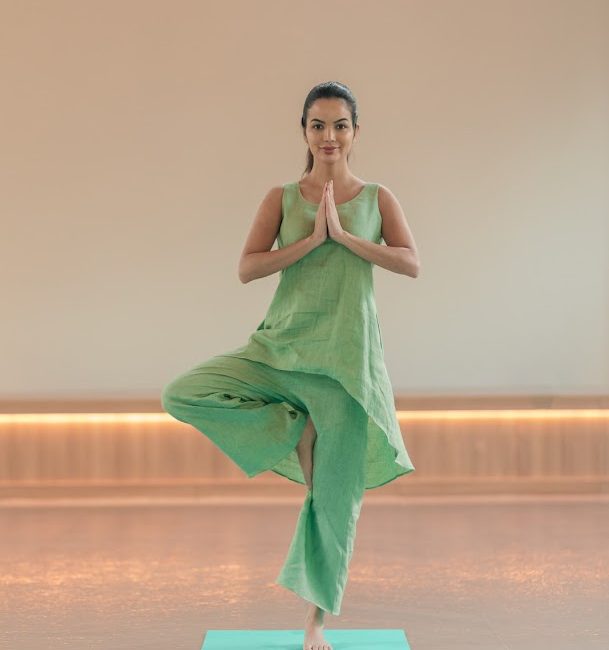
Yoga at a retreat can serve different purposes depending on the individual.
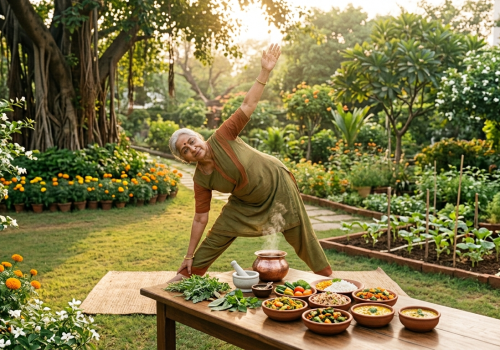
Some sessions may focus on gentle mobility and flexibility. Others may involve more sustained postures, breathing exercises or meditative practice.
The important point is that yoga should be adapted to the person practising it.
A posture that suits an experienced practitioner may not be appropriate for someone recovering from injury, managing joint discomfort or returning to movement after a long break.
This is why instructor guidance matters more than simply following a fixed sequence.
Yoga is not most useful when it is treated as a performance. It is more useful when the practice fits the person, the time of day and the wider treatment plan.
Meditation without exaggerated promises
Meditation is another important part of many retreat routines.
Its role does not need to be described in dramatic terms.
A guided meditation session can simply create a period without constant input, conversation or digital interruption. That can make it easier to notice habitual patterns of thought and attention.
For some people, the retreat setting itself supports this.
Away from ordinary work routines and screens, even a short period of quiet can feel unfamiliar at first.
The aim is not to promise instant emotional balance. It is to create conditions in which stillness becomes part of the day rather than something left until there is spare time.
What about pranayama?
Prāṇāyāma refers to traditional yogic breathing practices.
Different techniques involve different patterns of inhalation, exhalation, pauses and attention. In a supervised retreat setting, these practices can be introduced according to the guest’s experience and health.
They are often described online as ways to “detoxify” the body or dramatically increase energy.
Those claims are unnecessary.
Breathing practices have value as structured exercises in breath control and attention. Some may feel calming, while others are more stimulating.
As with yoga postures, suitability varies.
Ayurveda begins with consultation
The Ayurvedic part of the retreat begins with assessment rather than a standard treatment menu.
At Kairali, The Ayurvedic Healing Village, physician consultation helps determine which therapies may be appropriate for the individual.
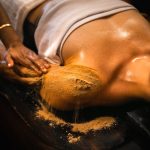
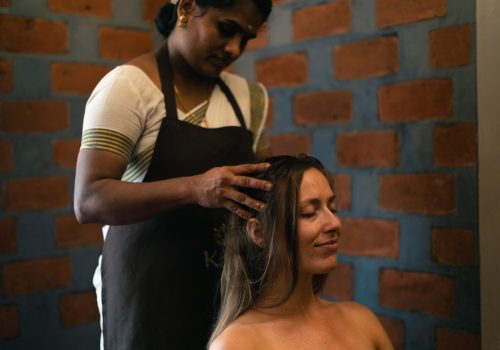
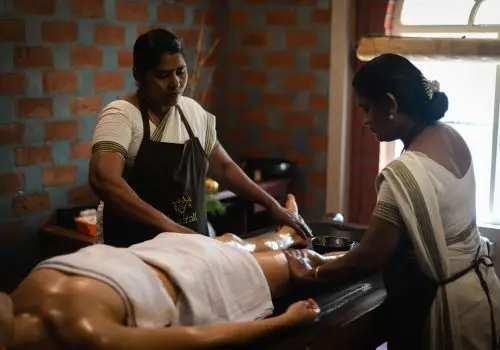
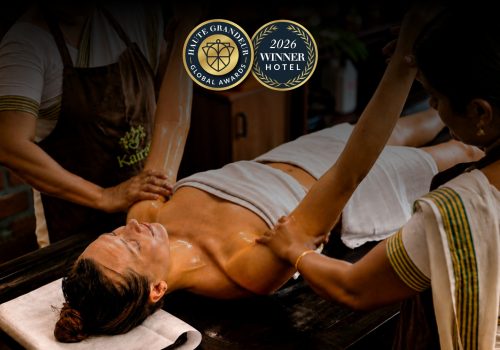
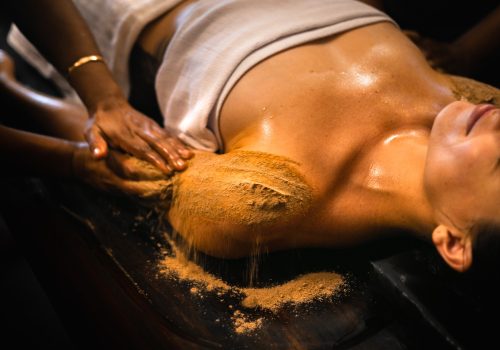
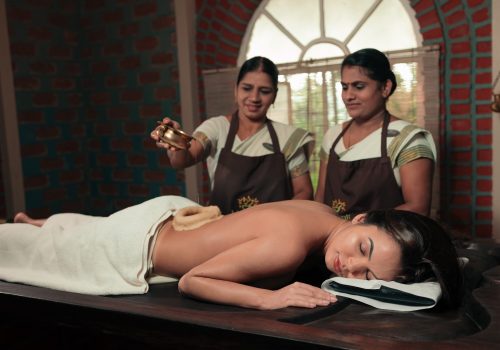
That may include procedures such as Abhyanga, an Ayurvedic oil application, or Shirodhara, in which a controlled stream of liquid is directed over the forehead.
These treatments are often marketed as universal remedies for stress, sleep or fatigue.
A physician-led approach is more cautious.
The question is not whether a treatment is popular. It is whether it makes sense for that particular person and where it fits within the wider programme.
Panchakarma is not simply a “detox”
Panchakarma is frequently presented in wellness marketing as an Ayurvedic detox programme.
That description is incomplete.
Panchakarma is a physician-directed therapeutic framework involving preparatory procedures, specific interventions and post-treatment care. Not every guest undergoes every procedure, and not every residential Ayurvedic stay should automatically be described as Panchakarma.
At Kairali, The Ayurvedic Healing Village, Panchakarma is delivered within an NABH-accredited Ayurvedic clinical setting, with treatment decisions guided by Ayurvedic physicians.
This supervision is an important distinction between clinical Ayurvedic practice and self-directed cleansing programmes.
Food is part of the experience
A residential retreat also changes the role of food.
Meals are not simply an interruption between therapies.
Ayurveda places considerable emphasis on agni (digestive function), appetite, preparation and the circumstances in which food is eaten.
Within an Ayurvedic programme, meals may therefore be simpler and more structured than visitors expect from a conventional resort.
This does not mean there is one universal “Ayurvedic diet”.
Food recommendations may vary according to constitution, digestion, season and the wider treatment plan.
The more useful lesson is that eating becomes something to observe rather than something done automatically.
The value of a slower environment
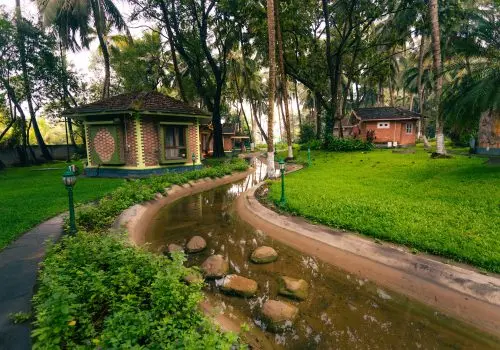
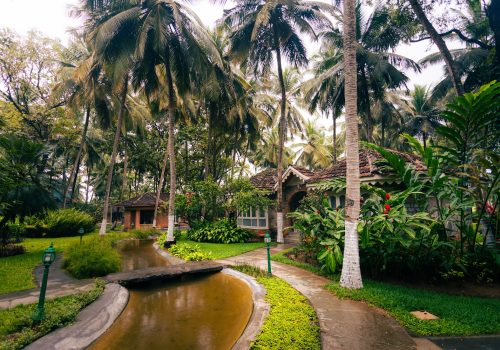
Kairali’s Palakkad setting also changes the experience.
A residential programme creates distance from the usual rhythm of meetings, commuting, messages and late-night screens.
That does not make nature itself a treatment.
But environment influences routine.
When meals happen at regular times, yoga has a defined place in the day and rest is intentionally scheduled, it becomes easier to notice how different that feels from ordinary life.
For many guests, that contrast may be one of the most memorable parts of a retreat.
Who might consider this kind of stay?
A yoga and Ayurveda retreat may appeal to people who want:
- A structured break from an irregular daily routine
- Time to establish a regular yoga or meditation practice
- A physician-guided introduction to Ayurveda
- A quieter environment for rest and reflection
- A residential programme that considers food, movement and routine together
It should not, however, be presented as a universal solution for anxiety, insomnia, chronic fatigue or other medical conditions.
Persistent or significant symptoms require appropriate medical assessment.
What makes a retreat useful?
The most valuable retreat is not necessarily the one with the longest list of treatments.
It is the one that creates enough structure for someone to understand what actually suits them.
Yoga becomes more useful when it is appropriate to the individual.
Ayurvedic therapies make more sense when consultation comes first.
Food becomes more informative when appetite and digestion are observed rather than ignored.
Meditation becomes more realistic when it is treated as a practice rather than a promise of instant peace.
Put together, these elements can create a period of deliberate attention.
That may be a less dramatic promise than “detox, heal and transform”.
It is also a more useful one.
Website: www.ktahv.com
Call: +91-9555156156