



















Shirodhara is one of Ayurveda’s most recognisable therapies.
A person lies quietly while a controlled stream of warm oil or another prescribed liquid flows across the forehead. The procedure is simple to watch, but the experience can be distinctive. Many people describe becoming deeply relaxed, drowsy or unusually still.
This has helped Shirodhara move beyond Ayurvedic hospitals in India. It now appears in wellness retreats and integrative-health settings around the world.
Its growing popularity has also produced exaggerated claims. Shirodhara is often promoted as a natural treatment for anxiety, insomnia, migraine, hormonal imbalance and burnout.
The current evidence does not support such certainty.
Small studies suggest that Shirodhara may influence relaxation, sleep and short-term stress responses. However, researchers have not yet established exactly how it works, which conditions it may help, or how its effects compare with established medical treatments.
What is Shirodhara?
The term śirodhārā combines śiras, meaning head, and dhārā, meaning a continuous stream.
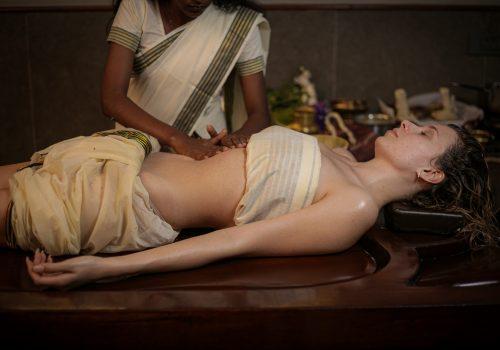
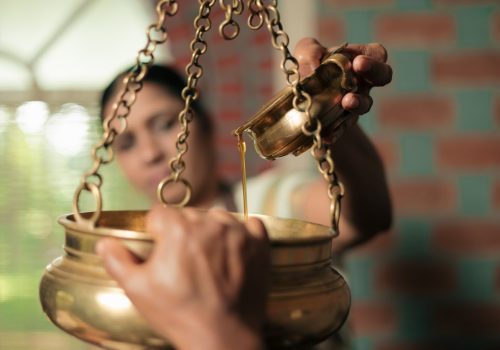
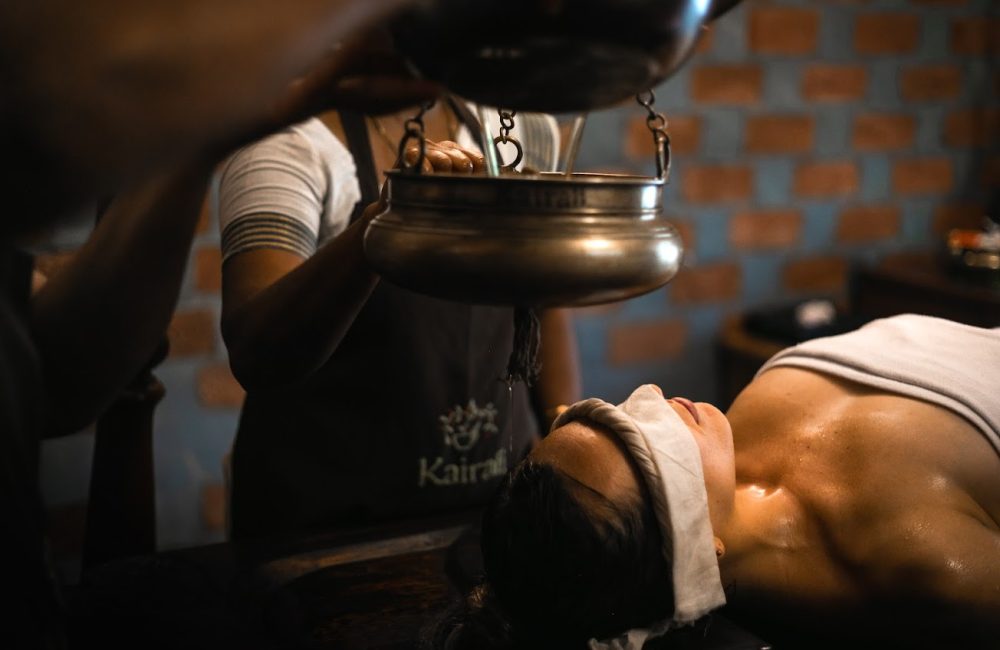
During the procedure, the person lies on an Ayurvedic therapy table. A vessel is positioned above the head, and a steady flow of liquid is directed across the forehead. The flow rate and temperature are controlled, and the eyes are protected from spillage.
Medicated oil is commonly used, but other liquids may be selected according to the physician’s assessment and the traditional purpose of the therapy.
Shirodhara should not be reduced to pouring warm oil over the so-called “third eye.” That explanation belongs to a popular spiritual interpretation rather than a proven biological mechanism.
In clinical Ayurveda, the choice of liquid, timing, duration and place within a wider treatment programme should be decided by a qualified physician.
Why does it feel so relaxing?
Researchers have proposed several possible explanations.
The repetitive sensation of a warm liquid moving across the forehead may reduce sensory variation and encourage sustained stillness. The quiet setting, reclined posture, warmth and predictable rhythm may also contribute to a relaxation response.
A small study involving healthy volunteers found that Shirodhara was associated with lower state-anxiety scores and changes in several neurochemical and immune markers compared with resting in a control position. The study was exploratory and too small to establish a clinical treatment effect.
Another small physiological study reported changes consistent with relaxation during Shirodhara. Such findings are interesting, but they do not yet prove that the procedure directly “resets” the central nervous system or treats a psychiatric disorder.
The most accurate conclusion is that Shirodhara may create conditions that favour short-term relaxation. The exact mechanism remains uncertain.
What does the research say about stress?
Shirodhara is widely associated with stress relief, but the clinical evidence remains limited.
A 2021 study examined one person who received sesame-oil Shirodhara over 14 days. The researchers reported improvements in mood scores and biological markers associated with stress. Because this was a single-patient report, the findings cannot tell us whether the same result would occur in a wider population.
Studies based on one patient or a small uncontrolled group can identify possible areas for further research. They cannot establish effectiveness.
Shirodhara may help some people feel calmer during or after a session. It should not be promoted as a proven treatment for chronic stress, burnout or anxiety disorders.
Can Shirodhara improve sleep?
Sleep is one of the most frequently studied areas.
A small trial involving 30 people compared Shirodhara using milk, an Ayurvedic herbal formulation and the combination of both. All groups reported improvement, with the combined group showing the largest change. The small sample and use of multiple interventions make it difficult to isolate the effect of Shirodhara itself.
A later case series followed a small number of people with insomnia who received Shirodhara. Case series do not include a strong comparison group, so they cannot determine whether improvement came from the procedure, the setting, expectation, natural symptom variation or another factor.
A Japanese pilot study compared sesame-oil Shirodhara with warm-water Shirodhara in people reporting sleep problems. The authors noted that few well-designed studies existed and described the quantitative effect as uncertain.
Taken together, these studies suggest that sleep is a reasonable area for further investigation. They do not establish Shirodhara as a treatment for chronic insomnia.
Anyone experiencing persistent sleep problems should be assessed for possible causes such as medication effects, breathing disorders, pain, anxiety, depression or another medical condition.
What about anxiety?
One frequently misquoted study examined an Ayurvedic formulation called Manasamitra Vataka in people with generalised anxiety disorder and social phobia.
Shirodhara was added for one group. The researchers concluded that the add-on procedure reduced daytime sleepiness, while the main anxiety findings related to the Ayurvedic formulation. They did not conclude that Shirodhara produced results equal to medication or that it did so without side effects.
This distinction matters.
A study of a combined programme cannot be used to claim that one therapy independently treats anxiety. Nor should a small trial be used to suggest that established psychiatric care can be replaced.
Shirodhara may be used as a complementary relaxation practice after appropriate assessment. It is not a substitute for evidence-based care for an anxiety disorder.
Is Shirodhara part of Panchakarma?
Shirodhara is often included in residential Ayurvedic programmes, but it is not one of the five principal Panchakarma procedures.
It may be used before, during or outside a Panchakarma programme depending on the physician’s assessment. It should not be automatically included simply because a guest has booked a “detox package.”
The word “detox” is also misleading when used as a programme identity. It suggests that the body contains undefined toxins that a standard treatment can remove.
A clinically responsible Ayurveda programme begins with assessment. The physician then decides whether Shirodhara, selected Panchakarma procedures, a simpler external therapy or no intensive treatment is appropriate.
What happens during a session?
A typical session begins with preparation of the person and the treatment space.
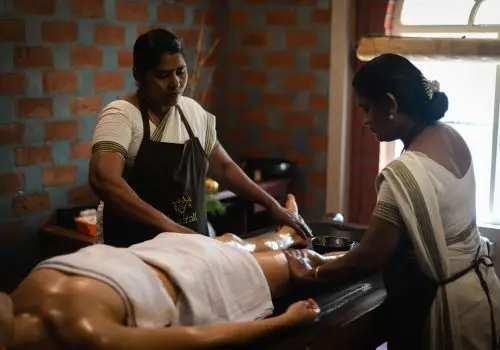
The guest lies comfortably while the practitioner protects the eyes and positions the vessel above the head. The prescribed liquid is maintained at a controlled temperature and allowed to flow at a steady rate across the forehead.
The therapist monitors comfort, temperature and flow throughout the session.
The procedure should stop if the person experiences dizziness, nausea, discomfort, headache, skin irritation or any other unexpected symptom.
Afterwards, the guest may be advised to rest and avoid abrupt exposure to cold or excessive activity. The exact instructions depend on the physician and the wider programme.
Is Shirodhara safe for everyone?
No therapy should be described as safe for almost everyone.
There is not enough high-quality research to define Shirodhara’s complete safety profile across pregnancy, breastfeeding, cardiovascular conditions, neurological illness and other medical situations.
A physician should review the person’s health, scalp condition, medication use, recent procedures and general stability before treatment.
Shirodhara may need to be postponed or avoided when there is:
- acute illness or fever;
- an active scalp infection, wound or significant skin irritation;
- severe dizziness or instability;
- recent head or neck injury;
- uncontrolled medical illness; or
- another concern identified during assessment.
Pregnant or breastfeeding women should seek individual medical advice rather than assuming the therapy is suitable.
The ingredients in the oil or liquid also matter. A person may react to a herb, fragrance or base oil even when the pouring procedure itself is comfortable.
Shirodhara at Kairali
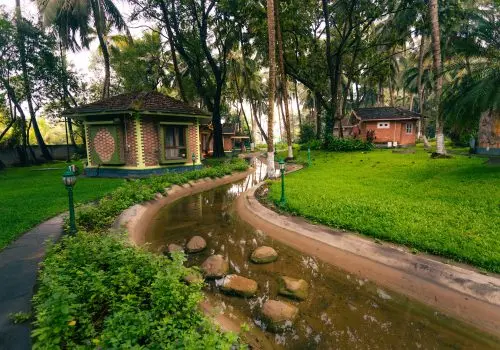
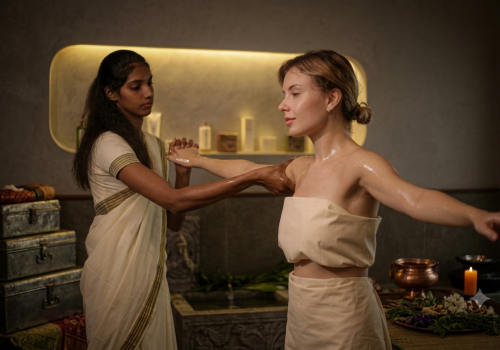
At Kairali – The Ayurvedic Healing Village in Palakkad, Shirodhara may be considered within a physician-led residential programme.
The Healing Village is an NABH-accredited Ayurvedic hospital. Guests begin with an assessment, and therapies are selected according to individual suitability rather than added as standard spa services.
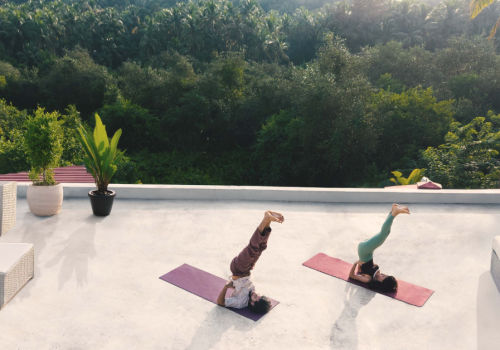
A programme may also include food guidance, rest, yoga, breathing practices or other Ayurvedic procedures where appropriate. These elements should be coordinated around the individual plan.
Shirodhara should not be described as a guaranteed route to deeper sleep, hormonal balance, emotional healing or recovery from burnout.
Its more credible role is narrower: it is a traditional, supervised therapy that may support relaxation and may warrant further research for sleep and stress-related outcomes.
Why is Shirodhara gaining attention?
Shirodhara has qualities that fit the concerns of many modern wellness travellers.
It is quiet. It requires stillness. It does not ask the person to perform or achieve anything. In an environment built around constant alerts, screens and decisions, that absence of effort may itself feel valuable.
Its global recognition, however, should not be confused with scientific validation.
The research so far is promising in places but preliminary. Samples are small. Interventions vary. Some studies combine Shirodhara with herbs or other therapies. Several lack strong control groups.
The next stage should involve larger, well-designed trials with clear treatment protocols, appropriate comparison groups and systematic reporting of adverse effects.
Until then, Shirodhara is best presented with precision.
It is a classical Ayurvedic procedure associated with deep relaxation. Early studies suggest possible effects on stress, sleep and autonomic activity. The evidence is not yet strong enough to treat it as a proven therapy for medical or psychiatric conditions.
That measured description is less dramatic than the wellness claims surrounding Shirodhara.
It is also more trustworthy.
Website: www.ktahv.com
Call: +91-9555156156