
























Ayurveda retreats in Kerala can differ considerably in medical supervision, therapist training, treatment structure and the way medicines are prescribed. Before choosing one, travellers should look beyond photographs and package names and ask how the programme is actually delivered.
Kerala offers a wide range of Ayurveda retreats.
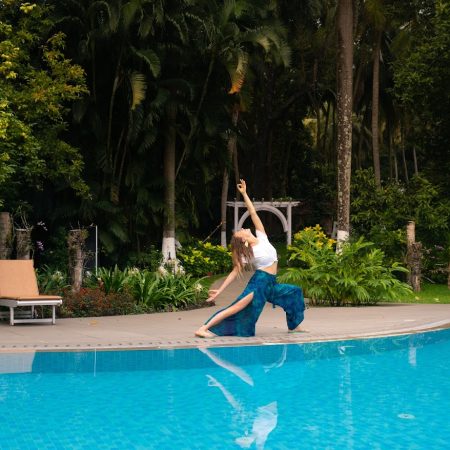
Some are designed primarily as relaxing holidays with massages, yoga and Ayurvedic food. Others operate closer to a supervised clinical model, with physician consultations, individually planned therapies and structured daily routines.
Both may have a legitimate place. The important question is whether the retreat matches what the traveller is looking for.
A person seeking rest for a few days may not need the same level of supervision as someone travelling with persistent pain, a complex medical history or an interest in a longer Panchakarma programme.
The comparison should therefore begin with the model of care, not the room category.
Are you booking a holiday or a treatment programme?
This is the first distinction to make.
A wellness-oriented stay may include general massages, yoga sessions, light meals and time for sightseeing. A treatment-oriented retreat is more likely to begin with a medical assessment and organise the stay around the physician’s recommendations.
Neither approach should be described as automatically superior. They serve different expectations.
Before booking, ask:
- Is the main purpose relaxation or supervised Ayurvedic care?
- Will a physician assess me before treatments begin?
- Are therapies changed according to my condition?
- Are medicines prescribed as part of the programme?
- How much of the day is structured?
- Is the retreat suitable for my medical history?
Clear answers to these questions are more useful than broad claims about “healing,” “rejuvenation” or “detoxification.”
1. Look for active physician supervision
A retreat may advertise access to Ayurvedic doctors, but travellers should ask what that means in practice.
Useful signs include:
- a consultation before the programme begins
- review of medical history and current medication
- follow-up consultations during the stay
- physician approval before major procedures
- changes to the programme when the guest’s response requires it
The presence of a doctor on the property does not, by itself, establish that the programme is physician-led. What matters is whether medical oversight shapes the therapies, diet and daily schedule.
At Kairali, The Ayurvedic Healing Village in Palakkad, programmes are organised around physician consultation and supervised treatment within an NABH-accredited Ayurvedic setting. This is one example of the treatment-oriented model travellers can use when evaluating other properties.
2. Ask how individualised the programme really is
“Personalised” is widely used in retreat marketing, but it can refer to very different levels of customisation.
A meaningful individual plan may consider:
- constitution and present imbalance
- the nature and duration of symptoms
- digestion, appetite and bowel habits
- sleep and energy
- age and physical strength
- current medication
- suitability for particular procedures
Two people with lower-back pain should not automatically receive identical treatments. Their symptoms may have different causes, durations and clinical implications.
Travellers should ask whether the daily plan is fixed before arrival or developed after consultation. They should also ask whether the schedule can change during the stay.
A programme that evolves in response to the physician’s assessment is different from a standard package with the guest’s name added to it.
3. Check how medicines are selected and explained
Ayurvedic medicines may form part of a treatment programme, but their use should be transparent.
Guests should be told:
- what has been prescribed
- why it has been prescribed
- how it should be taken
- how long it should be used
- whether there are relevant precautions
- whether it may interact with existing medicines
A retreat should also be able to explain where its medicines come from and how they are manufactured.
Vague descriptions such as “herbal tablets for cleansing” are not enough. Guests should know the name of the preparation and have an opportunity to discuss it with the physician.
People taking prescription medicines should disclose them fully and should not stop or alter them without advice from the clinician responsible for their care.
4. Evaluate therapist training and treatment discipline
The quality of an Ayurvedic therapy depends on more than the name of the procedure.
Travellers should consider:
- how therapists are trained
- whether treatments are supervised by physicians
- whether the same therapist is assigned consistently
- how hygiene and oil handling are managed
- whether sessions follow the prescribed duration and method
- whether privacy and gender preferences are respected
A well-designed treatment room does not reveal how carefully a therapy is performed.
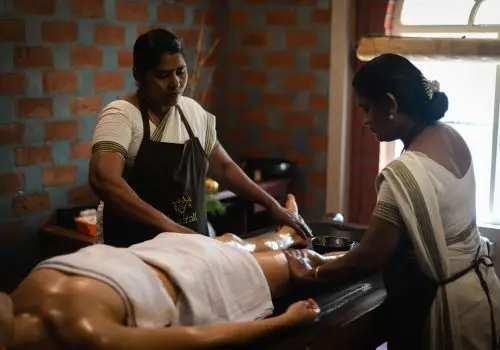
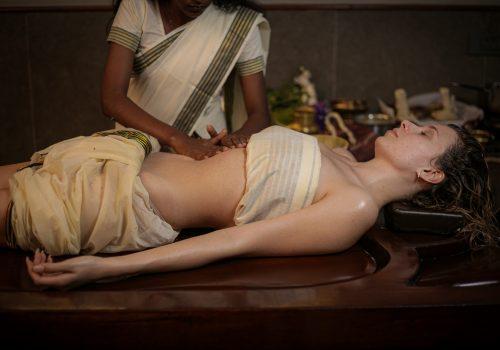
Hands-on procedures require training, consistency and communication. The therapist should also be able to report relevant observations or concerns to the medical team.
Where therapies are delivered in rushed blocks or altered mainly for operational convenience, the clinical value of an individualised programme may be weakened.
5. Match the duration to the purpose
Retreats commonly offer stays of different lengths, but a longer stay is not automatically better.
A brief visit may be suitable for rest, introductory consultation or a light routine-based programme. More involved procedures may require preparation, active treatment and a gradual recovery phase.
Travellers should ask the physician or programme team:
- what can realistically be included within the available time
- whether the proposed duration suits the planned procedures
- whether a recovery period is needed
- what should continue after returning home
Be cautious when a short package promises deep correction of a long-standing health problem.
The duration should follow the purpose of care rather than a standard sales package.
Beach retreat or inland retreat?
Location affects the character of the stay, but it does not determine the quality of the Ayurveda.
Beach-based retreats
A coastal setting may suit travellers who want a lighter wellness break or who prefer to combine Ayurveda with a holiday.
Possible advantages include:
- easier access to tourist areas
- a more familiar holiday atmosphere
- opportunities for leisure outside treatment hours
Possible limitations include:
- more distractions from the prescribed routine
- greater temptation to leave the property frequently
- a model that may lean more towards spa services at some locations
These are general patterns, not rules. Some coastal properties operate with strong medical discipline.
Inland or nature-based retreats
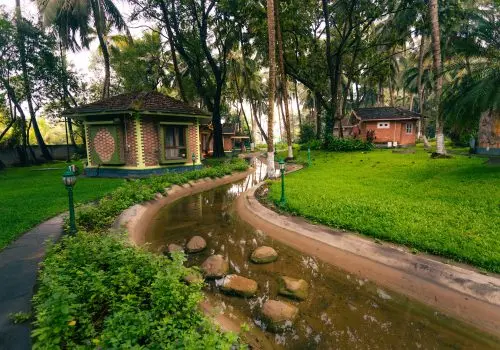
Inland settings may appeal to travellers who want fewer distractions and a more structured daily schedule.
Possible advantages include:
- a quieter routine
- less emphasis on sightseeing
- an environment suited to longer stays
- greater focus on treatment, rest and supervised movement
Possible limitations include:
- longer road transfers
- fewer leisure activities outside the retreat
- a more disciplined schedule than some travellers expect
Kairali’s Palakkad location fits this inland, treatment-oriented model. It may suit guests who prefer a quieter environment and a programme organised around consultation, therapy, diet, yoga and rest.
Accreditation and standards
Travellers should look for specific credentials rather than broad statements such as “internationally recognised.”
Kairali – The Ayurvedic Healing Village is an NABH-accredited Ayurvedic hospital and holds the Government of Kerala’s Green Leaf Certification. These are concrete signals that can be considered alongside physician qualifications, treatment procedures and manufacturing standards.
Accreditation does not answer every question about a guest’s experience, but it provides a more useful starting point than unverified claims of excellence.
When comparing retreats, ask for the exact name of the accreditation or classification and check whether it applies to the facility, pharmacy or hospitality operation.
Warning signs to notice before booking
Several signs suggest that a retreat may be offering a standardised wellness package rather than individually supervised care:
- every guest receives the same list of therapies
- there is no detailed consultation before treatment
- Panchakarma is sold as a simple add-on
- medicines are provided without explanation
- staff cannot describe practitioner qualifications
- long-standing conditions are matched with very short packages
- treatment schedules are vague before arrival
- cancellation and medical-suitability policies are unclear
- the property makes guaranteed or disease-cure claims
A retreat may still provide a pleasant holiday. The concern is whether its marketing creates expectations that its clinical model cannot support.
Questions to ask before paying a deposit
A short conversation with the retreat team can reveal a great deal.
Ask:
- Who conducts the first consultation?
- What qualifications do the physicians hold?
- Is the programme decided before or after assessment?
- How often will the physician review me?
- Are medicines included, and who manufactures them?
- What procedures can realistically be completed in my available time?
- What medical information must I provide before arrival?
- Are there conditions for which the programme may not be suitable?
- How are dietary restrictions handled?
- What happens if the physician changes the original programme?
Clear, specific answers indicate that the retreat has thought carefully about the clinical process.
Consider the practical details as well
Even a suitable treatment programme can become difficult if the journey and accommodation do not match the traveller’s needs.
Check:
- the nearest airport or railway station
- transfer time by road
- room accessibility
- support for older guests or people with limited mobility
- climate and monsoon conditions
- dietary requirements
- language preferences
- whether a companion can stay
- cancellation and refund policies
Travellers already experiencing pain, fatigue or reduced mobility should pay particular attention to transfer times and physical accessibility.
Choosing the right model
There is no single best Ayurveda retreat for every Indian traveller.
A coastal wellness property may suit someone looking for rest and a gentle introduction to Ayurveda. A quieter inland retreat may suit someone who wants to follow a structured routine with fewer distractions. A person with a complex health history should place greater weight on physician supervision, screening and coordination with existing medical care.
Kairali can be considered as one example of an inland, physician-led Ayurvedic model. Its relevance is not that every traveller should choose it, but that it gives prospective guests a clear set of features to examine: medical oversight, accreditation, supervised therapies, individual planning and an environment organised around treatment.
The most informed choice is the retreat whose actual method matches the traveller’s purpose.
Do not compare only rooms, views and package names.
Compare how the care is assessed, prescribed, delivered and reviewed.
Website: www.ktahv.com
Call: +91-9555156156