




















International Women’s Day often brings attention to visible milestones: appointments, awards, new ventures and public achievements.
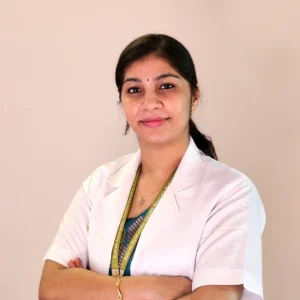
But leadership is also found in the less visible work of building systems, preserving standards and sustaining an idea over decades. At Kairali Ayurvedic Group, much of that work has been shaped by Gita Ramesh.
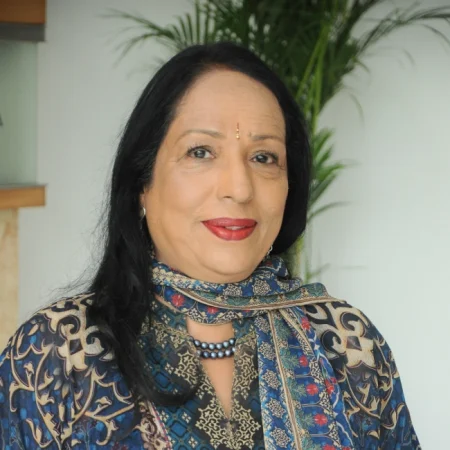
A recent Women’s Day special by DNA featured her role in the development of Kairali and her perspective on Ayurveda. The interview offers an opportunity to look beyond the familiar language of celebration and consider what her contribution has meant in practical terms.
Building Kairali from Its Early Years
Kairali Ayurvedic Group was founded in 1989 by Gita Ramesh and K.V. Ramesh. The company draws on a multigenerational association with Ayurvedic practice in the founders’ family, but the organisation itself has been built through more than three decades of sustained work.
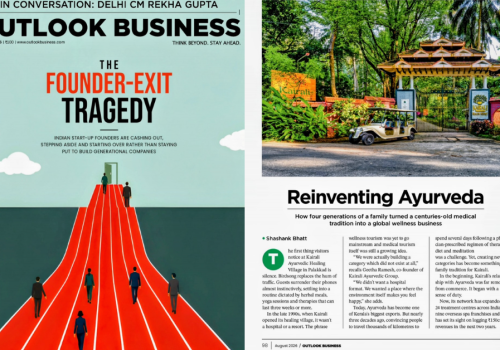
Accounts of Gita Ramesh’s professional journey identify her with the establishment of Kairali’s first Ayurvedic centre in New Delhi in 1989. They also record her involvement in the opening of Kairali – The Ayurvedic Healing Village in Palakkad, Kerala, in 1999.
These were not merely expansions in location. They represented two different challenges.
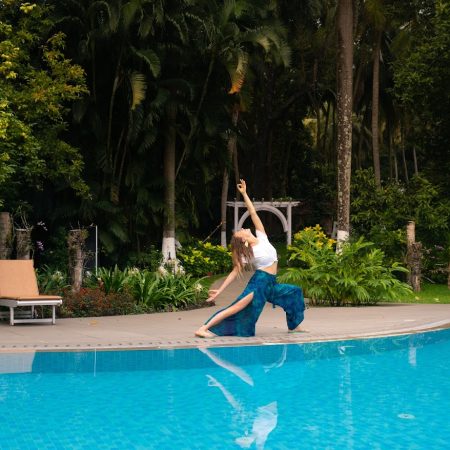
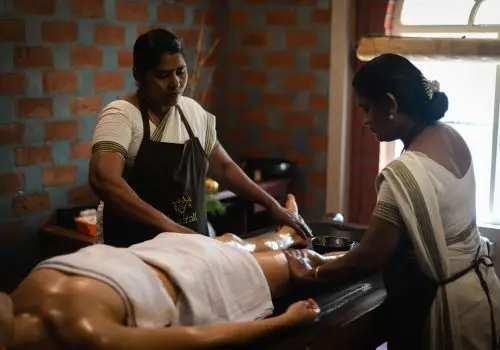
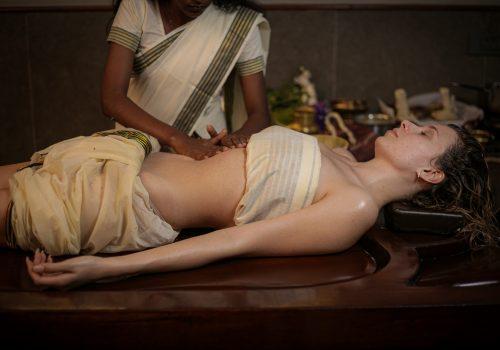
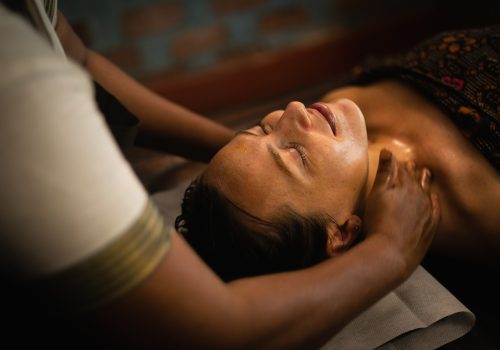
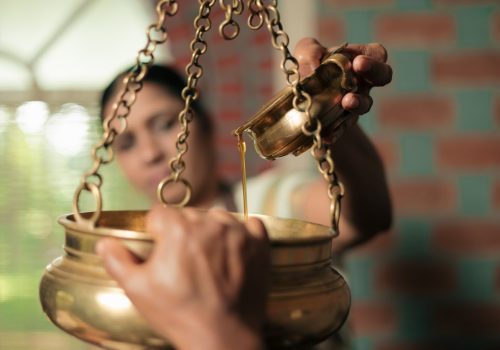
The Delhi centre brought structured Ayurvedic services into an urban setting. The Palakkad property required the development of a residential environment where consultations, therapies, food, yoga and daily routines could operate as parts of one physician-led programme.
Creating that environment called for more than familiarity with Ayurveda. It required operational discipline, attention to guest experience and a clear understanding of how care extends beyond the treatment room.
Ayurveda Is More Than Medicine
One of Gita Ramesh’s most consistent observations is that Ayurveda should not be reduced to medicines alone.
In an earlier interview, she described Ayurveda as “so much more than medicines”, placing food, prevention, therapy, meditation and yoga within the same system of health.
This distinction matters.
Ayurveda is sometimes presented to modern audiences as a collection of herbal products or isolated therapies. In practice, its approach also considers digestion, sleep, seasonal routines, physical activity, mental strain and the relationship between food and individual constitution.
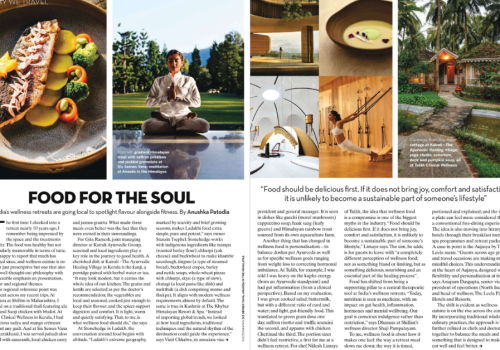
Gita Ramesh’s contribution to Kairali has been particularly visible in this wider understanding of care. As an Ayurvedic chef and scholar, she has helped shape an approach to food that is simple, vegetarian and adapted to the needs of guests undergoing supervised programmes.
Food in this setting is not an ornamental part of the retreat experience. It is part of the daily structure. Ingredients, preparation methods and meal timing are considered alongside the individual’s consultation and programme.
Leadership Through Attention to Detail
Public discussions of women in leadership often rely on general descriptions such as compassion, intuition or resilience. These qualities may be meaningful, but they can also obscure the actual work involved.
Gita Ramesh’s leadership is better understood through specific contributions:
She helped establish the group’s early treatment-centre model.
She contributed to the development of its residential Ayurvedic property in Kerala.
She shaped the role of food and hospitality within the Kairali experience.
She helped translate a family association with Ayurveda into an organisation capable of serving people from different cultural backgrounds.
None of these tasks is secondary to the clinical work. A physician-led programme can only function effectively when the surrounding systems support it. Consultation schedules, kitchens, accommodation, therapy spaces and daily routines must work together.
This form of leadership is often quiet, but it is not passive. It requires consistency and the willingness to protect standards as an organisation grows.
Preserving Practice While Responding to Change
Any institution working with a traditional medical system faces a difficult question: how can it make that system understandable to contemporary audiences without flattening its complexity?
Ayurveda is now discussed across wellness tourism, beauty, nutrition, preventive health and complementary medicine. Wider interest creates opportunities, but it also creates pressure to simplify the system into familiar trends.
Herbs become “superfoods”. Complex therapeutic procedures become spa treatments. Individualised assessments are replaced by general dosha quizzes and universal advice.
Kairali’s development has taken place within this changing environment. Gita Ramesh’s role reflects an effort to make Ayurvedic care accessible without separating it from the routines, food practices and professional supervision that give it context.
That balance is not achieved once. It has to be reconsidered whenever a new centre, programme or audience is introduced.
Women as Builders of Health Institutions
Women have always played an important role in the everyday continuity of health traditions. Much of this work has taken place through food knowledge, caregiving, household routines and the transmission of practical understanding between generations.
Today, women are also increasingly visible as physicians, researchers, entrepreneurs, administrators and leaders of healthcare institutions.
Gita Ramesh’s story belongs within this broader history. She is not simply a symbolic presence beside the organisation’s growth. She is one of its co-founders and a central participant in its development.
Her work also offers a useful example for younger women entering family businesses or health-and-wellness enterprises. Leadership does not have to depend on constant visibility. It can be expressed through subject knowledge, sound judgement and the patient construction of an organisation that lasts.
Recognition Grounded in Work
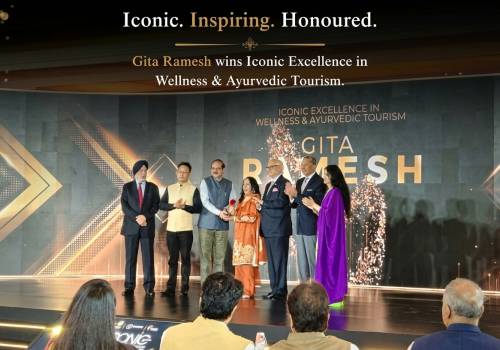
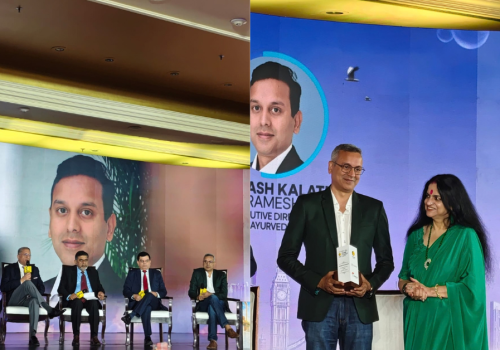
In 2010, Gita Ramesh received the Safari India National Tourism Award for “Best Woman Entrepreneur for Promoting Wellness”. The recognition reflects the intersection at which much of her career has taken place: Ayurveda, hospitality, entrepreneurship and the development of India as a destination for supervised wellness travel.
An award, however, captures only one moment.
The more substantial legacy lies in the organisation built since 1989 and in the systems of food, care and hospitality that continue to influence how guests encounter Ayurveda at Kairali.
A Women’s Day Reflection
International Women’s Day should do more than place women at the centre of a celebratory message for one day. It should make their work visible with accuracy.
In Gita Ramesh’s case, that means recognising her as a co-founder, Joint Managing Director, Ayurvedic chef and scholar whose decisions have helped shape Kairali’s direction.
It also means recognising a model of leadership based less on personal spectacle and more on sustained responsibility.
Her story is about enterprise, but not enterprise alone. It is about building an institution around a clear view of Ayurveda: one in which medicine, food, daily routine, movement and attentive care are understood as connected.
That is a contribution worth acknowledging on Women’s Day and beyond.
Click on the link to watch full video– https://www.youtube.com/watch?v=dC2p9w6ki84