



















International Women’s Day often celebrates resilience.
There is good reason for that. Women continue to carry demanding roles across work, family and community life, often while navigating changes in their own health.
But there is a problem with talking about resilience without talking about recovery.
Women should not have to become endlessly better at functioning through exhaustion, poor sleep, stress or physical discomfort. A more useful conversation about women’s wellness begins somewhere else: with the conditions that allow women to rest, notice changes in their health and seek appropriate support before depletion becomes normal.
Ayurveda has something worthwhile to contribute to that conversation.
Not because it offers one solution to every women’s health concern. It does not.
Its value lies partly in the way it asks us to look at health as a pattern rather than a collection of isolated complaints.
Women’s health rarely happens one symptom at a time
A woman may describe herself as tired.
But tiredness may exist alongside interrupted sleep, digestive changes, an irregular routine and sustained stress.
Another woman may be navigating perimenopause while also trying to understand changes in appetite, mood, energy and sleep.
Someone else may simply realise that she has spent months moving from one responsibility to the next without enough recovery between them.
These experiences do not all have the same cause, and they should not be treated as though they do.
But they illustrate something important: health is interconnected.
Ayurveda has traditionally approached the individual through this wider lens. A consultation may consider digestion, appetite, sleep, daily routine, constitution, current imbalance, stage of life and other factors together rather than focusing only on a single complaint.
That does not replace a medical diagnosis when one is needed.
It does, however, encourage a broader question:
What is happening across the whole pattern of a person’s life and health?
For women, that question can be particularly useful.
Women’s wellness does not need more pressure
Modern wellness culture often turns health into another list of things to achieve.
Sleep for eight hours.
Exercise every day.
Meditate.
Eat perfectly.
Optimise your hormones.
Manage your stress.
Maintain your career, relationships, appearance and emotional balance at the same time.
Advice that is meant to support women can quickly become another burden.
A thoughtful approach to wellness should do the opposite.
It should make room for context.
A woman caring for a newborn does not have the same needs as someone entering menopause. A woman recovering from a period of prolonged stress may need a very different rhythm from someone who is otherwise well and simply wants to improve her daily routine.
Ayurveda’s emphasis on individual assessment is relevant here.
The question is not simply, “What is the best wellness routine for women?”
There probably is no single answer.
The better question is, “What does this person need at this stage of life?”
Rhythm matters more than wellness trends
One of Ayurveda’s most practical ideas is that daily rhythm matters.
When we talk about women’s wellness, it is easy to focus on therapies, supplements or increasingly complicated routines. But many of the foundations are far less dramatic.
When do you sleep?
Are your meals regular?
Do you have time to eat without rushing?
How much recovery exists between demanding periods of work?
What happens to your routine when stress increases?
Are you constantly overriding tiredness?
These questions may sound ordinary. That is precisely why they are useful.
Ayurvedic approaches to dinacharya, or daily routine, place considerable emphasis on regularity. The principle is not that every person should follow an identical schedule. It is that the body is affected by repeated patterns.
A retreat can make those patterns easier to see because ordinary demands are temporarily reduced.
But the principle itself does not require a retreat.
Sometimes the most useful wellness change is not adding another intervention. It is creating a more sustainable rhythm around the basics.
Different life stages need different forms of support
“Women’s wellness” is an extremely broad category.
A responsible approach should acknowledge that.
Menstrual years
Changes in the menstrual cycle, pain, unusually heavy bleeding or persistent irregularity should not simply be dismissed as things women are expected to tolerate.
Some symptoms require conventional medical investigation.
Within an Ayurvedic consultation, menstrual history may also form part of a wider assessment of sleep, digestion, stress, routine and constitution.
The important point is not to assume that every menstrual concern has the same explanation or requires the same intervention.
Perimenopause and menopause
Perimenopause can affect women differently.
Sleep may change. Some women experience hot flushes or changes in mood and energy. Others experience symptoms that are less obvious.
This is an area where women deserve particularly careful communication. Ayurveda may be used as part of a wider approach to routine, diet, rest and wellbeing, but persistent or disruptive symptoms should be discussed with an appropriately qualified healthcare professional.
Periods of depletion and recovery
There are also stages of life that are not diagnoses at all.
A prolonged period of caregiving.
Several months of intense work.
Recovery after childbirth.
A difficult year.
A stretch of poor sleep.
These periods can alter how a person feels physically and emotionally, even when there is no single condition that explains the experience.
A good wellness programme should recognise this without turning normal exhaustion into a fashionable diagnosis.
What can an Ayurvedic retreat realistically provide?
A retreat cannot remove the responsibilities waiting at home.
It cannot guarantee that a health concern will disappear.
And it should never promise to cure complex medical conditions.
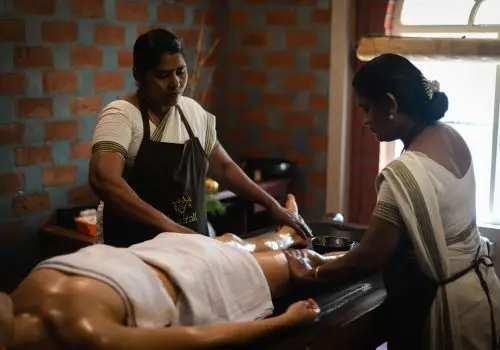
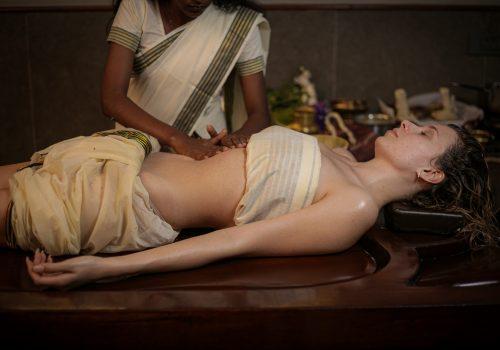
What a well-structured Ayurveda retreat can provide is simpler.
Time.
Regularity.
Clinical attention.
Fewer daily decisions.
Meals organised around a consistent routine.
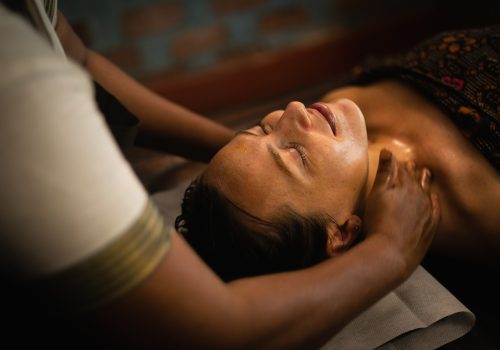
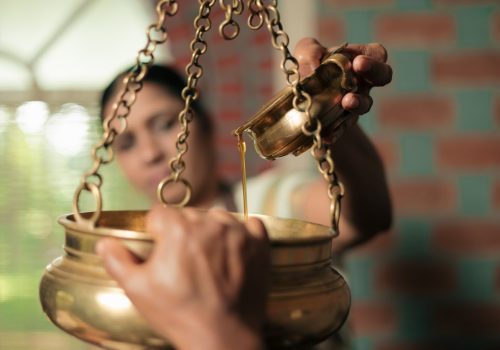
Prescribed therapies where appropriate.
Rest without having to negotiate for it.
For some women, that structure can be valuable precisely because it creates a temporary environment in which health does not have to compete with everything else.
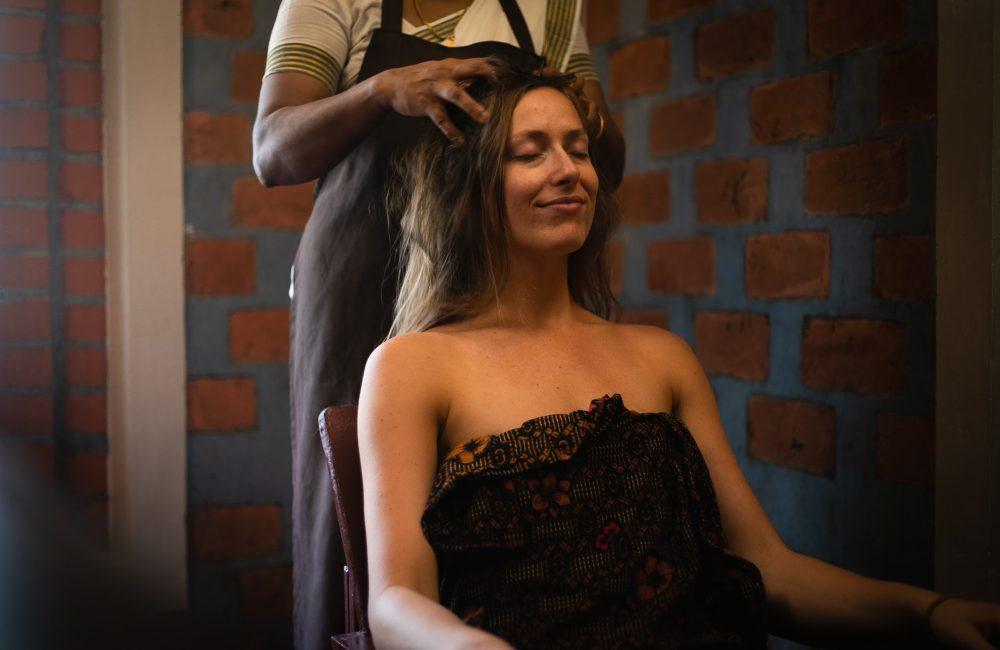
At Kairali – The Ayurvedic Healing Village in Palakkad, Ayurveda is delivered in an NABH-accredited Ayurvedic hospital setting. Programmes are physician-led rather than built around guests choosing treatments independently from a spa menu.
That clinical structure is an important distinction.
It means a women’s wellness stay should begin with assessment, not assumptions about what all women need.
A women’s wellness programme should not be a pink version of a general retreat
Adding “women’s wellness” to the name of a programme is easy.
Designing care around women’s actual needs is harder.
A serious programme should account for life stage, existing medical conditions, medication, menstrual history where relevant, sleep, digestion and current capacity.
It should also know its limits.
Not every symptom belongs in a wellness programme.
Severe or unusual pain, significant bleeding, pregnancy-related concerns, persistent unexplained symptoms or acute mental-health distress require appropriate medical assessment.
An Ayurvedic physician should be part of a responsible healthcare conversation, not positioned as a substitute for every other form of care.
That boundary makes Ayurveda more credible, not less.
Rest should not have to be earned
There is another reason this conversation belongs around International Women’s Day.
Women are often encouraged to rest only after they have reached exhaustion.
Rest becomes the reward for finishing everything.
But the work is rarely finished.
There is always another deadline, another family responsibility, another message to answer or another task that appears more urgent than recovery.
This is where wellness culture sometimes gets the emphasis wrong. Self-care is presented as an occasional indulgence when it may be more useful to think of recovery as part of ordinary health maintenance.
A retreat can make that idea visible because rest is deliberately built into the day.
The more important question is what survives once the retreat ends.
Can meals become a little more regular?
Can sleep be protected more consistently?
Can the diary include recovery before exhaustion rather than after it?
Can a woman pay attention to physical changes without immediately being told that she is simply stressed, ageing or too busy?
Those changes are less glamorous than wellness trends.
They may also be more meaningful.
A better International Women’s Day wellness message
Supporting women’s health should not mean telling women to become more disciplined versions of themselves.
It should mean giving them access to appropriate care, enough information to make informed choices, and environments in which their health is taken seriously.
Ayurveda can contribute to that by emphasising individual patterns, daily rhythm, nourishment, rest and practitioner-guided care.
But it should do so with restraint.
Not every tired woman needs Panchakarma.
Not every hormonal change needs an Ayurvedic intervention.
Not every woman needs a retreat.
Sometimes the right next step is an Ayurvedic consultation. Sometimes it is a gynaecologist, a mental-health professional, a general physician or simply a more sustainable daily routine.
The thoughtful position is not to make Ayurveda the answer to everything.
It is to understand where it can genuinely contribute.
Women deserve care, not another wellness performance
International Women’s Day asks us to think about what meaningful support for women actually looks like.
In health, that support should include the freedom to acknowledge tiredness without treating it as weakness. It should make space for life-stage changes without reducing every concern to “hormones”. And it should encourage women to seek qualified care when something does not feel right.
For Ayurveda, the opportunity is not to promise women another transformation.
It is to offer a slower and more individual question:
What does your health need now?
Sometimes the answer may include physician-guided Ayurvedic care, restorative routines and time away from ordinary pressures. Sometimes it will involve another form of healthcare entirely.
Either way, women’s wellness becomes more useful when it stops asking women to do more and starts helping them understand what kind of support they actually need.
Website: www.ktahv.com
Call: +91-9555156156