






















Breathing is something most of us notice only when it becomes uncomfortable. A blocked nose, a feeling of heaviness around the head, or repeated congestion can make even ordinary routines feel difficult.
Ayurveda has long given particular importance to the nose and the upper regions of the body. One of the therapies used within this framework is Nasya, a physician-directed procedure in which specially prepared oils or other substances are administered through the nostrils.
At Kairali – The Ayurvedic Healing Village in Palakkad, Nasya is not treated as a stand-alone spa treatment. It is considered only after consultation with an Ayurvedic physician and may be included within a wider programme depending on the individual.
What is Nasya?
Nasya is one of the procedures associated with Pañcakarma, the classical Ayurvedic system of physician-supervised therapies.
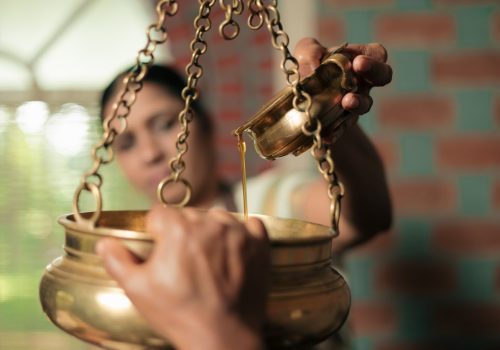
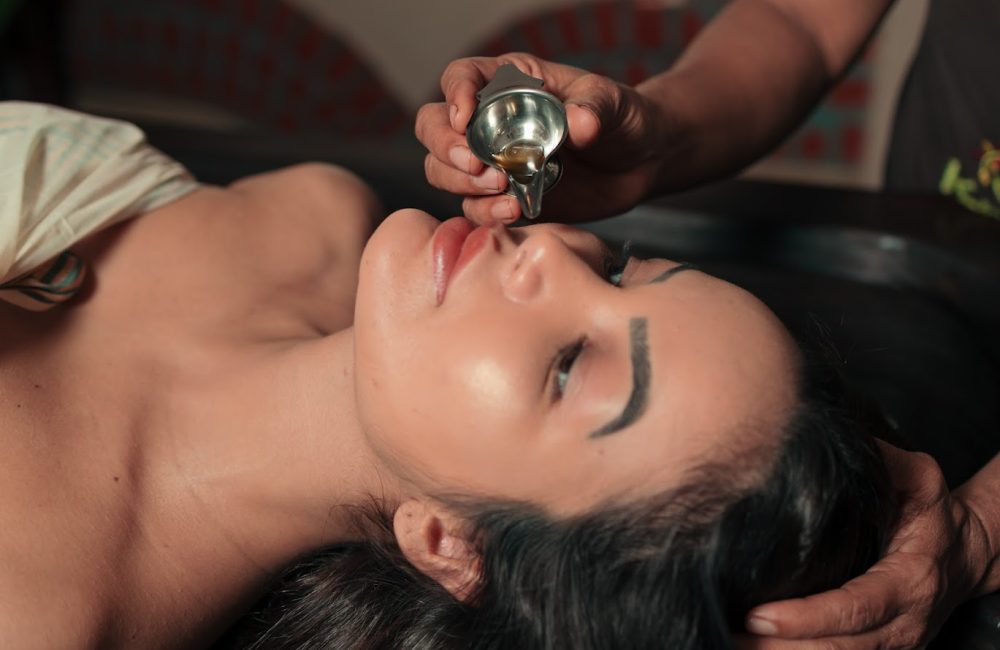
In practice, Nasya involves the administration of a small quantity of medicated oil or another prescribed preparation through the nostrils. The exact substance, timing and method depend on the person’s health, constitution and the physician’s assessment.
Ayurvedic texts traditionally describe the nose as an important route for therapies directed towards the head and neck region. This is why Nasya may be considered in cases involving the nasal passages, head, neck or related areas.
That traditional use should not be interpreted as a guarantee that Nasya will relieve every sinus, headache or respiratory complaint.
Different symptoms can have very different causes, and some require conventional medical evaluation.
How Ayurveda understands Nasya
Ayurveda uses concepts such as Vāta, Pitta and Kapha to describe patterns of function and imbalance.
In some traditional Ayurvedic presentations, heaviness, excess mucus or congestion in the upper body may be associated with Kapha. Dryness or sensitivity may be understood differently.
These patterns are part of the Ayurvedic clinical framework. They are not the same as a modern medical diagnosis of sinusitis, allergy, migraine or another respiratory condition.
This distinction is important because the same symptom can have more than one cause.
A blocked nose may be related to allergy, infection, structural problems or other conditions. Recurrent headaches also need to be assessed properly rather than automatically attributed to a doṣic imbalance.
For that reason, Nasya should begin with assessment rather than self-diagnosis.
What happens during a Nasya session?
A Nasya session is usually relatively simple, but it should still be carried out under appropriate supervision.
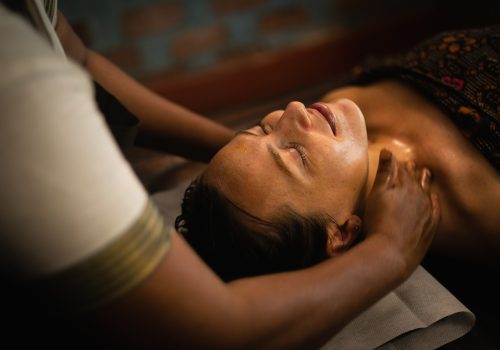
The person is positioned comfortably while the practitioner prepares the head and facial area according to the physician’s instructions. A prescribed nasal preparation is then administered in a controlled quantity.
The exact procedure can vary.
Some forms of Nasya are gentler and may be used as part of routine Ayurvedic care. Others belong to more specific therapeutic contexts and require greater caution.
The important point is that Nasya is not simply “putting herbal oil in the nose.”
The formulation, quantity, timing and suitability all matter.
Why consultation matters
At Kairali, The Ayurvedic Healing Village, guests meet an Ayurvedic physician before therapies are planned.
The physician may consider current symptoms, medical history, medications, sleep, digestion, constitution and other health factors before deciding whether Nasya is appropriate.
This matters because the therapy is not suitable for everyone at all times.
An acute illness, recent medical procedure, certain respiratory symptoms or other health concerns may change what is recommended.
A responsible Ayurvedic programme therefore does not begin with a fixed list of therapies.
It begins with the person.
Nasya and sinus complaints
Nasya is often discussed in connection with sinus and nasal discomfort in Ayurvedic practice.
However, “sinus problems” is a broad description.
Congestion can be temporary or chronic. It may be related to allergy, infection, structural issues or environmental triggers. Persistent facial pain, fever, repeated infections or difficulty breathing should be assessed medically.
Ayurveda may offer supportive care within a broader health plan, but Nasya should not be presented as a guaranteed alternative to medication or conventional treatment.
Its use should be based on clinical judgement.
Nasya as part of a wider Ayurvedic programme
At a residential Ayurvedic setting such as Kairali, Nasya may be combined with other elements of care where appropriate.
These can include physician-directed therapies, food planning, yoga, breathing practices, rest and attention to daily routine.
The aim is not to make every guest follow the same schedule.
Some people may receive Nasya. Others may not need it at all.
That individualisation is central to Ayurveda.
It also helps explain why a residential programme can offer a different experience from booking a single treatment in isolation. The physician has more opportunity to observe how the guest responds over several days and adjust recommendations when necessary.
What Nasya should not be expected to do
Nasya is sometimes described online in very broad terms.
Claims may suggest that it can remove toxins, cure sinus problems, eliminate migraines, improve immunity, sharpen memory or produce lasting respiratory relief.
Those claims go beyond what can responsibly be promised.
Ayurveda has a long traditional history of using Nasya within specific clinical contexts. But traditional use and modern clinical evidence are not the same thing.
A more careful position is that Nasya is an established Ayurvedic procedure whose suitability depends on individual assessment.
That is both more accurate and more useful for readers considering the therapy.
Experiencing Nasya at Kairali
Kairali, The Ayurvedic Healing Village is located in Kodumbu, Palakkad, Kerala, and operates as an NABH-accredited Ayurvedic hospital within a residential setting.
Guests are assessed by Ayurvedic physicians before a programme is recommended.
If Nasya is considered appropriate, it forms one part of that larger physician-led plan rather than being offered as a universal solution for respiratory or sinus concerns.
This approach is important because Ayurveda is most credible when treatments are explained in context.
The value of Nasya does not lie in presenting it as a miracle therapy.
It lies in understanding what the procedure is, when it may be considered, when it may not be suitable, and why individual assessment comes first.
For anyone considering Nasya during an Ayurvedic stay, the most useful first step is therefore not choosing the treatment.
It is speaking with the physician.
Book free doctor consultation at +91-9555156156 or visit www.ktahv.com