














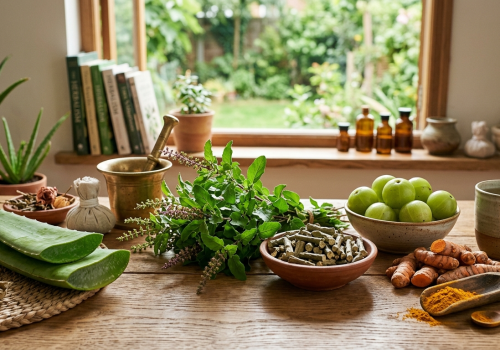













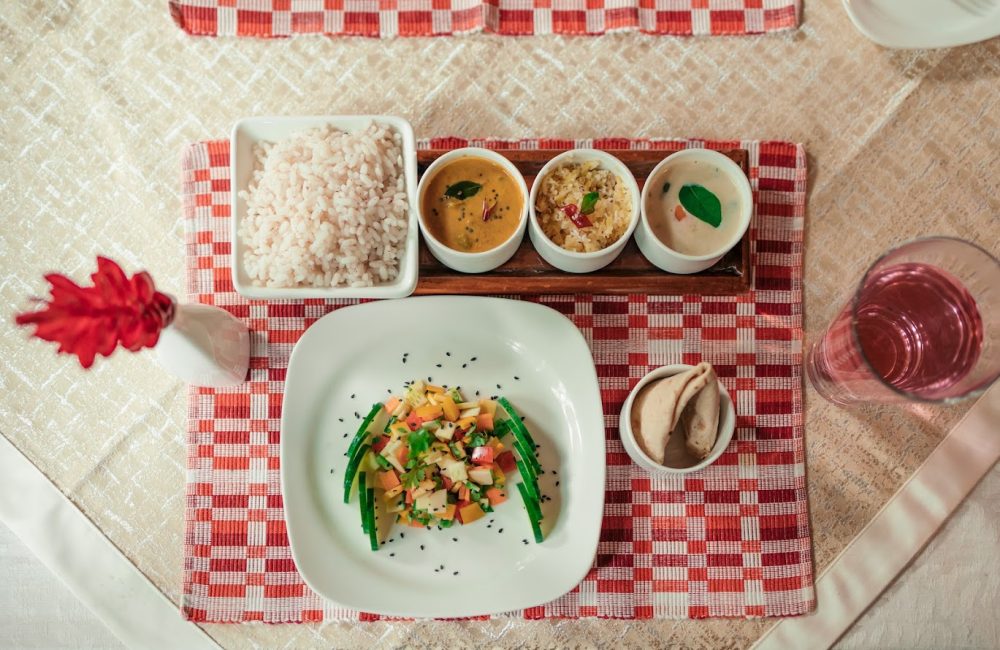

Amla, makhana, ghee, coconut and moringa are often described as “superfoods.” Their real value is less dramatic and more useful: each can contribute nutrients, variety and cultural continuity within a balanced diet.
The language of longevity has become increasingly extravagant.
A fruit becomes an anti-ageing remedy. A cooking fat becomes a “golden elixir.” A traditional vegetable is repackaged as a miracle food. The underlying ingredients may be valuable, but the promises attached to them frequently exceed the evidence.
Ayurveda offers a more contextual way to think about food.
It does not traditionally judge an ingredient only by its vitamin content or a single laboratory finding. Food is considered in relation to appetite, digestive capacity, preparation, quantity, season and the person eating it.
This means there is no universal list of foods that guarantees a longer life.
There are, however, familiar Indian ingredients that can contribute to a varied and nourishing diet. At Kairali, The Ayurvedic Healing Village in Palakkad, foods such as amla, ghee, coconut and drumstick may be used within meals according to the guest’s physician-guided dietary plan.
Here are five ingredients worth understanding without turning them into cures.
1. Amla: tart, versatile and rich in plant compounds
Amla, or Indian gooseberry (Phyllanthus emblica), has a long history of culinary and traditional use in India. Ayurveda classifies it within rejuvenative dietary and herbal traditions, and it appears in several classical formulations.
Fresh amla has a sharply sour and astringent taste. It may be eaten fresh, cooked, dried, preserved or incorporated into chutneys and preparations.
Nutritionally, amla contains vitamin C and several phenolic compounds with antioxidant activity. Reviews of the available research describe considerable laboratory and early clinical interest, but the strength of evidence differs depending on the preparation and outcome studied.
This distinction is important. Evidence that amla contains antioxidants does not prove that it slows ageing or prevents illness in people.
Its more defensible value lies in its place within a diverse diet and its usefulness as a tart ingredient that can add flavour without relying heavily on salt or sugar.
Sweetened amla products should be considered separately from the fresh fruit. Preserves, candies and commercial drinks may contain substantial added sugar.
2. Makhana: a simple snack, not a metabolic remedy
Makhana, commonly called fox nut, is the popped seed of Euryale ferox. It is used in savoury snacks, sweets and festival foods across parts of India.
The seeds provide carbohydrates along with smaller amounts of protein, fibre and minerals. Research reviews also report the presence of polyphenols and other bioactive compounds. Much of the discussion around its therapeutic potential, however, comes from laboratory, animal or preliminary research rather than strong human trials.
Makhana is sometimes marketed as a food that controls blood sugar, reduces cholesterol or produces weight loss. Such claims are too strong.
Its practical advantage is simpler: when dry-roasted and lightly seasoned, it can offer an alternative to heavily fried snacks. That advantage can disappear when it is coated with large quantities of sugar, salt, butter or flavoured powders.
As with most snack foods, preparation and portion size matter as much as the ingredient itself.
3. Ghee: traditionally important, best used with proportion
Ghee is clarified butter produced by removing water and milk solids from butter. It has long been used in Indian cooking and occupies a significant place in Ayurvedic food and pharmacy.
Its culinary strengths are clear. Ghee carries flavour well, tolerates cooking heat and can make simple foods more satisfying. Ayurveda also uses ghee as a base for certain physician-prescribed herbal preparations.
These traditional roles should not be confused with evidence that unrestricted ghee consumption improves health.
Ghee is predominantly a source of fat and contains a substantial proportion of saturated fatty acids. A controlled dietary study found that a ghee-rich diet increased certain cholesterol-related markers when compared with olive oil. Broader nutritional guidance continues to favour replacing some saturated fats with unsaturated sources where cardiovascular risk is a concern.
Research examining the traditional uses of ghee identifies interesting hypotheses, but also significant gaps between Ayurvedic descriptions and established modern clinical evidence.
Ghee therefore belongs in the category of foods where quantity, overall diet and individual health status matter.
For some people, a small amount may fit comfortably within a balanced diet. Others may need to limit it, particularly when advised to reduce saturated-fat intake. Medicated ghee used in clinical Ayurveda should only be taken under qualified supervision.
4. Coconut: a Kerala staple with several distinct forms
Few ingredients are as closely associated with Kerala cooking as coconut.
Fresh coconut, coconut milk, coconut water and coconut oil are often discussed as though they were nutritionally interchangeable. They are not.
Coconut water is largely a fluid containing naturally occurring sugars and electrolytes. Fresh coconut provides fat and fibre. Coconut milk is considerably richer and varies in concentration. Coconut oil is almost entirely fat and is high in saturated fatty acids.
This matters because a traditional ingredient can still require proportion.
Fresh coconut used as part of a vegetable preparation is different from consuming large quantities of coconut oil as a supplement. Claims that coconut oil accelerates metabolism, prevents cognitive decline or protects the heart are not established strongly enough to present as fact.
Within Kerala cuisine, coconut works best as one component of a broader meal that may also include vegetables, pulses, grains, herbs and spices.
Its relevance to healthy ageing does not come from a single exceptional property. It comes from the way it can contribute taste, texture and cultural continuity to meals built around a wider range of foods.
5. Moringa: nutritious leaves and pods with emerging evidence
Moringa oleifera, known in many Indian kitchens through its drumstick pods and leaves, is both a food plant and a subject of growing nutritional research.
The leaves contain protein, fibre, carotenoids, vitamins, minerals and polyphenols. The precise nutrient content depends on the plant variety, growing conditions, preparation and whether the leaves are eaten fresh, dried or powdered.
Moringa is frequently promoted for immunity, blood sugar, blood pressure and detoxification. Although early studies have explored several of these areas, the human evidence remains limited and inconsistent for many claimed outcomes.
A recent systematic review, for example, found insufficient evidence to establish that moringa causes reductions in blood pressure or body measurements in humans.
This does not make moringa unimportant.
Its leaves and pods are useful foods that can add variety and nutrients to meals. In regions where moringa grows locally, it can also be an accessible ingredient rather than an expensive imported supplement.
Food use should be distinguished from concentrated extracts. Powders and capsules may deliver different quantities and can interact differently with health conditions or medication.
Ayurveda does not reduce longevity to ingredients
The term rasāyana is sometimes translated simply as “rejuvenation” or “longevity.” In practice, the Ayurvedic idea is broader than consuming a list of special foods.
It includes nourishment, sleep, digestion, conduct, daily rhythm, seasonal adaptation and the preservation of strength over time.
Amla or moringa cannot compensate for persistent sleep deprivation. Ghee does not neutralise an otherwise unbalanced diet. Makhana remains a snack, not a substitute for regular meals. Coconut oil is not automatically beneficial because it is traditional.
Ayurveda also asks whether a food can be digested comfortably by the person eating it.
An ingredient that produces heaviness, reflux, discomfort or loss of appetite is unlikely to become beneficial merely because it appears on a superfood list. Preparation may need to change. Quantity may need to change. In some circumstances, the ingredient may need to be avoided.
This emphasis on suitability is more useful than the superfood label.
When should these foods be limited?
Individual tolerance and medical needs differ, but several practical cautions apply:
- Amla preserves and drinks can contain considerable added sugar.
- Makhana snacks may be high in salt or fat depending on preparation.
- Ghee and coconut oil are rich in saturated fat and may need to be limited on clinical advice.
- Coconut milk can make a dish considerably more energy-dense.
- Concentrated moringa products are not equivalent to eating the leaves or pods as food.
- Herbal or medicated preparations should not be self-prescribed simply because the base ingredient is familiar.
People managing a medical condition, food allergy or prescribed therapeutic diet should discuss significant dietary changes with an appropriate healthcare professional.
A better longevity plate
The more credible lesson from these five foods is not that everyone should consume all of them every day.
It is that healthy eating can draw from ordinary, culturally familiar ingredients without turning them into miracle products.
Amla may bring tartness and variety. Moringa can broaden the range of vegetables eaten. Makhana can be prepared as a relatively simple snack. Coconut can contribute flavour and texture. Ghee can be used deliberately rather than automatically.
Their effect depends on the meal around them, the quantity used and the needs of the person eating them.
Longevity is not contained in one fruit, seed or cooking fat.
It is more likely to be supported by consistent patterns: varied meals, adequate nourishment, appropriate portions, regular movement, sufficient sleep and attention to changes in health.
That answer is less marketable than a list of miracle foods.
It is also closer to how Ayurveda understands nourishment.
No single food has been proven to extend life. A varied diet and consistent health habits matter more than one ingredient.
Amla can form part of the diet, but the preparation and amount should suit the individual. Sweetened amla products may contain significant added sugar.
Ghee has culinary and traditional uses, but it is rich in saturated fat. It should be used in proportion to the overall diet and individual health needs.
No. Coconut water is mainly fluid with natural sugars and electrolytes, while coconut oil is concentrated fat.
No. Fresh pods, leaves and concentrated powders differ in composition and serving size. Supplements should not be treated as ordinary vegetables.