


























Sharad Purnima occupies an unusual place in the Indian calendar.
Also known in different regions as Kojagiri Purnima, it falls during Sharad Ritu (the autumn season in the Ayurvedic calendar), when the monsoon has receded and clearer skies return. Cultural traditions associated with the night often involve spending time outdoors under the full moon and preparing foods such as milk-and-rice kheer.
For Ayurveda, however, the more interesting idea is not that moonlight itself is a treatment.
It is the principle behind the observance: 9
Ayurveda pays close attention to seasonal change. Temperature, rainfall, food availability, appetite, sleep and daily activity all shift over the course of a year. Ritucharya (seasonal regimen) is the traditional framework for adapting one’s habits to those changes.
Sharad Purnima offers a useful way into that larger idea.
What does Sharad Ritu mean in Ayurveda?
Ayurveda traditionally divides the year into six seasons, or ritus, with recommendations for food and routine changing accordingly.
Sharad Ritu follows the monsoon season. Classical Ayurvedic guidance associates this period with an increased tendency toward Pitta aggravation. Pitta is the dosha traditionally associated with heat, digestion and transformation.
This does not mean that everyone develops the same symptoms during autumn, nor that every physical complaint at this time should be attributed to Pitta.
Rather, the seasonal framework asks practitioners to consider whether changes in climate, appetite, sleep, activity and individual constitution are influencing how a person feels.
Official AYUSH material similarly identifies Sharad as a season in which Pitta has a natural tendency toward aggravation.
The practical principle is simple: as the environment changes, Ayurveda recommends reconsidering the routine rather than following the same habits automatically.
Where does the moon fit into this?
The moon has an established cultural and symbolic role in Indian traditions, and Ayurvedic descriptions commonly associate lunar qualities with saumya, or cooling and gentle characteristics.
That traditional language should not be confused with a modern scientific claim that exposure to a full moon has a therapeutic effect.
A better way to understand Sharad Purnima is through contrast.
After periods traditionally characterised by heat and climatic instability, the clear autumn night represents coolness, moderation and stillness. The customs surrounding Sharad Purnima therefore fit naturally with Ayurveda’s broader seasonal preference for reducing excessive heat and choosing calmer routines during Sharad.
In that sense, moonlight becomes less a “medicine” and more a reminder of seasonal awareness.
The traditional lesson is moderation
Contemporary wellness culture often takes a traditional idea and turns it into a protocol: perform a particular ritual, consume a particular ingredient, and expect a particular result.
Sharad Purnima does not need that treatment.
Its Ayurvedic relevance can be understood more quietly.
During a season traditionally associated with Pitta, Ayurveda places emphasis on avoiding unnecessary excess: excessive heat, very intense routines and habits that leave the body feeling overstimulated.
Dietary choices are traditionally adjusted as well, with greater attention to foods and preparations considered appropriate for the season and the individual.
These are general seasonal principles rather than universal prescriptions. Someone’s constitution, health history, digestion and existing medical conditions still matter.
What about the traditional Sharad Purnima kheer?
One of the best-known customs associated with Sharad Purnima is preparing kheer, typically made from milk and rice, and leaving it exposed to the night sky before it is eaten.
It is a culturally significant ritual with regional variations.
Ayurvedic interpretations often connect the preparation with the cooling qualities traditionally associated with the season and the moon. But claims that moonlight “charges” the food with measurable medicinal properties should be treated as traditional belief rather than established scientific fact.
That distinction does not diminish the ritual.
Food traditions can carry seasonal, social and symbolic meaning without requiring a biomedical explanation.
For an evidence-aware understanding of Ayurveda, preserving that distinction is important.
Does the full moon affect the human body?
The scientific answer is less dramatic than popular wellness narratives sometimes suggest.
Researchers have investigated whether lunar phases are associated with human sleep. Some studies have reported differences around particular phases of the lunar cycle, including changes in sleep timing or duration.
Other studies, including a large population-based investigation, found no meaningful association between lunar phase and sleep measures.
Researchers reviewing the field have therefore described the evidence as inconsistent, with questions remaining about study design and possible confounding factors.
That is very different from saying that full-moon exposure improves hormones, immunity, fertility or emotional health.
At present, claims of that kind go beyond what the evidence supports.
What Sharad Purnima can teach us without overclaiming
Perhaps the most useful Ayurvedic lesson from Sharad Purnima has little to do with proving a biological effect of moonlight.
It is about noticing change.
Modern life makes it remarkably easy to live as though seasons barely exist. We work under the same artificial lighting, maintain similar schedules and often eat similar foods throughout the year.
Ayurveda asks us to pay closer attention.
Has the weather changed?
Has appetite changed with it?
Is sleep different?
Does a routine that felt comfortable a month ago still feel appropriate?
Should activity become lighter or heavier?
Should meals change?
These are modest questions, but they reflect one of Ayurveda’s more distinctive ideas: health is not considered entirely separate from time, climate and daily routine.
Seasonal living at an Ayurvedic retreat
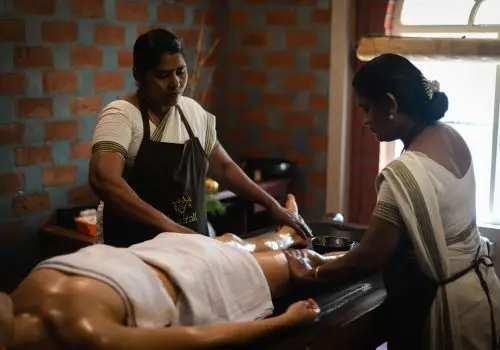
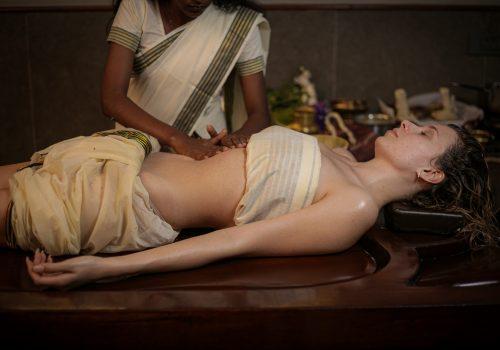
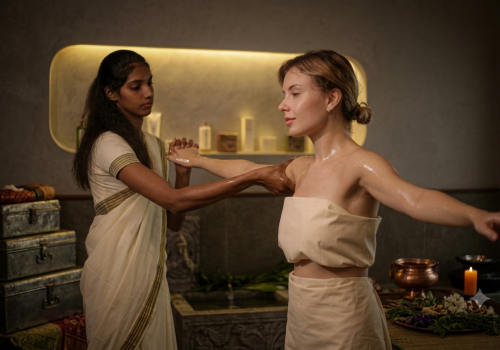
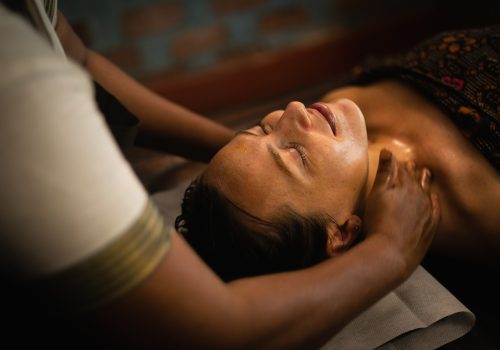
At Kairali – The Ayurvedic Healing Village in Palakkad, Kerala, Ayurveda is practised within a physician-led setting where food, therapies, activity, yoga and daily routine are considered together.
That does not mean every guest follows a predetermined “Sharad Purnima protocol.”
Ayurvedic care is individualised. Seasonal considerations may form one part of a practitioner’s assessment, alongside prakriti (individual constitution), vikriti (current imbalance), digestion, age, health history and other relevant factors.
This distinction matters because ritucharya is not a seasonal wellness package.
It is a framework for adapting behaviour thoughtfully.
Healing with nature does not mean making nature a cure
There is an appealing simplicity to saying that Ayurveda teaches us to “heal with nature.”
But the phrase can easily become vague.
A more precise interpretation is that Ayurveda asks us to notice environmental conditions and adjust daily life accordingly.
That may mean changing food with the season.
Changing the timing or intensity of activity.
Protecting sleep.
Recognising when heat, cold or humidity is affecting comfort.
Or simply spending enough time outside to notice that the season has changed at all.
Sharad Purnima gives that principle a memorable cultural expression.
The full moon does not need to be presented as a medicine for the tradition to retain its meaning.
Its more enduring lesson may be this: health is not practised in isolation from the environment in which we live.
And sometimes, paying attention is the first seasonal adjustment worth making.
Interested in understanding how Ayurveda approaches seasonal routines and individual constitution? Book a free consultation with a Kairali Ayurvedic physician to discuss an appropriate programme.
Website: www.ktahv.com
Call: +91-9555156156