































As an Ayurvedic physician, I am often asked: “Is it really safe to take ashwagandha every day for months?” A new 24‑week clinical trial now gives us much clearer data to answer that question.
In this article, I will unpack what this study found, how it fits with classical Ayurveda, and what it means if you are considering supplements like Kairali’s Ashwagandha Capsules.
What did the new ashwagandha safety study actually test?
A recent multicentre clinical trial supported by the Ministry of Ayush, India, followed 1,200 vaccinated adults for 24 weeks.
Participants were randomised to receive either:
- 500 mg of a standardised aqueous ashwagandha root extract daily (equivalent to about 4 g root powder), or
- a matching placebo.
The study was double‑blind and placebo‑controlled, which means neither the participants nor the investigators knew who was receiving what. It was registered in the Clinical Trials Registry–India (CTRI/2021/06/034496) and published in Frontiers in Medicine in August 2026.
Key safety findings on liver and kidney function
From an Ayurvedic practice point of view, the most relevant outcome is very simple: did long‑term use of this extract injure the liver or kidneys?
Over 24 weeks of daily intake and follow‑up to week 28, the researchers reported:
- Liver enzymes and bilirubin stayed within reported reference ranges.
- Kidney parameters such as creatinine and blood urea also remained within reference ranges.
- No evidence of treatment‑related liver (hepatic) or kidney (renal) injury was seen.
- No serious adverse event was judged to be caused by ashwagandha.
- No participant stopped the study because of side‑effects from the extract.
Out of 1,200 enrolled adults, 1,032 (around 86%) completed the full 24 weeks, which also supports overall tolerability.
For those of us who have prescribed Withania somnifera (ashwagandha) for years, this aligns with our day‑to‑day clinical experience. However, it is important to note that this is one specific, standardised extract in a defined group of healthy adults.
How this aligns with classical Ayurveda
In the classical texts, ashwagandha is described as a rejuvenative herb traditionally used to support strength, nourishment, vitality and balance.
Because Ayurveda individualises use according to constitution, digestion, lifestyle and current health status, the dose and combination may vary from person to person.
The new trial does not measure these traditional Ayurvedic concepts, but it does address a modern concern: “If I take this daily for months, will it harm my liver or kidneys?” Within the limits of that protocol, the answer was reassuring.
Where Kairali’s Ashwagandha Capsules fit in
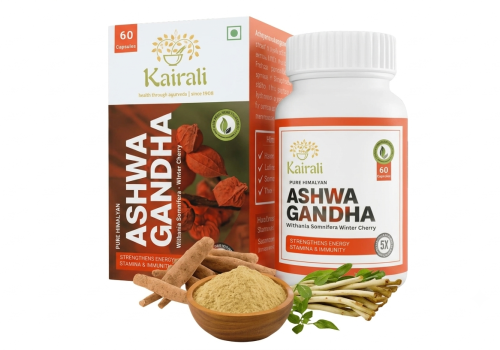
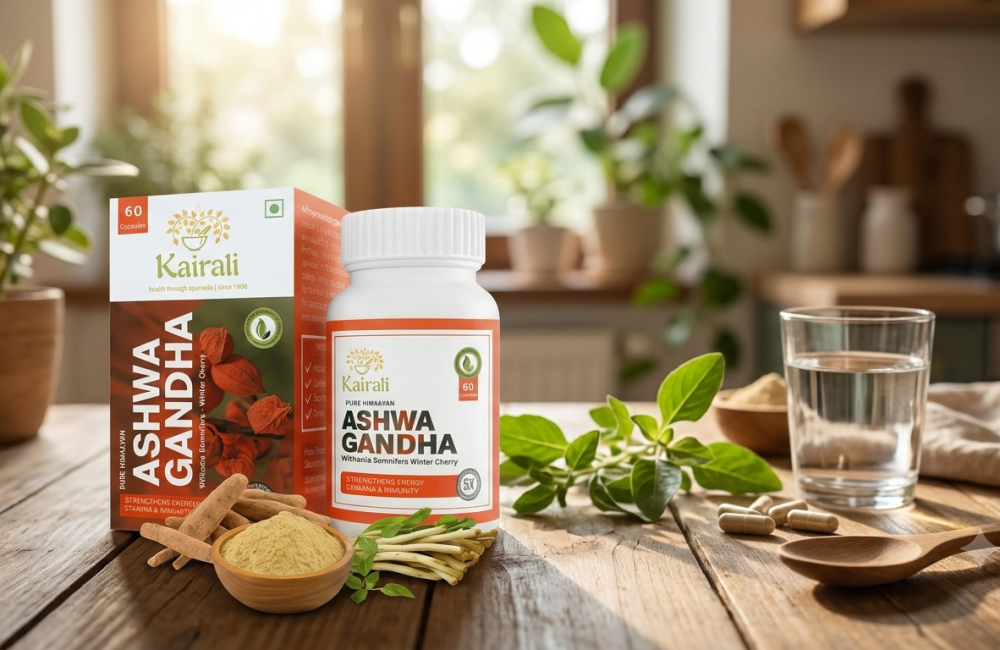
At Kairali, our Ashwagandha Capsules 500 mg are formulated as an Ayurvedic health supplement to support:
- physical and mental strength,
- stress management and emotional balance,
- stamina, memory and general vitality.
The trial dose (500 mg standardised extract, equivalent to 4 g root powder) is broadly in line with what many commercial preparations supply per day. However, it is crucial not to assume that every product is identical to the extract used in the study.
Different manufacturers use different extraction methods, standardisation markers and excipients. So while this trial is encouraging for ashwagandha safety as a category, it is not a direct test of any single brand.
ONLY FOR DIETARY USE. NOT FOR MEDICINAL USE. Consult your physician before use.
Clearing common misconceptions about ashwagandha safety
In my consultations, I see two opposite fears:
- Some people believe any herb taken longer than a few weeks must be unsafe.
- Others assume that if a product is “natural”, it can be taken in any amount, for any duration, without medical advice.
Ayurveda takes a middle path. We individualise based on constitution, digestion, current health status and other medicines. The same ashwagandha capsule can feel very different in a 25-year-old athlete and a 65-year-old with multiple medicines.
This is why, even with reassuring data, I still advise:
- Avoid self‑prescribing high doses if you have liver, kidney or serious systemic conditions.
- Share all supplements with your physician so they can check for interactions.
- Start with the lowest effective dose and review after a defined period.
What this means for yoga and wellness professionals
Many yoga teachers and wellness organisers who work with us at Kairali ask whether it is responsible to suggest ashwagandha to their students.
The emerging data, including this 24‑week trial, supports a more confident, yet still cautious, stance: for apparently healthy adults, appropriately prepared ashwagandha, taken in moderate daily doses, appears well tolerated over several months.
However, this does not replace medical screening. If you refer your community to Ayurveda, encourage them to read our explainer on what Ayurveda is and why it matters, and to consult a qualified physician before starting any supplement.
How we, as clinicians, integrate such evidence
At Kairali – The Ayurvedic Healing Village, clinical decisions are still based on classical texts and individual assessment. Modern trials like this do not replace that; they add another layer of safety evidence.
For example, when I consider a rejuvenative programme, data like this adds useful context to the safety discussion, while dose, duration and monitoring still depend on the individual and the specific preparation being used.
However, if baseline reports show borderline hepatic or renal values, I may choose gentler alternatives, adjust dose, or shorten duration, even though the trial did not find harm in healthy volunteers.
Key takeaways on ashwagandha safety
To summarise this trial’s relevance in simple points:
- Population: 1,200 apparently healthy, vaccinated adults, 18–70 years.
- Intervention: 500 mg standardised aqueous ashwagandha root extract daily vs placebo, for 24 weeks.
- Safety outcomes: No evidence of treatment‑related liver or kidney injury; good overall tolerability; no serious adverse events attributed to the herb.
- Implication: Supports the safety of prolonged, daily use of this type of extract in a defined healthy population.
This is encouraging safety data for the specific standardised Ashwagandha root extract studied. It should not be interpreted as direct clinical evidence for Kairali’s Ashwagandha Capsules 500 mg or for other Ashwagandha products.
However, the most important Ayurveda principle still applies: what is safe and appropriate for you depends on who you are. Personalised guidance matters more than any single study.
Disclaimer: This article is for educational purposes only and does not replace individual medical advice. Consult your physician or a qualified Ayurvedic doctor before starting or changing any supplement or treatment.










Leave a Reply