





























After days of festive meals, sweets and disrupted routines, the body may need a return to consistency rather than an aggressive detox. Here’s how Ayurveda approaches post-festival digestive well-being, and what modern science says.
Diwali brings families together around elaborate meals, traditional sweets and celebrations that often extend late into the night. From rich festive dishes to repeated servings of mithai, food is an essential part of the occasion.
Once the celebrations end, however, some people notice a familiar combination of bloating, sluggishness, acidity, irregular appetite or general digestive discomfort.
The immediate temptation may be to begin a detox programme, skip meals or turn to herbal cleanses. Yet neither traditional Ayurvedic thinking nor modern nutritional science requires a dramatic response to a few days of indulgence.
A more considered approach begins with understanding digestion, recognising the effects of disrupted routines and gradually returning to regular eating and sleeping patterns.
Why Does Digestion Feel Different After Festive Eating?
Digestive discomfort following celebrations can arise from several overlapping factors.
Large meals, increased consumption of fried foods, late-night eating, changes in sleep schedules and reduced physical activity can all influence how comfortable a person feels after eating.
Foods rich in fat may delay stomach emptying, while large portions can contribute to a sensation of fullness. Eating close to bedtime may also aggravate acid reflux in susceptible individuals.
Bloating and indigestion are common experiences and do not necessarily indicate an underlying medical problem. However, persistent or severe symptoms require proper medical evaluation.
The important distinction is that feeling heavy after a celebration does not mean the body has accumulated toxins that must be urgently removed.
Understanding Agni: Ayurveda’s View of Digestive Function
In Ayurveda, digestion is described through the concept of agni, commonly translated as digestive fire.
Agni is a broader traditional concept encompassing the transformation and assimilation of food. It is not a direct equivalent of stomach acid, digestive enzymes or metabolic rate, although these modern physiological processes offer useful points of comparison.
Classical Ayurvedic practice considers the state of agni when assessing appetite, digestion, bowel regularity and dietary suitability.
One traditional category, mandāgni (reduced digestive activity), is used to describe a pattern associated with poor appetite, heaviness and slow digestion.
Ayurveda also discusses āma, a concept referring to incompletely processed material within its traditional understanding of digestion and metabolism.
It is important not to interpret āma as a scientifically measured accumulation of environmental toxins. The Ayurvedic concept and modern toxicology operate within different explanatory frameworks.
From this perspective, the emphasis after festive eating is on restoring regularity and choosing food according to appetite and digestive comfort.
Five Ways to Return to Digestive Balance After Diwali
1. Return to Regular, Balanced Meals
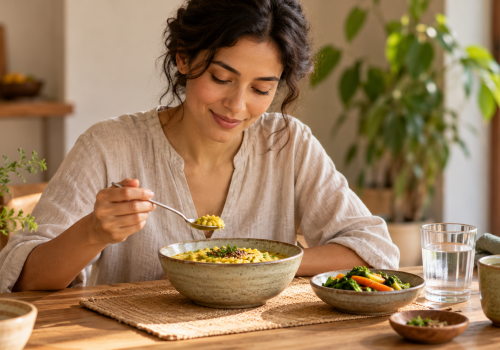
After several days of heavy eating, simple meals may feel more comfortable than rich or elaborate dishes.
Traditional Indian preparations such as moong dal, cooked vegetables, rice and lightly seasoned soups can provide familiar options during the return to a normal routine.
Ayurvedic dietary practice often places importance on freshly prepared food, appropriate portion sizes and attention to appetite.
These principles overlap with general nutritional advice that favours balanced meals over extreme dietary restriction.
There is usually no need to compensate for festive eating by skipping meals or following a highly restrictive diet.
2. Eat Mindfully and Avoid Overeating
Ayurveda has traditionally emphasised not only what is eaten but also how food is consumed.
Eating at a comfortable pace and paying attention to feelings of hunger and fullness can help people recognise when they have eaten enough.
After a festival, when sweets and snacks may have been consumed throughout the day, returning to a more predictable meal schedule can be useful.
Smaller portions may also feel more comfortable for people prone to indigestion or reflux.
The objective is not to impose rigid rules but to restore consistency.
3. Re-establish Hydration and Sleep Routines
Late nights and irregular mealtimes are common during Diwali celebrations.
Returning to adequate sleep and regular hydration is a practical part of post-festival recovery.
Water supports normal physiological functions, including digestion and kidney function. Drinking sufficient fluids is important, but excessive water intake does not accelerate toxin elimination.
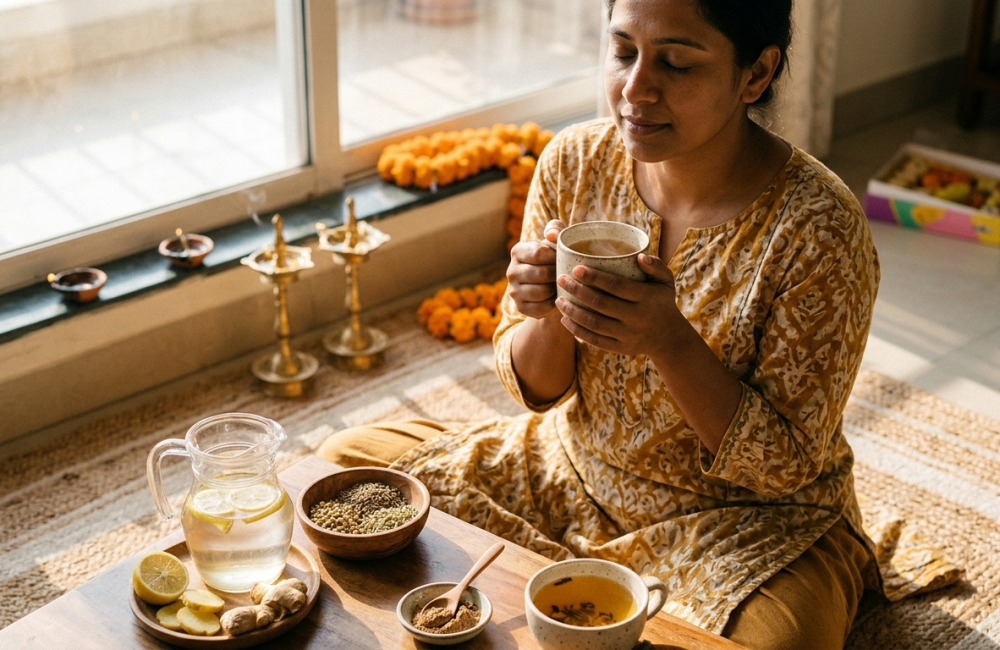
Warm water is commonly preferred in traditional Ayurvedic dietary routines. It may be comfortable for some people, although evidence does not establish that it removes toxins or offers special cleansing properties.
Similarly, consistent sleep schedules support general health and may help restore a sense of energy after several nights of celebration.
4. Include Gentle Physical Activity
Physical activity does not need to be strenuous to be useful.
A comfortable walk after eating can be a practical way to resume movement following days of prolonged sitting, travel or celebration.
Ayurvedic lifestyle principles also emphasise regular movement as part of dinacaryā, or daily routine.
Gentle yoga and breathing practices may complement this routine, particularly when they encourage relaxation and consistency.
Exercise should not be treated as a punishment for eating festive food. The aim is to return to sustainable habits rather than offset individual meals.
5. Approach Ayurvedic Herbs with Care
Several herbs and traditional preparations are associated with digestive health in Ayurveda.
For example, ginger (Zingiber officinale) is traditionally used in culinary and Ayurvedic preparations, while Triphala, a combination of three fruits, has a longstanding place in Ayurvedic practice.
However, traditional use does not establish that a preparation is effective or appropriate for every person experiencing bloating or indigestion.
Herbal products can vary in composition, quality and concentration. Some may cause adverse effects or interact with prescribed medicines.
There is also insufficient high-quality evidence to recommend particular Ayurvedic formulations as routine post-festival detox remedies.
Anyone considering medicinal herbal preparations should consult a qualified Ayurvedic practitioner, particularly when managing an existing medical condition or taking regular medication.
Does the Body Actually Need a Detox After Diwali?
The language of detoxification has become common in contemporary wellness marketing, particularly after holidays and festive seasons.
However, the human body already possesses specialised systems for processing and eliminating waste products.
The liver plays an important role in metabolising substances, while the kidneys filter blood and regulate the removal of waste through urine. The digestive system also participates in the elimination of substances through normal bowel function.
According to the US National Center for Complementary and Integrative Health (NCCIH), convincing scientific evidence supporting commercial detox diets for eliminating toxins or producing lasting health benefits is lacking.
Some cleansing programmes may also carry risks, particularly when they involve prolonged fasting, laxatives, excessive fluid consumption or severe dietary restrictions.
This does not mean that dietary habits are irrelevant. Reducing excessive consumption of rich foods, maintaining hydration and eating balanced meals are sensible steps toward general well-being.
What remains unsupported is the suggestion that a particular juice, supplement or cleansing regimen is necessary to remove toxins following festive meals.
The Difference Between Ayurvedic Cleansing and Modern Detox Trends
Ayurveda contains established traditional concepts relating to purification and elimination, particularly within śodhana (purificatory procedures) and Pañcakarma (a group of five classical therapeutic procedures).
These are clinical concepts within the Ayurvedic medical system and should not be confused with commercially marketed detox drinks, restrictive diets or unsupervised cleansing practices.
Traditional Panchakarma procedures involve individual assessment, preparation, carefully selected interventions and practitioner supervision.
They are not routine requirements after overeating, nor is their effectiveness for eliminating vaguely defined modern toxins established by high-quality clinical evidence.
For ordinary post-festival digestive discomfort, a return to regular meals, movement, hydration and rest is generally a more proportionate starting point.
When Digestive Discomfort Needs Medical Attention
Occasional fullness or mild bloating after a large meal is common.
Nevertheless, recurring indigestion, persistent abdominal discomfort or frequent reflux should not automatically be attributed to festive eating or an Ayurvedic imbalance.
Severe abdominal pain, persistent vomiting, difficulty swallowing, unexplained weight loss, blood in vomit or stools, or other concerning symptoms require prompt medical assessment.
People with existing gastrointestinal conditions should be especially cautious about self-prescribing herbal remedies, fasting or attempting cleansing procedures.
Ayurvedic dietary and lifestyle practices may be considered alongside appropriate medical care, but they should not delay necessary diagnosis or treatment.
Returning to Routine Is More Useful Than a Quick Fix
The days following Diwali need not become another period of strict dietary rules or corrective wellness programmes.
A few days of festive food do not automatically require a medical intervention. For most otherwise healthy people, returning to balanced meals, regular sleep, sufficient hydration and comfortable physical activity is a reasonable approach.
Ayurveda’s emphasis on agni, appetite, moderation and daily routine provides a traditional framework for thinking about these habits.
Its practical relevance lies in encouraging attention to individual needs rather than treating every digestive complaint with the same preparation.
Festivals are occasions for celebration, not reasons for dietary guilt. Once they end, ordinary consistency is often more useful than an elaborate cleansing ritual.
The most sustainable post-Diwali reset may simply be a return to the habits that support everyday health.








Leave a Reply