































Artificial intelligence is changing the way healthcare professionals work.
Some tools help organise records. Others help find research or prepare follow-up notes. Ayurveda is also beginning to explore these uses.
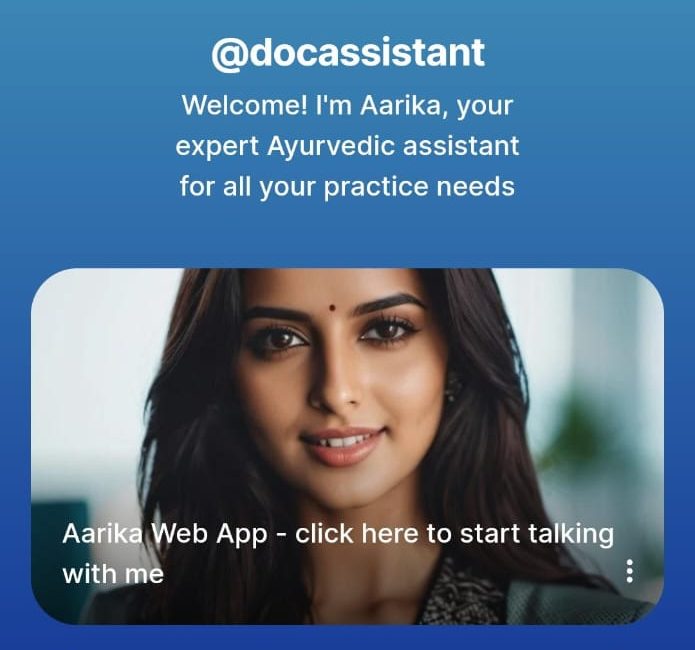
Kairali Ayurvedic Group introduced KAAI as an AI-based application for Ayurvedic practitioners. Its assistant, Aarika, is designed to support consultations, case records and access to Ayurvedic knowledge.
Aarika is not a doctor. It does not replace an Ayurvedic physician. It is intended to help practitioners manage information more efficiently.
What Is Aarika?
Aarika is the AI assistant within the KAAI application.
It is designed to help practitioners with tasks such as:
- organising patient records
- reviewing case information
- managing follow-ups
- finding relevant Ayurvedic references
- supporting routine administrative work
The practitioner remains responsible for every clinical decision.
This is important because Ayurveda depends on individual assessment. A digital tool can organise information, but it cannot fully understand a patient in the way a trained physician can.
Why Ayurveda Needs Human Judgement
Ayurvedic consultations consider more than one symptom.
A physician may also look at digestion, sleep, strength, age, medical history, diet and daily routine. The practitioner may assess prakṛti, or constitutional pattern, and vikṛti, or the current imbalance.
Two people with the same complaint may therefore receive different advice.
An AI assistant may help the practitioner review these details. It may also suggest possible patterns based on the information entered.
But the suggestion is not a diagnosis.
Aarika cannot examine the patient. It cannot confirm whether the information entered is complete. It may also miss details that an experienced physician notices during a consultation.
The final decision must remain with the practitioner.
Supporting Practitioners, Not Replacing Them
Abhilash K. Ramesh, Executive Director of Kairali Ayurvedic Group, described Aarika as a tool that supports practitioner expertise.
“Aarika represents a significant step in our mission to bridge traditional Ayurvedic wisdom with modern technology. Our goal is to provide practitioners with a tool that offers research-based insights to complement their expertise in patient care, fostering a holistic approach to healthcare.”
The word “complement” matters.
Aarika is designed to assist the practitioner. It is not intended to take control of the consultation.
This is the safest and most useful role for AI in Ayurveda.
Helping with Case Records
Ayurvedic case records can contain a large amount of information.
A physician may need to note symptoms, diet, sleep, therapies, herbal formulations and changes over time.
When these details are spread across different files, follow-up can become difficult.
Aarika may help bring this information together. It may allow practitioners to review earlier consultations, update treatment notes and track progress more clearly.
This can save time.
It can also help maintain continuity when a patient returns for another consultation.
The quality of the record, however, still depends on accurate information and careful review.
Access to Ayurvedic Knowledge
Ayurvedic knowledge is spread across classical texts, commentaries and modern research.
Important references may appear in works such as the Caraka Saṃhitā and Suśruta Saṃhitā. Finding the right passage can take time.
An AI assistant may help practitioners search this material more quickly.
But finding a reference is not the same as understanding it.
Classical texts need context. Translations can differ. Modern studies also vary in quality.
For this reason, practitioners should be able to see the source behind any suggestion. They should review the original material before using it in patient care.
AI should make information easier to find. It should not hide where the information came from.
Privacy and Patient Information
Any healthcare application must protect patient information.
Medical records may include private details about symptoms, medication, diagnoses and personal history.
Before using an AI tool, practitioners should know:
- what information is collected
- where it is stored
- who can access it
- how long it is kept
- whether it is used to improve the system
- how patients can request changes or deletion
Privacy should be explained clearly.
It should not be treated as a general promise.
The Limits of AI
AI systems can sometimes give an answer that sounds certain even when the information is incomplete.
This is a serious concern in healthcare.
A responsible system should make uncertainty clear. It should show its sources and allow the practitioner to question or reject its suggestions.
It should also recognise when a patient may need conventional medical care.
The practitioner must remain in control at every stage.
Kairali’s Approach to Ayurveda and Technology
Kairali Ayurvedic Group was founded in 1989 by K.V. Ramesh and Gita Ramesh. The Group draws on four generations of Ayurvedic practice in the founders’ family.
The development of KAAI reflects a wider question for Ayurveda:
How can technology make practice more efficient without weakening clinical judgement?
Aarika may help with records, research and follow-up. It may also reduce some of the routine work involved in practice management.
But it cannot replace examination, experience or responsibility.
Its value will depend on how carefully it is tested and how responsibly it is used.
A Tool, Not an Authority
AI may become useful in Ayurvedic practice. It can help organise information. It can make research easier to find. It can support better record-keeping. But good care will still depend on the practitioner. Aarika should not be judged by how quickly it gives an answer. It should be judged by whether that answer is clear, reviewable and used with care.
This AI ayurveda assistant news has been featured on Travel world online, Nuffordsspectrum, ayurveda magazine
Website: www.kairali.com
Call: +91-9555156156