

















There is a particular rhythm to a retreat that combines yoga with Ayurveda.
The day begins with movement before breakfast. Ayurvedic treatments occupy the quieter hours. Meals are simple and vegetarian. Between sessions, there is time to walk, swim, read or simply sit without having somewhere else to be.
That was the idea behind the Yoga and Ayurveda Retreat held at Kairali, The Ayurvedic Healing Village in Palakkad, Kerala, from 1 to 8 July 2016.
Led on the yoga side by teacher Lakshya [Elouise Erlings], the week brought together Hatha Yoga, meditation, physician-guided Ayurvedic care, vegetarian meals and periods of unstructured rest.
The retreat was not designed around constant activity. Its structure deliberately alternated practice with recovery.
And that distinction matters.
Why Combine Yoga and Ayurveda?
Yoga and Ayurveda are often encountered separately today.
Yoga may be approached primarily as a physical practice, while Ayurveda is commonly associated with massage, herbs or dietary advice. In a traditional Indian context, however, the two systems have long shared a broader interest in disciplined daily living, bodily awareness and the relationship between routine and wellbeing.
A residential retreat makes that relationship easier to experience.
Instead of fitting an hour of yoga into an otherwise unchanged day, the entire schedule becomes slower and more deliberate.
Morning movement is followed by breakfast.
Ayurvedic consultations and treatments take place during the day.
Meals are taken at regular times.
The evening returns to yoga or meditation.
The value of the format lies partly in repetition. Rather than asking the body to switch constantly between work, travel, screens, exercise and irregular meals, the retreat creates a more consistent daily rhythm.
Beginning the Day With Hatha Yoga
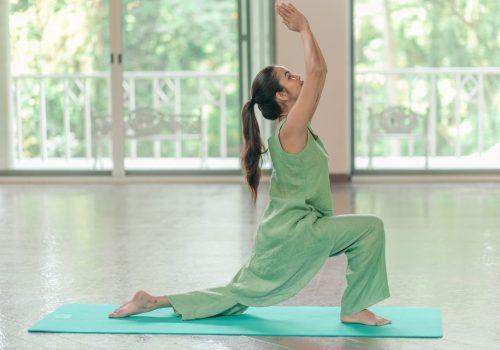
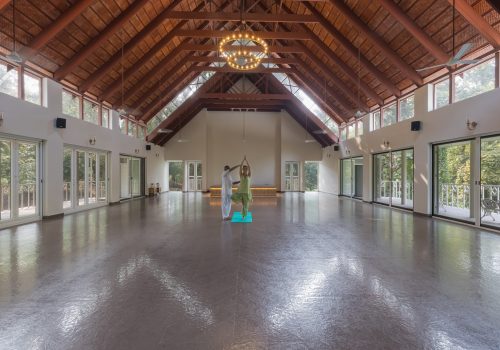
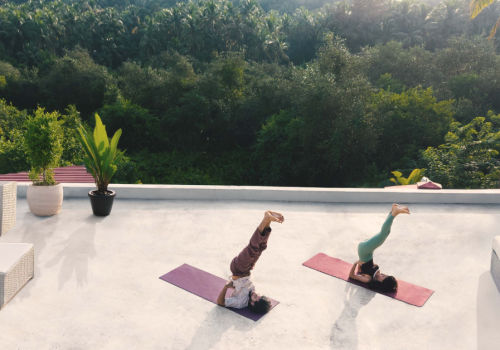
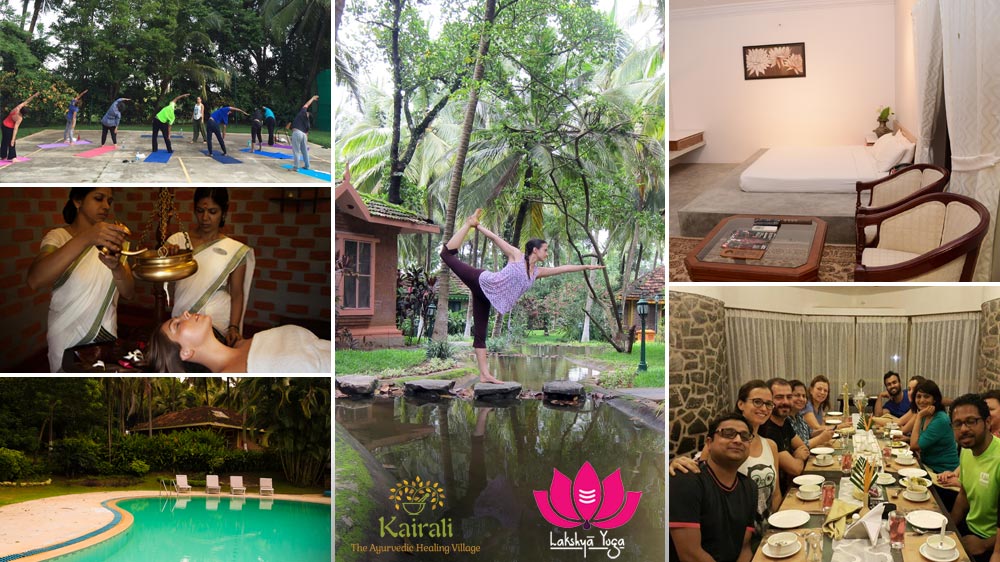
During the 2016 retreat, mornings began with a Hatha Yoga class.
Lakshya’s teaching emphasised the relationship between breath and movement, with students encouraged to work within their own physical capacity rather than forcing themselves into a predetermined level of performance.
Her background included more than seven years of Hatha Yoga practice and teaching at the time of the retreat, along with extended study in India. She had also completed studies in Vedanta, Sanskrit and Vedic chanting under Swami Dayananda Saraswati in Coimbatore.
The morning session was intended to establish the tone for the rest of the day: alert, physically engaged, but not rushed.
That was followed by a South Indian vegetarian breakfast before the Ayurvedic portion of the programme began.
Ayurveda as a Physician-Guided Part of the Retreat
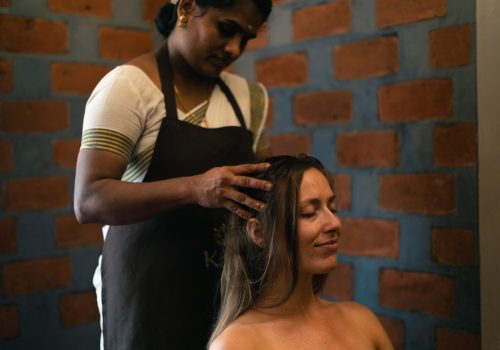
Ayurvedic care during the retreat began with consultation rather than a predetermined list of treatments.
This distinction is central to responsible Ayurvedic practice.
Treatments are not selected simply because they are popular or relaxing. An Ayurvedic physician considers the individual before recommending what is appropriate.
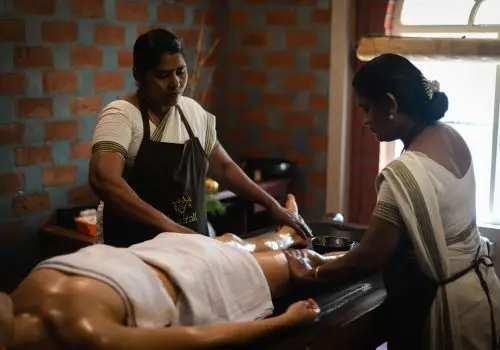
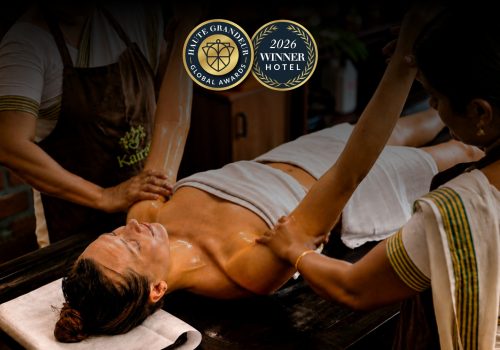
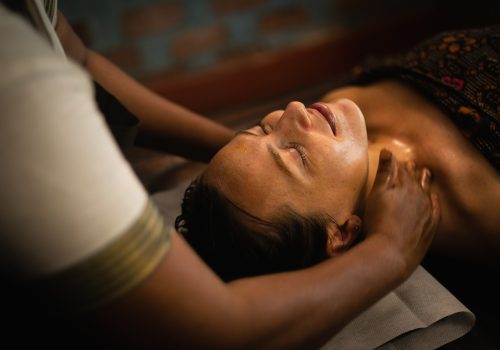
The 2016 programme included Abhyanga, the traditional Ayurvedic oil application, with additional therapies selected according to the physician’s assessment where appropriate.
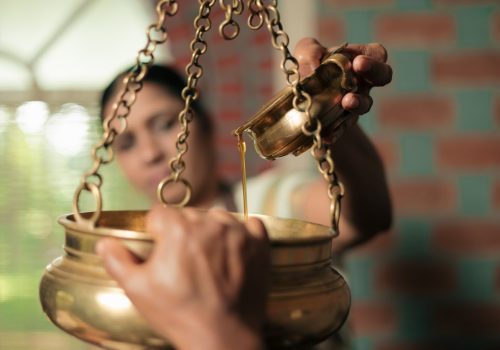
Depending on individual recommendations, these could include therapies such as Śirodhāra (the controlled flow of liquid over the forehead) or Piḻiccil (a traditional oil-based therapy).
The retreat therefore combined two very different kinds of participation.
Yoga asked guests to move and engage actively.
Ayurvedic treatment asked them to become still.
The day made room for both.
Why Free Time Was Part of the Programme
One of the more useful aspects of the retreat schedule was what it did not fill.
The afternoon included substantial free time.
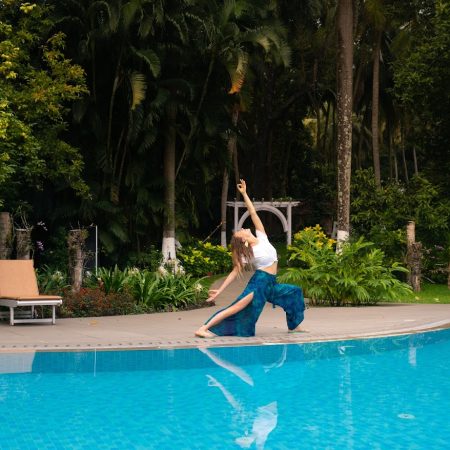
Guests could swim, walk through the grounds, read on the terrace of their villa, use the library or spend time in quiet reflection.
In many contemporary retreats, every hour becomes an opportunity for another workshop, class or organised experience. But rest becomes less meaningful when it has to compete with an itinerary.
Here, unstructured time was part of the design.
The idea was not simply to keep participants entertained for a week. It was to create enough space for the pace of the day itself to change.
A Typical Day at the Retreat
The daily schedule followed a relatively simple pattern:
7:00–8:00 am
Hatha Yoga
8:00–9:00 am
Breakfast
Morning
Ayurvedic massage and physician-recommended treatment sessions
12:30–1:30 pm
Lunch
Afternoon
Free time and, where prescribed, an additional Ayurvedic treatment
6:00–7:00 pm
Yoga and/or meditation
7:00–8:00 pm
Dinner
The precise timings were subject to adjustment, but the underlying structure remained consistent: movement in the morning, treatment and rest during the day, and a quieter practice toward evening.
Food as Part of the Daily Rhythm
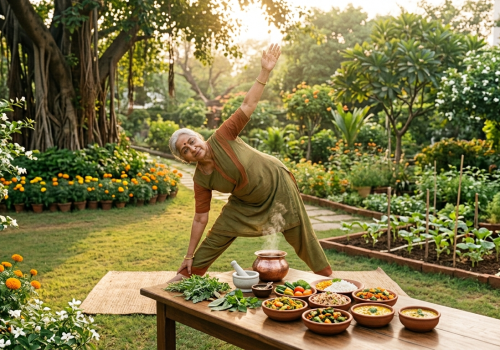
Vegetarian Ayurvedic meals were served three times a day during the retreat.
Food was not treated as an afterthought between therapies.
Regular meal timings were part of the structure of the week, and an Ayurvedic cookery workshop gave participants an introduction to how meals could be prepared using Ayurvedic principles.
For guests accustomed to eating while working, travelling or looking at a screen, simply sitting down for meals at consistent times can itself feel unfamiliar.
The retreat used that regularity deliberately.
The objective was not to present one universal “Ayurvedic diet”, but to introduce the idea that how and when we eat forms part of the wider pattern of daily living.
Learning Beyond the Treatment Room
The week also included educational and cultural sessions intended to give participants more context around the practices they were experiencing.
These included:
- an introduction to Ayurveda with an Ayurvedic physician
- an Ayurvedic cookery workshop
- an introduction to mantra chanting
- a guided walk through the neighbouring village and temple
These sessions gave the retreat a dimension beyond yoga classes and treatments.
A person receiving an Ayurvedic therapy may reasonably want to know why it is being used. Someone eating differently for a week may want to understand the reasoning behind the meal structure.
Education helps turn a retreat from a sequence of experiences into something that can be understood.
The Setting Matters
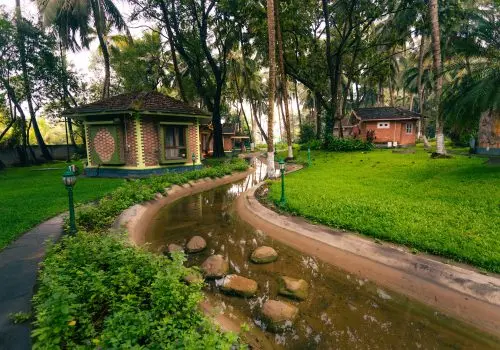
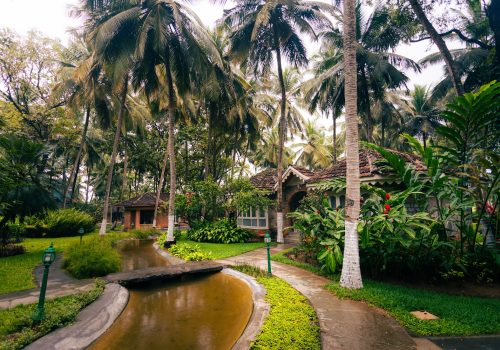
The retreat took place at Kairali – The Ayurvedic Healing Village in Palakkad, Kerala, in a quiet, green environment away from the pace of a city schedule.
The villas were designed according to Vāstu Śāstra (traditional Indian principles concerning architecture and spatial arrangement), and the property was arranged to make walking, reading, meditation and outdoor time part of everyday life.
For a retreat built around yoga, Ayurveda and rest, this kind of setting is not merely decorative.
Environment influences behaviour.
A place where walking is easy encourages walking.
A quiet terrace encourages sitting.
A schedule without constant transport, appointments and external demands makes regular meals and sleep easier to maintain.
The retreat used the environment to reinforce the rhythm of the programme.
Yoga as More Than Exercise
Lakshya’s approach to yoga during the retreat was grounded in the idea that practice should not be reduced entirely to physical performance.
Her classes were dynamic, but breath and movement were coordinated, and practitioners of different levels were encouraged to explore their own capacities.
This distinction remains useful.
A retreat is not necessarily the place to perform the most advanced posture possible.
For many participants, the more meaningful challenge is learning to pay sustained attention to breathing, movement and physical limits without turning the practice into another competition.
Combined with meditation and the quieter periods of Ayurvedic care, yoga became part of a larger pattern rather than a standalone fitness session.
What a Week Like This Can Offer
A seven-night retreat cannot resolve every source of stress in someone’s life, nor should yoga or Ayurveda be presented as substitutes for necessary medical care.
What a residential programme can offer is something more specific: a temporary environment in which daily habits become easier to observe.
How does the body feel after several days of regular meals?
What changes when mornings begin with movement rather than notifications?
How much rest does a person actually need when the schedule allows it?
What does it feel like to spend part of the afternoon without a task?
These are modest questions, but they are often difficult to investigate in ordinary life.
The July 2016 Yoga and Ayurveda Retreat at Kairali was structured around giving participants enough time to explore them.
Yoga provided movement and attention.
Ayurveda provided individualised physician guidance and traditional therapies.
Meals gave the day regularity.
And the spaces between all three gave participants something increasingly difficult to schedule: time without an immediate demand on it.
That combination, rather than any single treatment or yoga class, was the point of the week.